

Frenchies are champion beggars. Those big eyes locked on your dinner plate make it awfully tempting to share a bite, but some of the most common foods in your kitchen can send a French Bulldog to the emergency vet, and a few can be fatal in surprisingly small amounts.
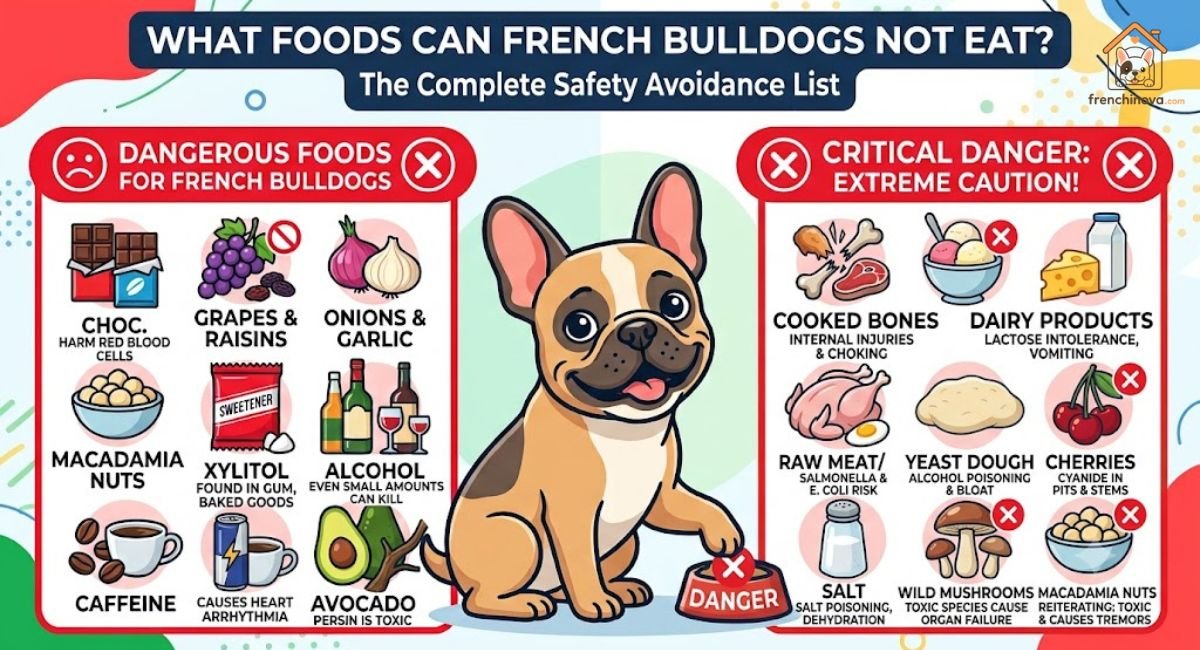
The tricky part is that many dangerous foods look completely harmless. A grape, a square of dark chocolate, a stick of sugar-free gum that rolled under the couch, none of them scream “danger,” yet each can cause serious harm. This guide What Foods Can French Bulldogs Not Eat? lays out exactly what French Bulldogs can’t eat, why each food is risky, the symptoms to watch for, and what to do if your Frenchie gets into something they shouldn’t. Bookmark it, because the time to know this is before an accident, not during one.
Table of Contents
The Most Dangerous Foods, Never Feed These
These foods are toxic to dogs and should never end up in a Frenchie’s bowl or be dropped on the floor. Keep them well out of reach.
Chocolate
Chocolate contains theobromine and caffeine, both of which dogs can’t process the way people can. The darker the chocolate, the more dangerous, baking chocolate and dark chocolate carry far more theobromine than milk chocolate. Signs include vomiting, diarrhea, restlessness, a racing heart, tremors, and, in severe cases, seizures. With a small breed like a Frenchie, it doesn’t take much.
Grapes and Raisins
Grapes and raisins are deceptively deadly. Even a small amount can trigger sudden kidney failure, and the toxic dose varies so much between dogs that there’s no “safe” quantity. Researchers suspect tartaric acid is the culprit, since dogs can’t process it well. Watch for vomiting, loss of appetite, weakness, dehydration, and reduced urination. This one is a true emergency.
Xylitol (Artificial Sweetener)
Xylitol may be the most underrated danger on this list because it hides in everyday products, sugar-free gum, some peanut butters, sugar-free baked goods, mints, and even certain medications. In dogs, xylitol causes a rapid, dramatic drop in blood sugar and, in larger doses, can lead to fatal liver failure. Just one or two sticks of sugar-free gum can cause dangerously low blood sugar in a small dog. Dogs can become disoriented or develop seizures within 30 minutes, so always check peanut butter labels before sharing.
Onions, Garlic, and Chives
The entire allium family, onions, garlic, chives, and leeks, damages a dog’s red blood cells and can cause anemia. This applies whether they’re raw, cooked, powdered, or hidden in another dish, which is why so much of what’s on your plate is off-limits. Effects can be delayed, with symptoms like weakness, lethargy, and pale gums showing up days later.
Macadamia Nuts
Macadamia nuts are specifically toxic to dogs, even though the exact toxin remains unknown. They affect the nervous system and muscles, producing hind-leg weakness, wobbliness, vomiting, tremors, and fever, often within 12 hours. The good news is that most dogs recover within 24 to 48 hours, but the symptoms are distressing, and macadamias often turn up in cookies and trail mixes alongside chocolate or raisins, which raises the stakes considerably.
Alcohol and Caffeine
Both are toxic to dogs. Alcohol, including unbaked yeast dough, which ferments in the stomach, can cause dangerous drops in blood sugar, body temperature, and breathing. Caffeine in coffee, tea, and energy drinks overstimulates the nervous system and heart. Neither belongs anywhere near a Frenchie.
Foods That Aren’t “Toxic” but Are Still Risky for Frenchies
Some foods won’t poison your dog outright, but they’re a bad idea for French Bulldogs specifically, a breed already prone to sensitive stomachs, obesity, and pancreatitis.
Fatty and Fried Foods
Bacon, sausage, butter, fried scraps, and fatty trimmings can trigger pancreatitis, a painful, sometimes serious inflammation of the pancreas that Frenchies are already predisposed to. High-fat foods are one of the most common causes of a Frenchie ending up at the vet with vomiting and abdominal pain.
Dairy
Most dogs, Frenchies included, don’t produce much of the enzyme needed to digest lactose. Milk, cheese, and ice cream often lead to gas, loose stool, and stomach upset. In a breed already known for digestive drama and flatulence, dairy just makes things worse.
Salty and Heavily Seasoned Foods
Chips, pretzels, deli meats, and seasoned leftovers carry far too much salt and often hide ingredients like onion or garlic powder. Excess salt can cause dehydration and, in large amounts, sodium poisoning.
Cooked Bones
Cooked bones splinter easily and can cause choking, mouth injuries, or dangerous blockages and tears in the digestive tract. This is an extra concern for a flat-faced breed that doesn’t chew as efficiently as longer-muzzled dogs.
Fruit Pits and Seeds
The pits in cherries, peaches, and plums contain compounds that release cyanide, and the pits themselves are a choking and obstruction hazard. The fruit flesh of some of these is fine in moderation, but the pit never is.
A Quick-Reference Danger List (What Foods Can French Bulldogs Not Eat?)
For fast scanning, here are the foods to keep away from your French Bulldog entirely:
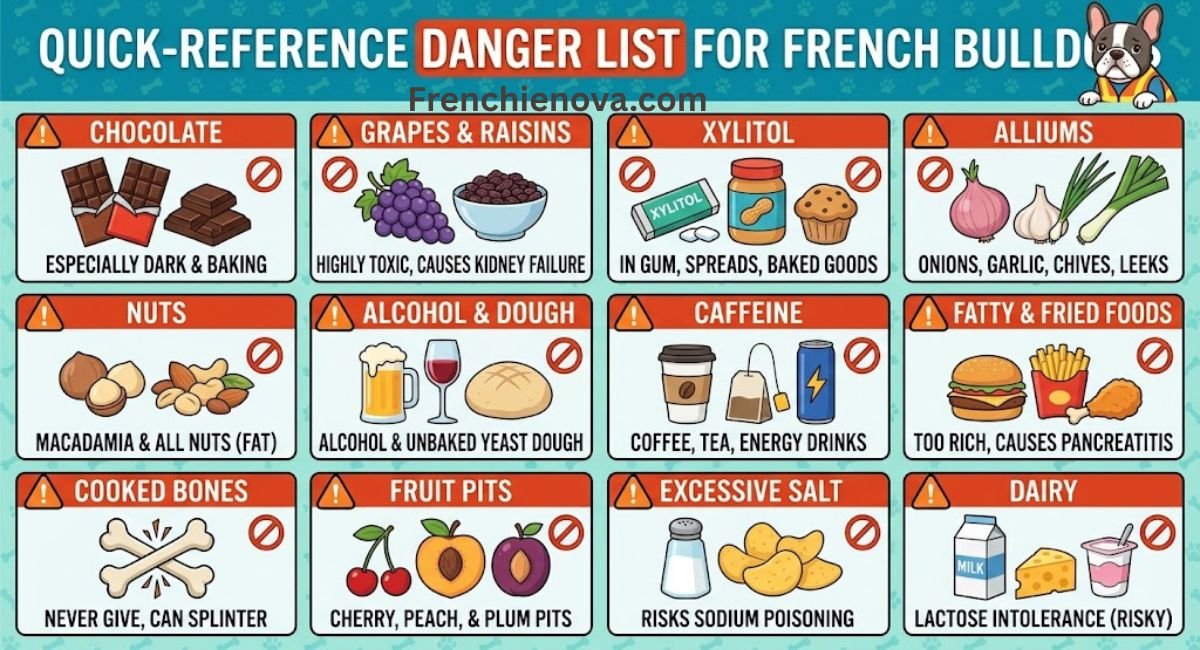
- Chocolate (especially dark and baking chocolate)
- Grapes and raisins
- Xylitol (sugar-free gum, some peanut butters, baked goods)
- Onions, garlic, chives, and leeks
- Macadamia nuts (and most nuts, due to fat)
- Alcohol and unbaked yeast dough
- Caffeine (coffee, tea, energy drinks)
- Fatty and fried foods
- Cooked bones
- Cherry, peach, and plum pits
- Excessively salty foods
- Dairy (risky rather than toxic)
Symptoms of Food Poisoning to Watch For
Because some toxins act fast and others take days, knowing the warning signs helps you act in time. Contact your vet if your Frenchie shows any of these after eating something questionable:
- Vomiting or diarrhea
- Weakness, lethargy, or collapse
- Tremors, shaking, or seizures
- Loss of appetite
- Excessive drooling or thirst
- Difficulty walking or coordination problems
- Pale gums
- Disorientation or unusual behavior
With a small breed, symptoms can escalate quickly, so err on the side of caution. When in doubt, call.
What to Do If Your Frenchie Eats Something Toxic
Acting fast and calmly matters more than anything. Here’s the order to work through:
- Remove access to whatever they got into, and figure out roughly how much they ate and when.
- Don’t try to induce vomiting at home unless a vet specifically tells you to. With some substances, it does more harm than good, and there’s no safe way to do it yourself.
- Call your veterinarian or an animal poison control hotline immediately. In the US, the ASPCA Animal Poison Control Center is a recognized resource. Have your dog’s weight and the food details ready.
- Save the packaging or any leftovers. Bringing the wrapper or recipe helps your vet figure out exactly what, and how much, your dog ingested, which guides treatment.
- Watch closely and follow instructions. The sooner treatment begins, the better the outcome with nearly every toxin on this list.
Prompt care makes an enormous difference. Many dogs recover fully when owners act quickly, while delays are what turn manageable situations into emergencies.
Safe Treats to Offer Instead
The good news is that plenty of human foods are perfectly fine in moderation, so your Frenchie doesn’t have to miss out entirely. Good options include:
- Plain cooked chicken or turkey (no seasoning)
- Carrot sticks, crunchy and low-calorie
- Apple slices (no seeds or core)
- Plain pumpkin, which also helps with digestion
- Blueberries
- Plain peanut butter, but only after confirming it’s xylitol-free
Keep treats to no more than about 10% of your Frenchie’s daily calories, since the breed gains weight easily and obesity brings its own health problems.
Can French Bulldogs eat peanut butter?
Yes, but only if it’s xylitol-free. Always read the label first, since that sweetener is toxic to dogs and increasingly common in sugar-free spreads. Plain peanut butter in small amounts makes a fine occasional treat.
Are grapes really that dangerous for a small dog like a Frenchie?
Yes. Even a small number of grapes or raisins can cause kidney failure, and because the toxic dose is unpredictable, there’s no amount considered safe. Treat any grape ingestion as an emergency and call your vet.
What human foods are safe for French Bulldogs?
Plain cooked chicken, carrots, apple slices without seeds, blueberries, and plain pumpkin are all good choices in moderation. The key is keeping them unseasoned and free of any toxic add-ins like onion, garlic, or sweeteners.
My Frenchie ate a small piece of chocolate, should I panic?
Don’t panic, but don’t ignore it either. The risk depends on the type and amount of chocolate and your dog’s size. Dark and baking chocolate are the most dangerous. Call your vet with the details rather than waiting to see what happens.
The Bottom Line
Keeping a French Bulldog safe at mealtimes comes down to knowing the danger list and respecting it, no matter how convincing the begging gets. Chocolate, grapes, raisins, xylitol, onions, garlic, and macadamia nuts are the headline threats, while fatty foods, dairy, and cooked bones round out the “not worth the risk” category for this sensitive breed.
If your Frenchie ever gets into something toxic, act fast, skip the home remedies, and call your vet or poison control right away. A little awareness now is what keeps those dinner-table eyes begging happily for years to come.
For complete feeding guidance, see our French Bulldog puppy diet guide and feeding chart.
This article is for general educational purposes and isn’t a substitute for veterinary advice. If you suspect your dog has eaten something toxic, contact your veterinarian or an animal poison control center immediately.

Auston is the founder of Frenchie Nova and a longtime French Bulldog owner. He writes practical, research-backed guides on Frenchie care, feeding, and health. Not a veterinarian — always consult your vet for medical concerns.