


There’s a reason the jumper is the first piece of clothing most Frenchie owners actually buy. It’s the everyday hero, easy to throw on for a chilly morning, a drafty living room, or that shivery hour after a bath. The trouble is that half the “small dog” jumpers on the market don’t fit a Frenchie at all, and the dog ends up stuck halfway in, looking deeply betrayed.
Finding the right French bulldog jumpers for dogs comes down to a few specific things: a cut made for a broad chest and short back, a soft stretchy knit, and a design that goes on without a wrestling match. This guide covers what separates a great Frenchie jumper from a frustrating one, the styles worth owning, and how to nail the fit the first time.
💡 Disclosure: this article contains affiliate links. If you buy through them, we may earn a small commission at no extra cost to you.
Table of Contents
Top Picks at a Glance


Each pick is detailed in the sections below.
Why Frenchies Wear Jumpers (It’s Not Just for the Photos)
A jumper looks adorable on a Frenchie, sure. But for this breed, it does real work.
French Bulldogs have a thin, single-layer coat with no insulating undercoat, so they lose body heat quickly. They feel indoor drafts, cold tile floors, and damp mornings far more than a fluffier breed does. A soft knit jumper traps a little warmth and takes the edge off, exactly what a cold-sensitive dog needs around the house and on mild-weather walks.
There are bonus perks, too. A jumper reduces shedding around the home, gives anxious dogs a gentle, swaddled sense of security, and keeps a freshly bathed Frenchie from getting chilled while it dries. For everyday comfort, it’s hard to beat.
What Makes a Good French Bulldog Jumper
Reviewing jumpers for this breed comes down to features that suit the Frenchie body and temperament.
A breed-specific cut
This is everything. Frenchies have a broad, deep chest, a narrow waist, and a short back. A good jumper leaves room through the chest while staying snug at the waist and short along the back. Generic small-dog knits, built for a slimmer silhouette, simply don’t sit right.
A stretchy, breathable knit
Soft, flexible fabric pulls on easily and moves with the dog. Stiff or scratchy material gets refused fast, and an itchy jumper is a jumper that lives in a drawer.
Easy on and off
Step-in designs or back-fastening styles beat anything that forces the head through a tight collar. Frenchies hate having fabric dragged past their face, and it’s the number-one reason a dog fights getting dressed.
Harness compatibility
A built-in opening or a cut that works under a harness means the jumper and walking gear coexist without a daily reshuffle.
Right length
The jumper should stop short of the belly opening so the dog can potty without getting the knit dirty, and it shouldn’t pin the front legs.
Types of French Bulldog Jumpers
Several jumper styles suit Frenchies, and the right pick depends on the weather and the dog.
Pullover Knits
The classic everyday jumper. A soft, stretchy pullover handles indoor wear and mild outdoor cold. Look for a wide, forgiving neckline that slips on without a struggle.


Turtleneck and Roll-Neck Jumpers
A higher neck adds warmth for those exposed bat ears and a chilly neck. Great for colder days, as long as the neck opening stretches enough to go on comfortably.


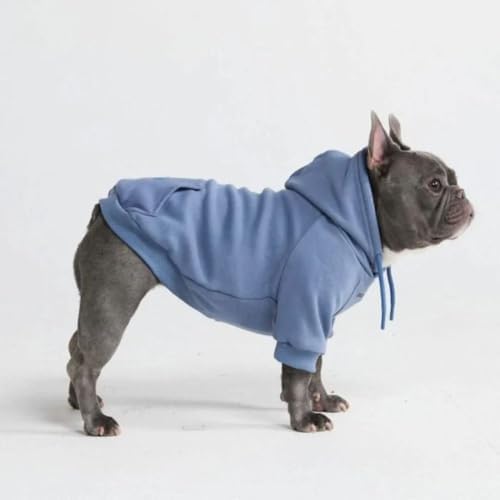
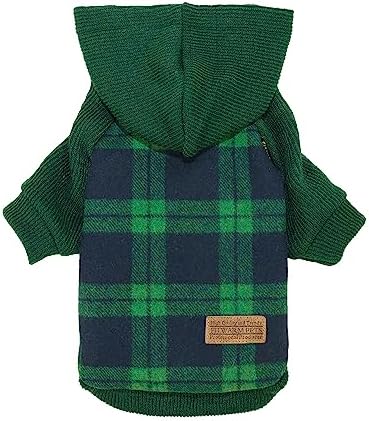
Hoodie Jumpers
Part jumper, part sweatshirt, often in cotton or fleece. Casual, cozy, and usually easy to pull on. The hood is more style than function for most dogs, but the extra coverage is welcome on cool days.
Cable-Knit Jumpers
The cute, chunky, photogenic option. Lovely for occasions and cooler weather, though the heavier knit suits cold days more than warm ones.


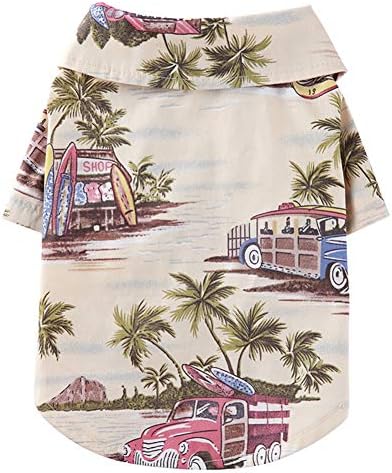
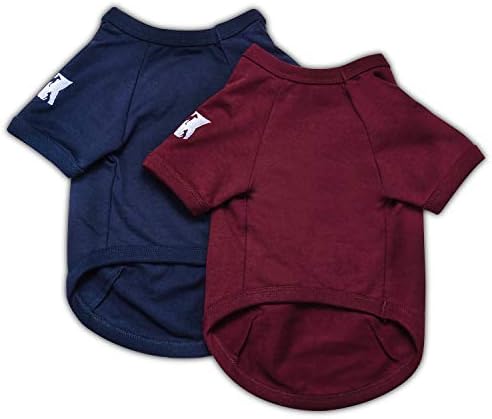
Lightweight Cotton Jumpers
Thin cotton or jersey jumpers work for transitional weather and indoor wear when a heavy knit would be too much, a good warm-month layer for a dog that still gets chilly indoors.

Fleece-Lined Jumpers
When real cold sets in, a fleece-lined jumper adds serious warmth and crosses over into proper French bulldog winter clothing territory, worth a look for anyone facing a genuine winter.

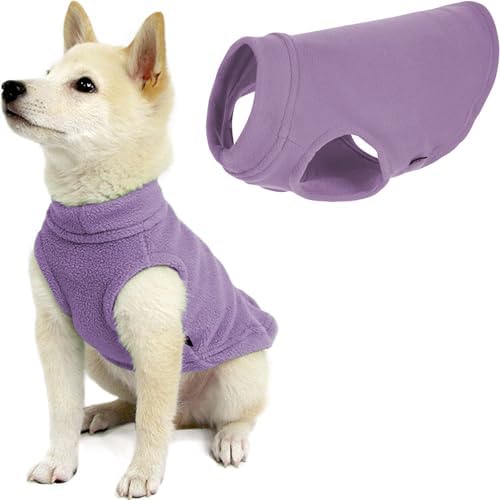

Frenchie Jumper Buying Guide
French Bulldogs aren’t built like the average small dog, and that makes off-the-rack jumpers a gamble more often than not. A deep, barrel-shaped chest, a short back, and a stocky neck mean a size that’s “right” on the label can still pinch, gap, or ride up in all the wrong places. Getting the fit, material, and timing right isn’t complicated once the basics are clear. This section walks through exactly that, from taking the right measurements to spotting the mistakes most owners make on their first few jumper purchases.
Getting the Fit Right
Three measurements do the job:
- Neck girth: measured at the base of the neck
- Chest girth: measured at the widest point, just behind the front legs
- Back length: measured from the base of the neck to the base of the tail
The chest measurement is the make-or-break number, it’s the part of a Frenchie that gets stuck. Brands that build for the breed leave room there while keeping the back short.
How to measure without a fight: use a soft cloth tape, measure while the dog is standing rather than sitting (sitting compresses the chest reading), and keep a couple of treats on hand, a few seconds of stillness is usually all it takes.
A quick trust test when comparing products:
- Sizing charts that mention the breed by name are a good sign
- Fit photos that actually show a Frenchie signal a maker who understands the shape
- A single vague “chest” number with no neck or length detail is a quiet warning sign
Size Guide
Measurements are approximate, always check a specific brand’s chart against the dog’s actual numbers, especially chest girth.
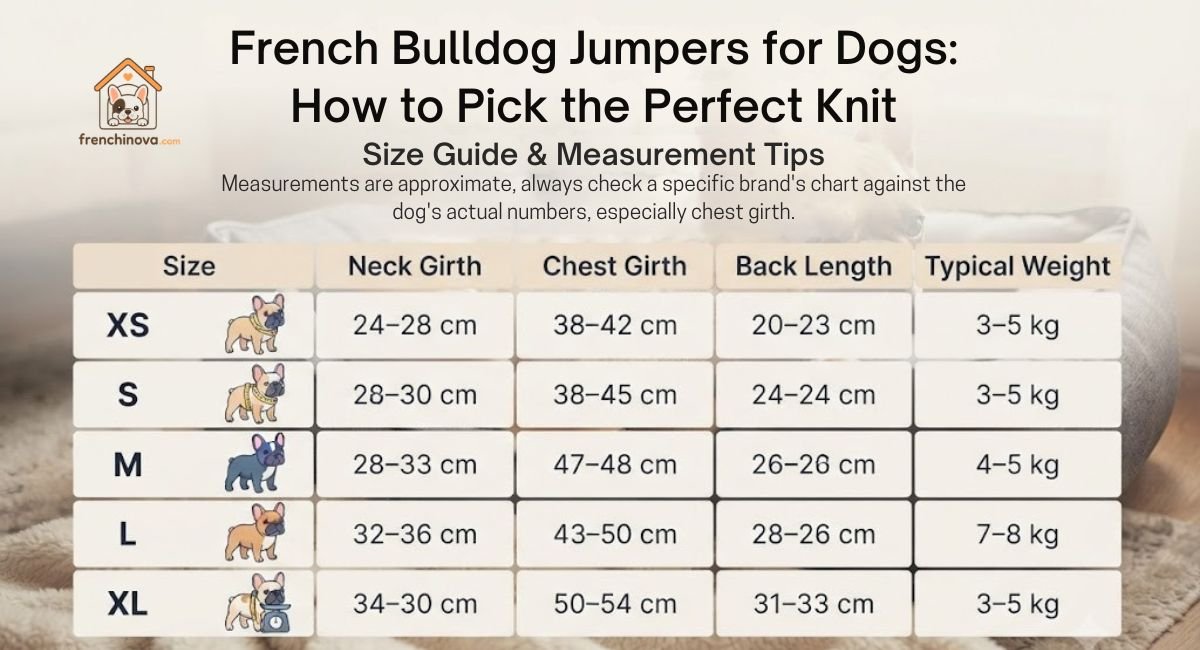
| Size | Neck Girth | Chest Girth | Back Length | Typical Weight |
| XS | 24–28 cm (9.5–11″) | 38–42 cm (15–16.5″) | 20–23 cm (8–9″) | 3–5 kg (6.5–11 lbs) |
| S | 28–32 cm (11–12.5″) | 42–48 cm (16.5–19″) | 23–26 cm (9–10″) | 5–7 kg (11–15 lbs) |
| M | 32–36 cm (12.5–14″) | 48–54 cm (19–21″) | 26–30 cm (10–12″) | 7–10 kg (15–22 lbs) |
| L | 36–40 cm (14–15.5″) | 54–60 cm (21–23.5″) | 30–33 cm (12–13″) | 10–13 kg (22–29 lbs) |
| XL | 40–44 cm (15.5–17″) | 60–66 cm (23.5–26″) | 33–36 cm (13–14″) | 13–16 kg (29–35 lbs) |
How to use the table:
- Measure the dog first, then match the chest girth row before anything else, it’s the tightest-fitting, most failure-prone spot
- If the dog falls between two sizes, size up on the chest and check that the back length doesn’t creep past the belly
- A snug chest with a slightly loose neck is fine; a snug neck with a tight chest is not, go up a size
- Frenchies vary a lot in build (compact vs. stockier, short-backed vs. slightly longer), so treat this table as a starting point ,a brand’s own breed-specific chart, if it has one, should win over generic small-dog sizing
Material Guide
Material decides comfort, and comfort decides whether the jumper gets worn.
- Cotton and cotton blends: soft, breathable, easy to wash; a reliable everyday pick
- Acrylic knits: warmth and stretch at a friendly price, though quality varies, so look for soft, non-pilling versions
- Fleece-lined options: bring the most warmth for cold months
- Wool: warm but can itch sensitive skin, and Frenchies are prone to skin sensitivities, so a soft wool blend or a lined wool jumper beats raw, scratchy wool against the skin
Whatever the material, machine-washable matters for a breed that sheds and gets grubby.
When to Reach for a Jumper
A jumper shines indoors and in mild outdoor cold:
- Around a drafty home
- On cool-but-not-freezing walks
- After baths
When temperatures genuinely drop, a jumper becomes a base layer under a proper coat rather than the whole solution.
Many owners keep a couple of lightweight jumpers for everyday wear and one heavier or fleece-lined option for the cold stretch, plus a warm spot to rest, like a cozy Frenchie dog bed away from drafts, to round out the warmth strategy.
Caring for Knitwear
Knit jumpers last longer with a little care.
- Wash on a gentle, cool cycle and air-dry flat to preserve shape and stop shrinkage
- Avoid hot water and tumble dryers, that’s how a perfectly sized jumper turns into a doll’s outfit
- Turn the jumper inside out before washing to reduce pilling
- Store knits folded rather than hung to keep them from stretching out at the neck
Common Mistakes Owners Make
- Over-the-head-only designs: turn dressing into a fight; back-fastening or stretchy step-in styles solve it
- Choosing by generic small-dog size instead of measuring: this is why the chest never fits
- Picking scratchy wool: the dog refuses to wear it, wasting money
- Going too long: covers the belly opening and makes potty breaks messy
All are easy to avoid once the breed’s shape is at the front of mind.
How do I measure my Frenchie for a jumper without a fitting?
Use a soft tape measure while the dog stands naturally, and take the chest measurement just behind the front legs, that’s the number most likely to make or break the fit.
Can Frenchies wear jumpers all winter?
A jumper works well for indoor drafts and mild cold, but on genuinely cold days, it should go under a proper coat rather than stand alone, a Frenchie’s thin coat and short muzzle mean the breed still struggles with prolonged outdoor cold even when dressed.
What material is safest for a Frenchie with sensitive skin?
Soft cotton blends or lined wool are gentler options; raw, scratchy wool is the most likely to trigger irritation.
The Bottom Line
The best French Bulldog jumpers for dogs respect the breed’s build first and look cute second: a chest-roomy, short-backed cut, a soft stretchy knit, an easy step-in or back-fastening design, and harness-friendly length. Match the weight to the weather, light cotton indoors, fleece-lined for the cold. Pick soft materials over scratchy ones, and wash gently to keep the fit. Get those basics right, and the humble jumper becomes the most-worn, most-loved piece in a Frenchie’s wardrobe.
For the full picture of dressing a Frenchie through every season, the main French Bulldog clothes guide ties it all together.

Auston is the founder of Frenchie Nova and a longtime French Bulldog owner. He writes practical, research-backed guides on Frenchie care, feeding, and health. Not a veterinarian — always consult your vet for medical concerns.