
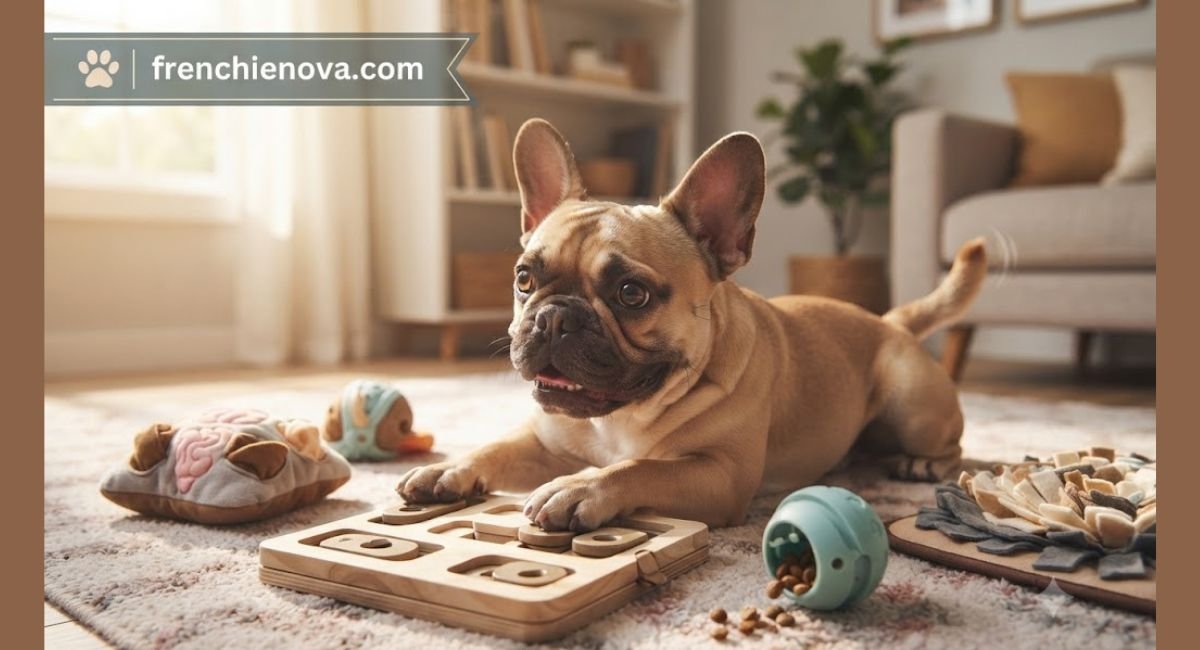
A tired dog is a good dog, but here’s what most owners miss: mental tiredness beats physical tiredness every time. A 20-minute puzzle session can wear a dog out more thoroughly than an hour-long walk, and it scratches an itch that exercise alone never reaches. That’s the whole promise of the best interactive dog toys, they turn a bored, couch-destroying dog into a focused, satisfied one. This guide covers puzzle toys, treat dispensers, and enrichment games, what each does, and the specific picks worth buying, including toys matched to your dog’s breed, for a smarter, calmer dog.
Affiliate disclosure: Frenchienova may earn a small commission from qualifying Amazon purchases made through links in this post, at no extra cost to the reader. Recommendations are based on independent research.
Table of Contents
Why Mental Stimulation Matters More Than Owners Think
Dogs were bred to do things, hunt, herd, retrieve, dig out vermin. Modern pet life gives them almost none of that, and the leftover drive has to go somewhere. Left unaddressed, it shows up as chewing, barking, digging, and the general restlessness that owners mistake for “needing more walks.”
Enrichment toys fill that gap. They give a dog a problem to solve, a reward to work for, and a job to focus on. The result is a mentally satisfied dog, which translates directly into calmer behavior at home. This matters even more for high-intelligence breeds, Border Collies, Poodles, Shepherds, and for flat-faced breeds like Frenchies and Pugs that can’t exercise hard without overheating. For them, brain games are often the best way to burn energy safely.
The science backs it up: cognitive enrichment is widely recommended by veterinary behaviorists as a tool for reducing anxiety and problem behaviors. It’s not a gimmick, it’s a genuine need.
Best Puzzle Toys for Problem Solving (Best Interactive Dog Toys)
Puzzle toys make a dog figure something out, slide, flip, lift, or nose a mechanism to find a hidden treat.
Top Pick: Nina Ottosson Puzzles (by Outward Hound) (Best for Problem Solving)
Nina Ottosson essentially invented the modern dog puzzle category, and her designs (now under Outward Hound) come in graded difficulty levels. Start a beginner on an easy slider puzzle and work up to multi-step challenges. Among cognitive dog toys, these are the gold standard.

- Dog Puzzle Toy – Level 2 Intermediate: Perfect for beginners or smart pups, this Nina Ottosson dog puzzle offers a 3-in-…
- Boredom Buster: 15 minutes of brain-engaging play equals 30 minutes of physical activity, giving dogs of all ages the ex…
- Engaging Puzzle Play: Keeps pets entertained while encouraging problem-solving and interactive play
Runner-Up: Trixie Activity Flip Board (Best Multi-Mechanism Puzzle)
Combines several different motions, flipping lids, sliding covers, lifting cones, in one board, so the dog has to learn multiple skills. Great for keeping a clever dog challenged.
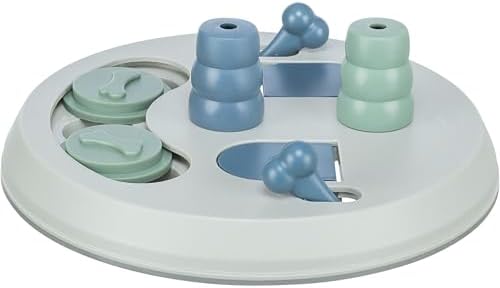
- LEVELING UP: TRIXIE’S Level 2 dog food puzzles provide more challenges for smart dogs by incorporating more obstacles an…
- MENTAL STIMULATION: 15 minutes of mental stimulation is equal to 30 minutes of physical exercise; TRIXIE food puzzle toy…
- ENRICHMENT FUN: Lift, flip & slideto discover treats and hidden levels; this interactive dog treat puzzle has different …
Best Treat Dispensing Toys
These reward a dog for working at the toy, slowly releasing treats or kibble as it rolls, nudges, or chews.
Top Pick: KONG Classic (Best All-Rounder Treat Dispenser)
Stuff it with kibble, peanut butter, or a frozen filling and a dog will work at it for ages. Freezing it makes it last far longer, a favorite trick for crate time and settling anxious dogs. Simple, durable, endlessly reusable. Among the best treat dispensing dog toys for sheer value.
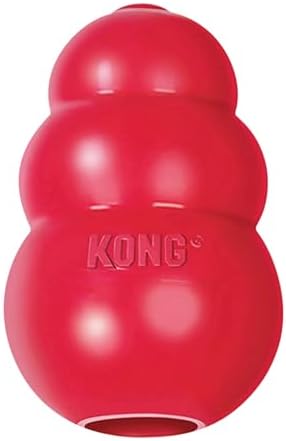
- Satisfy Instinctual Needs: The KONG Classic red rubber toy helps satisfy dogs’ instinctual needs and provides mental sti…
- Enticing Chew Toy for Dogs: This unique toy has an erratic and unpredictable bounce, keeping all breeds of dogs engaged …
- Treat-Filling Capabilities: The hollow interior allows for stuffing with kibble, peanut butter, or KONG Snacks or Easy T…
Also Great: PetSafe Busy Buddy (Best Adjustable Release)
Lets owners control how hard the treats are to get, scaling difficulty as the dog learns.
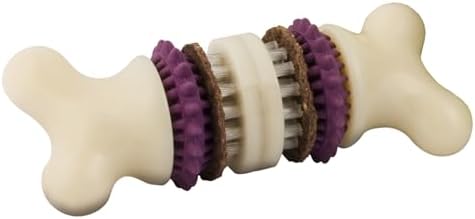
- Age Range Description: All Ages
- Included Components: Busy Buddy Bristle Bone (Medium)
- Special Features: Dispenses Treats0
Best Foraging and Sniffing Enrichment
Sniffing is deeply calming for dogs, it engages the part of the brain that processes their richest sense.
Top pick: Snuffle Mat (Best for Foraging Instinct)
A fabric mat with fabric strips that hide kibble in the folds. The dog snuffles through to find it, which mimics natural foraging and is wonderfully calming. Lick mats and snuffle mats for calming enrichment Excellent for slowing down fast eaters and for low-impact enrichment on rest days.
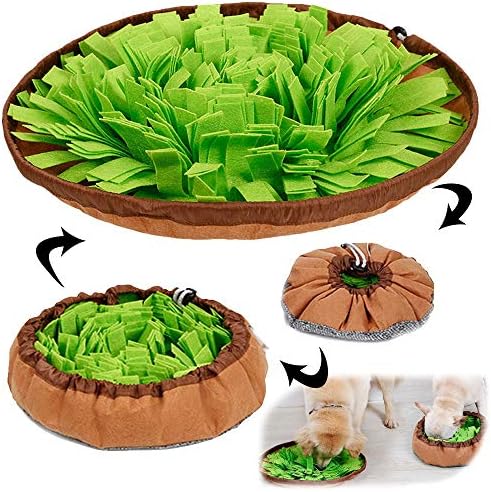
- ★ Dog Training Toys: It is a unique dog training mat that allows your dog to find snacks or small toys hidden in the mat…
- ★ Non-slip & Large & Portable: The bottom is a non-slip cloth that effectively holds the mat and prevents the dog from m…
- ★ Dual-use Design: The feeding mat can be folded into a bowl. Stick to the good habits of your dog or use it as an olfac…
Runner-Up: Outward Hound Hide-A-Squirrel (Best Plush Foraging Puzzle)
The dog digs squeaky squirrels out of a plush log, then the owner re-hides them. Taps foraging instinct with a play twist, and it’s gentle enough for almost any dog.

- Hide & squeak: this dog puzzle is the perfect way to keep your furry friends engaged for hours; just fill the trash can …
- Interactive dog toy: toss the stuffed trash can, place it on the ground, or take the squeaky plush dog toys out for a ga…
- Mentally stimulating: keep boredom at bay and engage your curious canine with these dog puzzles for smart dogs
Toys That Pair With Crate Time
Crate-bound dogs, whether for training, travel, or rest, benefit enormously from a safe toy that keeps them occupied. A frozen stuffed KONG is the classic choice: long-lasting, mentally engaging, and settling. Look for crate-safe toys with no small parts that could come loose unsupervised, and avoid anything with squeakers a dog might dismantle when alone. Treat-stuffable rubber is almost always the safest crate companion.
How to Choose and Use Interactive Toys Well
A few tips to get the most out of them:
- Start easy: A puzzle that’s too hard frustrates a dog and kills interest. Begin simple and build up as the dog gets the hang of it.
- Supervise puzzle toys: Many have removable pieces a determined dog could chew off and swallow, these are activity toys, not unsupervised chew toys.
- Rotate them: Even the best puzzle gets boring if it’s always out. Rotating keeps novelty high.
- Match difficulty to the dog: A first-timer and a seasoned puzzle pro need very different challenges.
- Use mealtime: Feeding through a puzzle or snuffle mat instead of a bowl turns a 30-second meal into 15 minutes of enrichment.
Do Interactive Dog Toys Actually Reduce Bad Behavior?
Often, yes, when the bad behavior comes from boredom or pent-up mental energy, which a lot of it does. Chewing, barking, digging, and restlessness frequently ease once a dog has a real outlet for its problem-solving drive. Cognitive enrichment is widely recommended by veterinary behaviorists for exactly this reason. It won’t fix every issue, but for the boredom-driven ones it’s one of the most effective and underused tools.
How Long Can a Dog Play With a Puzzle Toy?
Most dogs engage with a puzzle for 10–20 minutes before they solve it or lose interest, which is often enough to tire them mentally. The trick is matching difficulty to the dog and rotating puzzles so they stay novel. Treat-dispensing toys like a stuffed, frozen KONG can stretch much longer, sometimes 30 minutes or more, which makes them great for crate time and settling.
What Are The Best Interactive Toys for Dogs That Get Bored Easily?
For quick-to-bored dogs, graded puzzles like the Nina Ottosson range work well because the difficulty can keep climbing, and multi-mechanism boards like the Trixie Flip Board keep them guessing. Pairing puzzle work with a snuffle mat and a rotating stash of treat dispensers gives enough variety that nothing gets stale. Rotation is the real secret, even a great toy bores a dog if it’s always out.
Are Puzzle Toys Safe to Leave With a Dog Unsupervised?
Generally no. Most puzzle toys have removable pieces, sliders, pegs, lids that a determined dog could chew off and swallow, so they’re best used as supervised activity toys. For unsupervised time, a solid treat-stuffable rubber toy with no small parts (like a KONG) is the safer choice. Knowing which toys are “supervised only” versus “leave-alone safe” prevents most accidents.
Can Interactive Toys Replace Walks and Exercise?
No, they complement physical exercise, they don’t replace it. Dogs still need movement for their physical health. What enrichment toys add is mental tiredness, which physical exercise alone doesn’t fully deliver. The best routine combines both: a walk or play session for the body, and puzzles or foraging for the mind. Flat-faced breeds that can’t exercise hard are the exception where brain games carry more of the load.
How do I Introduce a Puzzle Toy to a Beginner Dog?
Start far easier than seems necessary. Make the first few rounds almost free, treats barely hidden, mechanisms left open, so the dog learns the toy pays off and builds confidence. Increase difficulty only once it’s clearly got the idea. A puzzle that’s too hard too soon just frustrates the dog and kills interest, which is the most common reason these toys end up in a drawer.
The Bottom Line
The best interactive dog toys do something a walk can’t: they tire a dog’s mind, which is often exactly what a restless, bored, or anxious dog needs most. Start with a stuffable KONG for everyday enrichment, add a graded Nina Ottosson puzzle for problem-solving, and use a snuffle mat for calming foraging. Match the difficulty to the dog, supervise the puzzles, and rotate to keep things fresh, and a bored troublemaker turns into a focused, satisfied companion.
Always supervise puzzle and treat-toy sessions, and consult a veterinarian or qualified behaviorist about enrichment for a dog with significant anxiety or behavioral concerns.

Auston is the founder of Frenchie Nova and a longtime French Bulldog owner. He writes practical, research-backed guides on Frenchie care, feeding, and health. Not a veterinarian — always consult your vet for medical concerns.