


If you’ve Googled this with one hand while waving the other in front of your nose, you’re in good company. French Bulldog owners ask this more than almost any other breed-specific question, and there’s a real biological reason behind it.
Frenchies top every “gassiest dog breeds” list veterinarians publish. The good news? Most of it is fixable once the root causes are understood. Why is French bulldog so gassy? A flat-faced anatomy, a famously sensitive gut, and a few common diet mistakes do most of the damage, and each one has a workaround that doesn’t require a vet visit.
Here’s what’s actually going on, and what works to fix it.
Table of Contents
Quick answer: why French Bulldogs fart so much
French Bulldogs fart more than most breeds because their flat (brachycephalic) faces cause them to swallow air while eating and breathing, their digestive tracts are shorter and more sensitive than average, and they react badly to common ingredients like dairy, soy, and legumes. Slowing their eating, switching to a limited-ingredient diet, and adding a dog-specific probiotic resolves most cases within a few weeks.
The #1 reason: Their Flat Face Changes Everything (why French bulldog so gassy)
It starts at the snout.
French Bulldogs are a brachycephalic breed, selectively bred for that smushed, expressive face that defines the breed. According to Dogster’s vet-reviewed breed health overview, that same anatomy creates brachycephalic obstructive airway syndrome (BOAS), a common condition in these dogs caused by elongated palates, narrow tracheas, and stenotic nares that create significant breathing difficulties.
So what does breathing have to do with farting? More than most owners realize.
Because Frenchies can’t move air efficiently through their nose, they breathe and eat through their mouth. Every meal becomes an air-swallowing event, a condition called aerophagia. All that swallowed air has to go somewhere, and the digestive tract has exactly one exit.
The link runs even deeper than air-swallowing alone. A 2018 study in the Journal of Small Animal Practice (Kaye et al.) found that 93% of French Bulldogs presenting with brachycephalic airway syndrome also showed gastrointestinal signs, and those signs improved after corrective surgery. The face shape and the gut problems are connected, not coincidental.
This part of the equation can be reduced, but it can’t be eliminated without surgical intervention.
Why French Bulldog farts smell so bad
This is the question most owners are too embarrassed to type in full.
The smell comes from sulfur-containing gases, mainly hydrogen sulfide, produced when gut bacteria ferment undigested protein and fat. Frenchies’ shorter digestive tracts move food through faster, which leaves more undigested material for bacteria to break down at the end of the line. More fermentation equals more sulfur. More sulfur equals that legendary room-clearing odor.
A sudden change in smell, especially if it turns sharply rotten or sulfuric, usually points to a diet trigger or a gut bacteria imbalance (called dysbiosis), not just a one-off bad meal.
Their digestive system is built differently
It’s not just the face. French Bulldogs have shorter digestive tracts that process food faster than most breeds, which limits how much can be properly broken down before bacteria take over.
When food isn’t fully digested, either because it’s moving too fast or because the right enzymes aren’t present in sufficient amounts, gut bacteria ferment the leftovers. That fermentation is the direct source of foul-smelling gas.
Digestive enzymes like amylase, lipase, and protease handle carbs, fats, and proteins respectively. When they’re insufficient, fermentation takes over, which is why enzyme and probiotic supplements have become so popular among Frenchie owners. Strains like Lactobacillus acidophilus and Bifidobacterium animalis are the ones most commonly recommended for dogs with sensitive guts. Product-wise, Purina FortiFlora is widely sold and frequently suggested by vets for short-term gas issues.
Foods that make French Bulldog gas unbearable
Diet is the single biggest variable in how bad the flatulence gets. Some ingredients are practically guaranteed to trigger a smell wave within an hour.
Foods to avoid:
- Dairy products: Most adult Frenchies are lactose intolerant. Milk, cheese, and yogurt feed the wrong bacteria fast
- Cruciferous vegetables: Broccoli, cabbage, cauliflower, and Brussels sprouts are notorious gas producers
- Beans and legumes: Peas and lentils, now common as filler substitutes in grain-free foods, are a big one
- Soy, wheat, and corn: Common allergens that trigger bloating and digestive sensitivity
- High-fat foods and table scraps: Slow digestion and push fermentation harder
- Low-quality kibble: Cheap fillers and by-products feed the wrong gut bacteria
What to feed instead:
Single-source proteins tend to be the least reactive, turkey, rabbit, and salmon are gentle starting points. Frenchie owner forums consistently report success with novel proteins like bison, rabbit, and goat for dogs that don’t tolerate beef or chicken. Simple carbohydrates like sweet potato and pumpkin are easier on a sensitive gut than grain or legume fillers. Limited-ingredient diets help identify the specific trigger by process of elimination, give each elimination 2–3 weeks before evaluating.

- 100% HUMAN GRADE DOG FOOD: All JustFoodForDogs meals are made with fresh whole foods that are gently cooked for optimal …
- PROVEN HEALTHY: Our food is 40% more digestible than kibble. Pet parents have seen improvements in their dog’s health, i…
- SHELF STABLE DOG FOOD: Thanks to innovative Tetra Pak packaging, this fresh dog food is free from preservatives and can …
Fast eating makes everything worse
Frenchies tend to inhale food like a vacuum cleaner, and that habit causes most of the gassiness.
When food gets gulped instead of chewed, two things happen at once: more air gets swallowed, and food enters the stomach in chunks too big to digest efficiently. The result is a fermentation spike, and a room-clearing event within the hour.
Two simple fixes go a long way:
- Slow-feeder bowls: bowls with ridges and obstacles that force the dog to eat around them. Most owners report a noticeable difference within days
- Raised feeding bowls: elevating the bowl reduces neck strain and the angle of air intake during eating. Frenchie owner communities report this combined with a slow-feeder is the most effective setup
Splitting one daily meal into two or three smaller ones also paces digestion and prevents gas buildup at any single point in the day.
When should I worry about my French Bulldog’s gas?
Most Frenchie gas is harmless. But there’s a point where it crosses from breed quirk into vet-visit territory. A vet should be called if excessive gas appears alongside any of these:
- A bloated or distended stomach: this can signal gastric dilatation, which is a medical emergency
- Consistent diarrhea or loose stools: points to inflammatory bowel disease (IBD), parasites, or a food intolerance that needs proper diagnosis
- Blood in the stool: never ignore this, with or without gas
- Loss of appetite or lethargy: a gassy dog that’s also low-energy may be dealing with pancreatitis or a bacterial infection
- Sudden worsening with no diet change: often points to gut dysbiosis or an underlying infection
If signs of BOAS are present, loud snoring, blue-tinged gums, or collapse after exercise, surgical correction can do more than reduce gas. It can be life-saving, since severe BOAS restricts a dog’s ability to get enough oxygen.
Can probiotics help my French Bulldog’s gas?
Yes, dog-specific probiotics consistently help reduce Frenchie gas by rebalancing the gut microbiome and limiting the bacterial fermentation that produces foul-smelling gas.
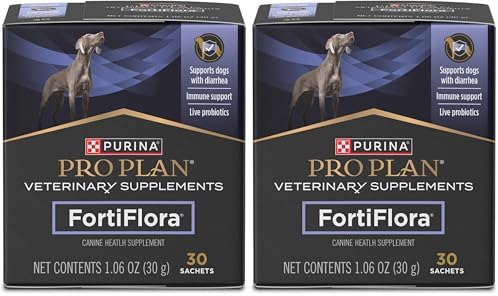
Look for multi-strain dog probiotics (not human-grade ones) that include Lactobacillus and Bifidobacterium species. Veterinary-sold options like Purina FortiFlora are a common starting point. Most owners notice a difference within 2–4 weeks of consistent use, especially when combined with a cleaner diet.


Is obesity making it worse?
Often, yes, and it’s an underrated factor.
Frenchies that are even slightly overweight are at much higher risk of chronic gas. Extra weight slows digestion, increases bloating pressure, and worsens the breathing struggles that drive air-swallowing in the first place. Keeping a Frenchie at a healthy weight protects against gas, joint issues, and BOAS flare-ups all at once.
7 practical ways to reduce French Bulldog farts
None of these are complicated. All of them work:
- Switch to a limited-ingredient, high-quality diet. Cut common triggers one at a time, dairy first, then grains, then legumes. Give each change 2–3 weeks
- Use a slow-feeder bowl. A single change that often makes a noticeable difference within days
- Try a raised bowl alongside the slow-feeder. Reduces the eating angle and lowers air intake
- Add a digestive enzyme supplement. Given before meals to break down proteins, fats, and carbs more completely
- Introduce a dog-specific probiotic. Multi-strain options like FortiFlora rebalance gut bacteria over 2–4 weeks
- Walk daily, 30 to 60 minutes split between movement and play. Exercise keeps the digestive tract moving and helps prevent gas buildup
- Cut table scraps completely. Human food disrupts gut bacteria for days after a single serving
For acute flare-ups, some vets approve a small dose of simethicone (the active ingredient in Gas-X), but never administer it without veterinary guidance, since dosing and inactive ingredients (like xylitol, which is toxic to dogs) need verification first.
The bottom line
French Bulldogs fart so much because of three overlapping reasons baked into the breed: their flat faces cause air-swallowing, their shorter digestive tracts ferment food faster, and their sensitive guts react poorly to common kibble ingredients. None of that can be eliminated, but most of it can be managed.
A clean diet, a slow-feeder bowl, and a quality probiotic resolve the majority of cases. If those don’t help, or other symptoms appear, a vet visit is the right next step. A Frenchie can’t say when something’s off, but the gut usually will.
Auston is the founder of Frenchie Nova and a longtime French Bulldog owner. He writes practical, research-backed guides on Frenchie care, feeding, and health. Not a veterinarian, always consult your vet for medical concerns.

Auston is the founder of Frenchie Nova and a longtime French Bulldog owner. He writes practical, research-backed guides on Frenchie care, feeding, and health. Not a veterinarian — always consult your vet for medical concerns.