

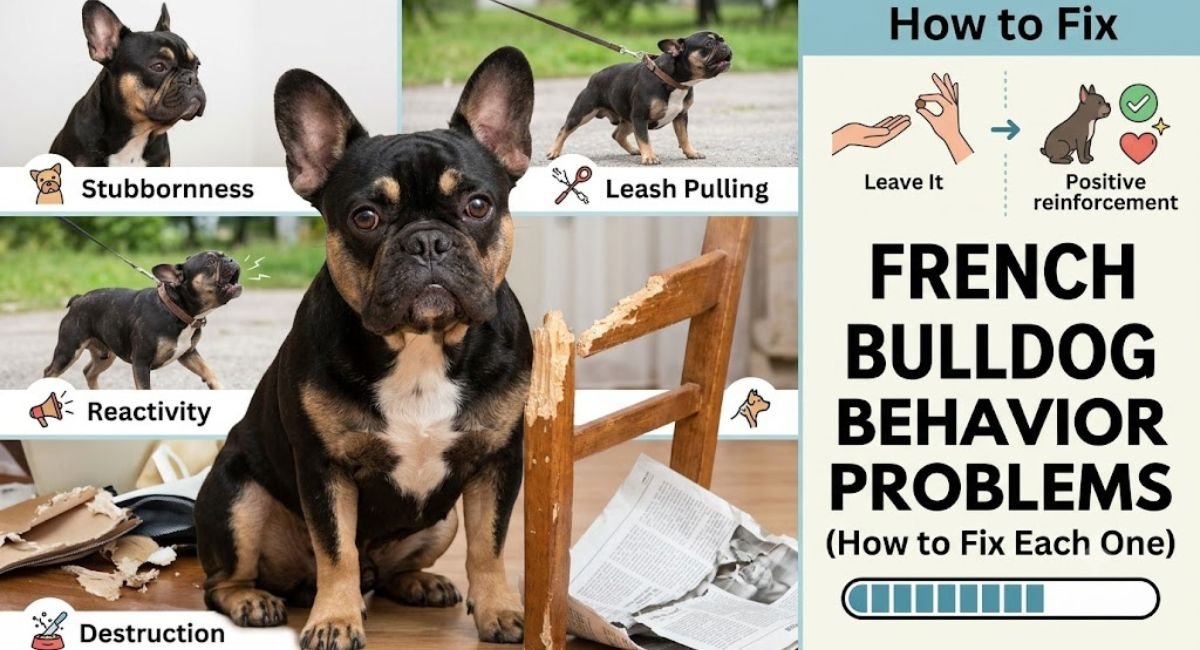
A Frenchie can melt your heart with one head tilt, then spend the next hour screaming at the front door because you dared to make a coffee. That mix of pure charm and pure stubbornness is exactly why so many owners end up searching for answers.
The good news? Most French Bulldog behavior problems aren’t random bad temper, they trace back to the breed’s wiring as a velcro companion dog. Once you know the “why,” the fixes get a lot simpler.
Below are the nine issues Frenchie owners run into most, with practical, trainer-backed ways to handle each one.
Table of Contents
Why Frenchies Behave the Way They Do
French Bulldogs were bred for one job: keeping people company. They don’t just enjoy being near their humans, they’re built to need it. That single trait explains a huge share of their quirks, from the clinginess to the meltdowns when left alone. Layer on a famously independent streak and a flair for drama, and you get a dog that’s affectionate, funny, and occasionally a tiny dictator in the living room.
It helps to remember that “stubborn” rarely means “dumb.” Frenchies are smart enough to ask what’s in it for me before following a command. Work with that instead of against it, and training gets far easier.
9 French Bulldog Behavior Problems
1. Separation Anxiety
This is the big one. Because Frenchies bond so tightly with their people, many struggle when left alone, sometimes panicking within minutes. Signs include nonstop barking or howling, destructive chewing, pacing, and accidents indoors, even in a fully house-trained dog.
The fix: Build alone-time slowly. Start with very short departures, leave the room for 30 seconds, then a minute, then five, and only reward calm behavior, never the whining. A stuffed food puzzle or a long-lasting chew gives your Frenchie something positive to associate with your absence.
Keep arrivals and departures low-key so leaving stops feeling like a big event. If the panic is severe or leads to self-injury, a certified veterinary behaviorist can build a desensitization plan and, in some cases, recommend medication.
2. Stubbornness and Selective Hearing
Ask a Frenchie to sit when there’s nothing in it for them, and you’ll often get a blank stare. This selective listening frustrates new owners, but it’s a motivation problem, not a defiance problem.
The fix: Keep sessions short, five to ten minutes, and high-value. Use small, soft treats they actually love, mark the exact moment they get it right, and end while they’re still winning. Consistency matters more than repetition.
If “off the sofa” is the rule, it’s the rule even when they look heartbreakingly cute. Mixed messages are what truly confuse this breed.
3. Excessive Barking, Whining, and “Screaming.”
Frenchies aren’t heavy barkers, but they are wildly expressive. Many owners describe a signature “scream” or “yodel” when their dog wants attention or feels frustrated. Reward that noise once, and you’ve taught them it works.
The fix: Figure out the trigger first, boredom, attention-seeking, or a specific sound. Never hand over a treat or attention mid-noise. Wait for a few seconds of silence, then reward the quiet. Pair this with enough daily mental and physical stimulation, since a bored Frenchie is a loud Frenchie.
4. Destructive Chewing
Shredded shoes and gnawed furniture usually come down to one of three things: teething, boredom, or stress from being left alone. Puppies especially explore the world with their mouths.
The fix: Rotate a few sturdy chew toys so they stay novel, and redirect to the toy the second your Frenchie targets something off-limits. Plenty of exercise burns the energy that fuels destruction. There’s a light at the end of the tunnel too, puppy chewing typically eases up around eight months as the adult teeth settle in.
5. Clingy “Velcro Dog” Behavior
Following you from room to room sounds adorable until you can’t shower in peace. Clinginess is normal for the breed, but unchecked it can tip into full-blown separation anxiety.
The fix: Teach independence in small doses while you’re still home. Reward your Frenchie for settling on their own bed a few feet away, then gradually increase the distance and time. The goal isn’t less affection, it’s a dog that feels secure even when you’re not within paw’s reach.
6. Leash Pulling
A small dog can still drag you down the block. Pulling usually means the Frenchie has learned that lunging forward gets them where they want to go faster.
The fix: Stop walking the instant the leash goes tight, and only move again once it slackens. Reward your dog for walking near your side. A well-fitted harness is also kinder to a Frenchie’s airway than a collar, which matters a lot for a flat-faced breed prone to breathing issues.
7. Jumping Up on People
That excited leap at guests is friendly in intent but a habit worth curbing, especially around kids and older relatives.
The fix: Ignore the jump completely. No eye contact, no pushing away (which reads as play), no talking. Reward all four paws on the floor. Asking for a “sit” as an alternate greeting gives your Frenchie a job to do instead of bouncing.
8. Begging and Food Obsession
Frenchies are food-motivated, which is great for training and terrible at dinnertime. Give in once at the table, and you’ve signed up for a lifetime of pleading eyes.
The fix: Never feed from your plate, and ask everyone in the house to hold the same line. Send your dog to a designated spot during meals and reward them there. That food drive is a gift in training sessions, just keep it off the dining table.
9. Aggression Toward Other Dogs or People
Despite the tough-guy face, Frenchies aren’t an aggressive breed. When aggression does show up, growling, snapping, lunging, it’s usually rooted in fear, poor socialization, or resource guarding rather than a mean streak.
The fix: Early, positive socialization is the best prevention. For a dog that already reacts, gradual exposure works: keep enough distance that your Frenchie notices another dog without reacting, reward the calm, and slowly close the gap over many short sessions.
Genuine aggression, especially fear-based snapping or biting, is a job for a certified behaviorist, not trial and error at home.
At What Age Do French Bulldogs Calm Down?
Most Frenchies mellow noticeably between two and three years old, as they move past the puppy and adolescent stages. Hyper energy, frantic zoomies, and the worst of the chewing usually fade in that window, though a sudden, dramatic shift in energy or focus is always worth a vet check, since hyperactivity can occasionally have a medical cause.
What bad habits do French Bulldogs have?
French Bulldogs tend to pick up a handful of stubborn habits: excessive begging at the table, nipping during play, resource guarding over food or toys, leash pulling, jumping on people, and occasional stubborn refusal to listen. Most of these come from their strong personality and their deep need for attention.
The good news is that none of these are “bad dog” traits, they’re learned behaviors, which means they can be unlearned. Begging usually starts because someone slipped a scrap from the plate once. Guarding often shows up in dogs that feel they have to protect what’s theirs. Catching these habits early, staying consistent, and rewarding the behavior you do want will fix most of them faster than any correction ever could.
How to correct aggressive behavior in dogs?
Start by figuring out why the dog is reacting, fear, pain, guarding, or feeling cornered are the most common triggers. Avoid punishment, since it usually makes aggression worse. Instead, remove the trigger when possible, reward calm behavior, and use slow desensitization to help the dog feel safe.
A vet check should come first, because sudden aggression can point to pain or an underlying health issue. Once that’s ruled out, the focus shifts to counter-conditioning: pairing the thing that upsets the dog with something good, like treats or praise, at a distance the dog can handle. For serious or escalating aggression, a certified dog behaviorist or trainer is worth the investment, they can read the warning signs most owners miss and build a safe, step-by-step plan.
Why is my French Bulldog misbehaving?
A French Bulldog usually misbehaves for one of a few reasons: boredom, too little exercise or mental stimulation, anxiety (especially when left alone), inconsistent rules at home, or a bid for attention. Frenchies are smart and emotionally sensitive, so unmet needs tend to show up as “bad” behavior.
Think of misbehavior as a message rather than defiance. A bored Frenchie chews. An anxious one barks, paces, or has accidents. A dog that gets attention only when it acts up learns that acting up works. Before correcting the behavior, it helps to ask what the dog might be missing, more walks, a puzzle toy, a steadier routine, or simply more quality time. Fix the root cause and the behavior often sorts itself out.
How do you discipline a French Bulldog?
The best way to discipline a French Bulldog is through positive reinforcement, not punishment. Reward good behavior with treats and praise, redirect unwanted behavior toward something acceptable, and stay calm and consistent. Frenchies respond poorly to yelling or physical correction, it only breeds fear and stubbornness.
Consistency matters more than intensity. If jumping isn’t allowed, it can’t be okay sometimes and off-limits other times, that mixed message confuses the dog. A firm “no,” followed by ignoring the behavior or redirecting to a sit, works far better than scolding. Timing is everything too: corrections and rewards only land when they happen within a second or two of the behavior. Patience pays off, because this breed learns through trust, not fear.
The Bottom Line
Almost every French Bulldog behavior problem is manageable with the same three ingredients: patience, consistency, and positive reinforcement. Punishment and dominance tactics tend to backfire with this sensitive, people-focused breed. Figure out what’s driving the behavior, reward the version of your dog you want to see more of, and keep the rules the same every single day.
If anything points to fear-based aggression, self-harm during anxiety, or a sudden change you can’t explain, loop in your vet or a certified veterinary behaviorist. For your Frenchie’s health and safety, professional guidance beats guesswork, your dog’s wellbeing is worth that call.

Auston is the founder of Frenchie Nova and a longtime French Bulldog owner. He writes practical, research-backed guides on Frenchie care, feeding, and health. Not a veterinarian — always consult your vet for medical concerns.