

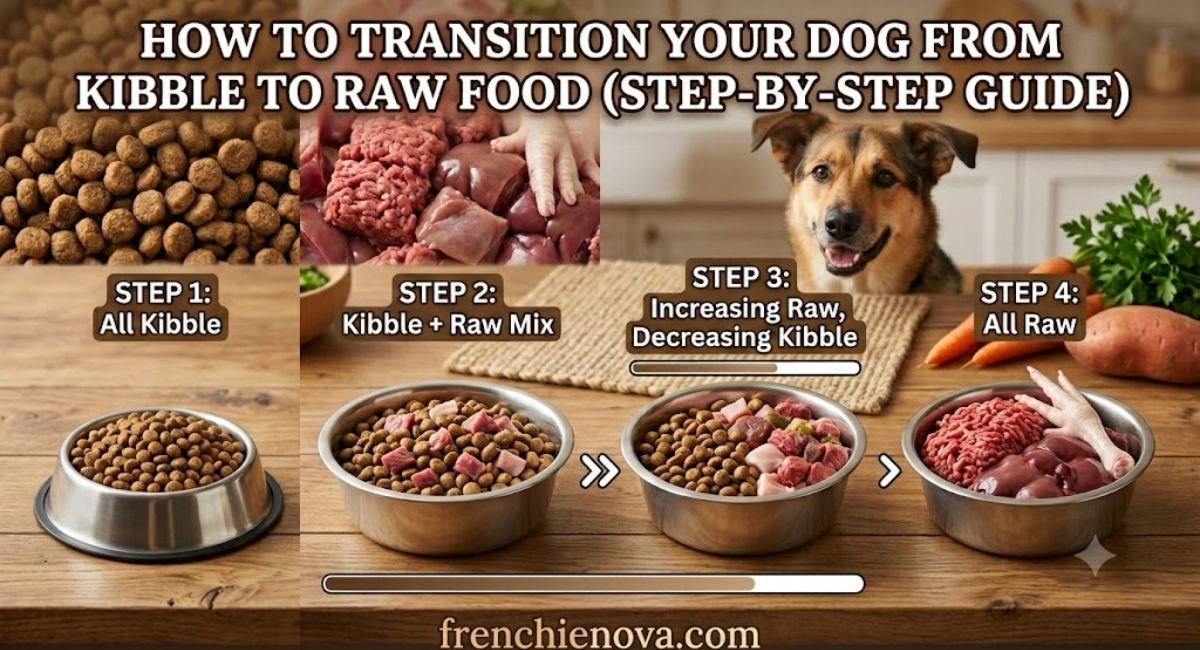
Switching a dog to raw usually goes one of two ways: a smooth week, or a messy stretch of loose stools and a dog turning its nose up at the bowl. The difference almost always comes down to two things most guides gloss over, going slow enough and getting the portion size right. “Add some raw and increase it” isn’t a plan.
This guide walks through the switch one step at a time, including the exact math for how much raw food replaces the kibble coming out.
Table of Contents
Why a Gradual Transition Beats Going Cold Turkey
A dog’s digestive system tunes itself to whatever it eats. Years of kibble means the pancreas is geared to break down a high-carbohydrate, processed food, and the gut microbiome has settled into that pattern. Raw food asks for a different mix of enzymes and a more acidic stomach environment.
Switch everything overnight, and the system has to scramble to catch up. That mismatch is what causes the loose stools, gas, and vomiting people blame on the raw food itself, when the real culprit is usually the speed of the change. A gradual transition gives the gut time to adjust, which is why most raw feeders recommend easing in over 7 to 10 days.
Some healthy young dogs handle a fast “cold turkey” switch fine. But gradual is the safer default, and it’s the method this guide follows.
What You Need Before You Start
A short setup list keeps the switch from stalling halfway.
Pick one gentle, single protein to start, many feeders begin with a lean poultry or a novel protein the dog hasn’t reacted to before. Have the dog’s ideal body weight on hand (not necessarily its current weight), since that’s what the portion math runs on. Stock a few digestive aids in case of loose stools, plain probiotics or a little plain pumpkin are common choices. And clear the calendar for the first day or two of any big change, ideally over a weekend, so extra potty trips aren’t a problem.
BARF vs. PMR: Which Raw Feeding Model Is Best for Frenchies?
Step-by-Step Guide: How to Transition Your Dog From Kibble to Raw Food
Step 1: Calculate the Right Daily Raw Portion
This is the step most guides skip, and it’s the one that decides whether portions stay sensible through the switch. Raw food isn’t measured in kibble scoops, adult dogs eat roughly 2–3% of their ideal body weight in raw food per day. Feed nearer 2% for a dog that needs to lose weight and toward 3% for a very active one.
The key idea during a transition is equivalence: when you remove a quarter of the kibble, you replace it with a quarter of the dog’s daily raw target, not a matching volume of meat. Kibble is calorie-dense and dry; raw is about 70% moisture, so equal scoops don’t mean equal calories. Run the daily raw number first, then portion the phases below as fractions of it.
Raw feeding made easy
Calculate raw food portions for your dog
Step 2: Follow the Day-by-Day Transition Schedule
With the daily raw target set, ease raw in while easing kibble out. Watch the stool at each stage, firm stool means move forward, loose stool means hold or step back a day.
A reliable 7–10 day schedule looks like this:
- Days 1–3: 25% raw, 75% kibble. Feed the raw and kibble as separate meals where possible (raw in the morning, kibble at night is a common split).
- Days 4–6: 50% raw, 50% kibble. By now most dogs show firmer, smaller stools.
- Days 7–9: 75% raw, 25% kibble.
- Day 10: 100% raw.
Sensitive dogs, seniors, and long-time kibble eaters often need longer, two to four weeks, sometimes more. There’s no prize for finishing fast. If a stage causes upset, drop back to the last comfortable and extend it.
Step 3: Stick to One Protein, Then Build Variety
Hold that single starter protein through the whole transition. One ingredient makes it obvious whether a reaction is the new food or just the adjustment. Adding five proteins at once turns troubleshooting into guesswork.
Once the dog is fully on raw and stools have been firm for a week or two, start rotating proteins one at a time, spaced about a week apart. Variety is what makes a raw diet nutritionally rounded over time, and raw meaty bones and organ meat get introduced gradually in this same patient, one-at-a-time way.
Daily calorie needs
How many calories does your dog need?
What to Expect During the Switch (and the “Detox” Myth)
Some short-term changes are normal as the gut adapts: slightly softer stools for a day or two at each new ratio, a bit more gas, or a temporary dip in appetite. These usually pass quickly, and a hallmark of a healthy raw transition is smaller, firmer, less smelly stools once the dog settles.
Here’s something most transition guides won’t tell you: many of them describe a “detox phase”, shedding, runny eyes, skin flare-ups, as a normal, even good sign that the body is “purging toxins.” That idea isn’t established by veterinary science, and treating genuine symptoms as harmless detox can delay real care. Persistent diarrhea beyond a couple of days, repeated vomiting, lethargy, or any sign of pain are not detox. They’re reasons to slow down and call a vet.
Can You Mix Kibble and Raw in the Same Bowl?
This one splits the raw feeding world. Some sources insist kibble and raw digest at different rates and should be fed as separate meals; others point out dogs are scavenging carnivores that handle mixed meals fine, and that mixing is unavoidable during any gradual switch. The practical middle ground: feeding them in separate meals during the transition is a sensible, low-risk default, especially for a sensitive dog, but a brief overlap while transitioning is not the problem it’s sometimes made out to be.
Common Mistakes to Avoid
Most failed switches trace back to a handful of errors. Rushing the timeline tops the list, it’s the single biggest cause of the diarrhea people wrongly blame on raw food. Eyeballing portions instead of running the 2–3% math is next, and it leads to slow weight gain or an underfed dog.
A few more: introducing multiple proteins at once, so a reaction can’t be traced; feeding cooked bones, which can splinter (bones go in raw or not at all); and ignoring food hygiene, since raw meat needs sealed storage, clean surfaces, and washed hands. Finally, skipping the vet conversation, especially for a dog with a history of IBD, pancreatitis, or a compromised immune system, where a slow, supervised switch isn’t optional.
Kibble-to-Raw Transition: Quick-Start Tips
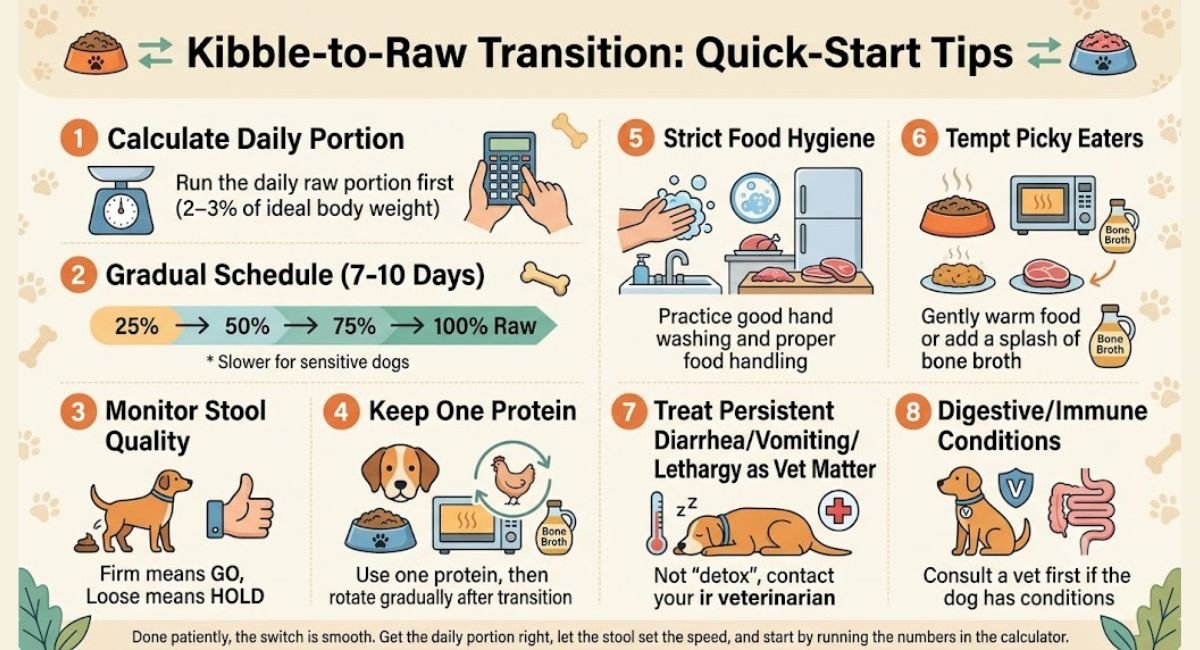
- Run the daily raw portion first (2–3% of ideal body weight) using the calculator
- Move through 25% → 50% → 75% → 100% raw over 7–10 days, slower for sensitive dogs
- Let stool quality set the pace, firm means go, loose means hold
- Keep one protein through the whole transition, then rotate gradually
- Feed bone raw, never cooked, and practice strict food hygiene
- Tempt a picky eater by gently warming the food or adding a splash of bone broth
- Treat persistent diarrhea, vomiting, or lethargy as a vet matter, not “detox”
- Talk to a vet first if the dog has any digestive or immune condition
Done patiently, the switch is far less dramatic than the horror stories suggest. Get the daily portion right, let the stool set the speed, and the rest is mostly waiting. Start by running the numbers in the calculator, then ease into day one.
The Bottom Line
Switching a dog from kibble to raw doesn’t have to be dramatic. The horror stories people share online almost always trace back to the same two mistakes: moving too fast and skipping the portion math. Get those two things right, and the rest of the process is mostly patience.
Run the daily raw target first, 2–3% of ideal body weight, before day one. Work through the 25/50/75/100 schedule over 7–10 days, letting stool quality set the pace rather than the calendar. Stick to one protein the whole way through, and hold off on bones and organs until the dog is fully transitioned and settled.
Short-term loose stools or a day of reluctance at the bowl are normal as the gut adjusts. What’s not normal, and not “detox”, is persistent diarrhea, vomiting, or lethargy. Those are vet calls, not things to wait out.
Done patiently, most dogs land on raw without drama. The bowl gets cleaner, the stools get smaller, and the pickiest eaters usually come around once the food warms up a little. Start with the numbers, trust the schedule, and let the dog’s gut set the pace.
Raw feeding made easy
Calculate raw food portions for your dog
Daily calorie needs
How many calories does your dog need?
This guide draws on raw feeding resources and veterinary sources, including the American Veterinary Medical Association (AVMA) and AAFCO nutritional standards, alongside current information on raw feeding transitions. Reported benefits of raw feeding remain largely anecdotal rather than established by controlled studies, and the “detox” phase described by some sources is not a veterinary-recognized phenomenon. Always consult a veterinarian before changing a dog’s diet, especially for puppies, seniors, or dogs with existing health conditions.

Auston is the founder of Frenchie Nova and a longtime French Bulldog owner. He writes practical, research-backed guides on Frenchie care, feeding, and health. Not a veterinarian — always consult your vet for medical concerns.