

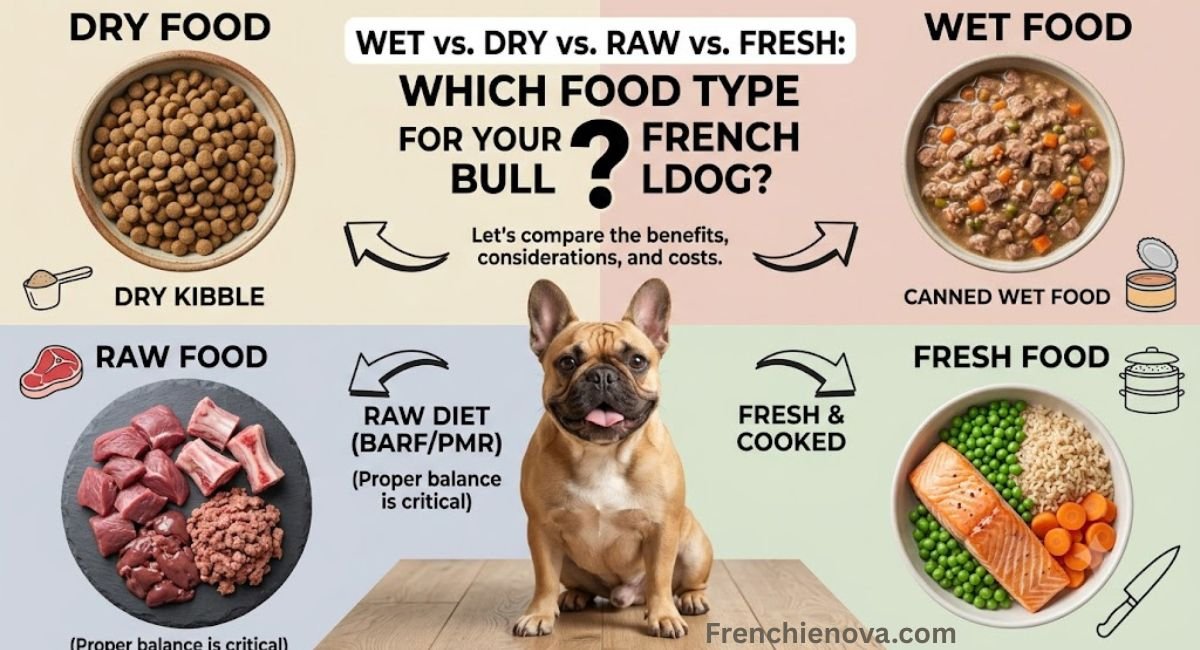
Walk down the dog food aisle today, and the simple choice your parents made, kibble or canned, has exploded into a wall of options. Now there’s fresh food delivered in pre-portioned packs, raw meals in the freezer, and bags of kibble making competing health claims on every panel. For a Frenchie owner already juggling a sensitive stomach and a long allergy list, it’s a lot.
So, which food type is actually best for a French Bulldog? The honest answer is that each one has real strengths and genuine trade-offs, and the “right” pick depends on your dog, your budget, and your schedule. This guide which is best for a French Bulldog? breaks down dry, wet, raw, and fresh food side by side, the pros, the cons, the cost, and how each suits a Frenchie specifically, so you can choose with confidence instead of guesswork.
Table of Contents
The Four Main Types of Dog Food at a Glance
Before the deep dive, here’s the quick version. The table below sums up how the four types stack up for a French Bulldog.
| Food Type | Rough Daily Cost | Best For | Main Drawback |
| Dry (kibble) | $0.50–$1.50 | Budget, convenience, dental | Lower moisture, quality varies |
| Wet (canned) | $1–$3 | Picky eaters, hydration | Pricier, dental buildup |
| Fresh (gently cooked) | $3–$7 | Sensitive stomachs, quality | Cost, needs refrigeration |
| Raw | $2.50–$15+ | Owners wanting whole-food diets | Safety risks, balance, handling |
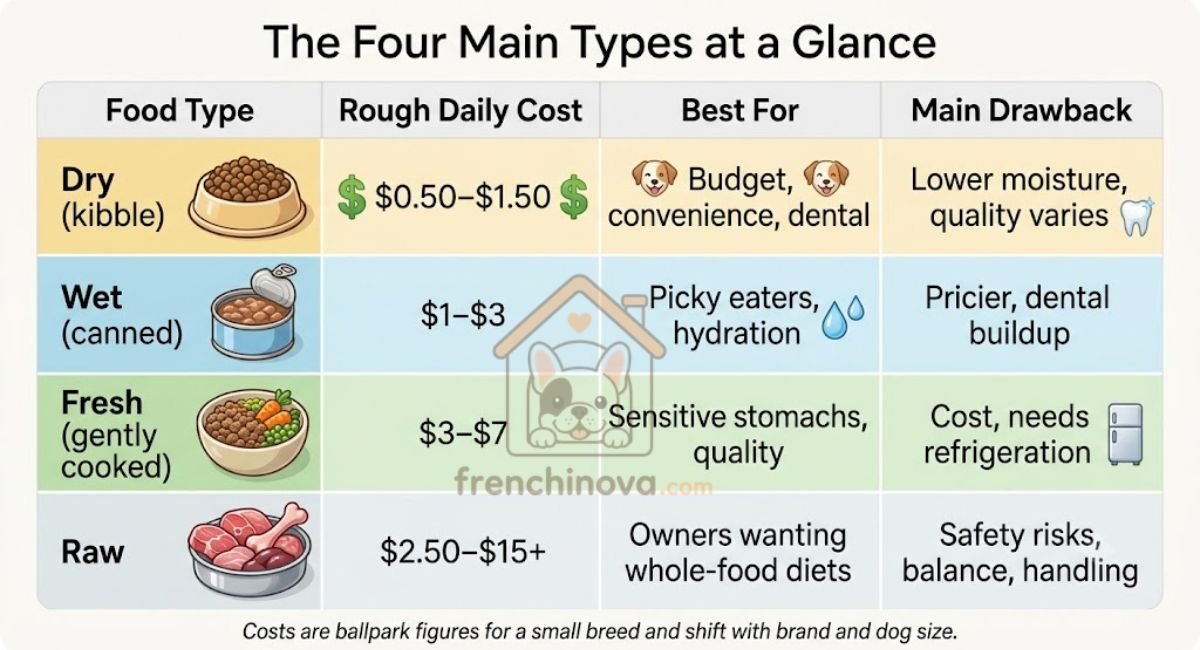
Costs are ballpark figures for a small breed and shift with brand and dog size. Now let’s look at what each really means for a Frenchie.
Dry Food (Kibble)
Kibble is the default for a reason. It’s the most affordable and convenient option, it stores easily, and the crunch offers a small amount of dental benefit by reducing plaque buildup. For most Frenchie owners, a quality small-breed kibble is a perfectly solid foundation.
The catch is quality control. Ingredient standards vary enormously between brands, some use excellent meats and fats, others lean on questionable by-products and cheap fillers like wheat and corn that happen to be common Frenchie allergens. Kibble is also low in moisture, which matters for a flat-faced breed that doesn’t always drink enough. And the hard texture can be awkward for a Frenchie’s small mouth, which is why soaking it in warm water helps, especially for puppies.
Best for a Frenchie when: you want an affordable, convenient base and you’re willing to read labels carefully and pick a high-quality, small-breed formula.
Wet Food (Canned)
Wet food wins on two fronts that matter for this breed: moisture and palatability. The high water content helps with hydration, and the richer smell and texture tempt even the pickiest Frenchie, and Frenchies can be very picky. Canned food is made through a sterilizing “retort” process similar to human canning, which makes it shelf-stable without heavy preservatives, and it’s often more carefully regulated than dry food.
On the downside, wet food costs more per calorie than kibble, offers no dental benefit (and can actually contribute to plaque), and once opened, it has to be refrigerated and used quickly. Fed exclusively, it can also be richer than some sensitive Frenchie stomachs prefer.
Best for a Frenchie when: your dog is a fussy eater or needs more moisture, often used as a topper mixed into kibble rather than the whole meal.
Fresh Food (Gently Cooked)
Fresh food is the fastest-growing category, usually sold by subscription and delivered in pre-portioned packs. It’s made from recognizable whole ingredients, real chicken, carrots, and the like, gently cooked and balanced with added vitamins and minerals to meet complete-and-balanced standards. The gentle cooking kills pathogens while keeping the food far less processed than kibble.
For Frenchies, fresh food has real appeal: it’s easy to digest, supports skin and coat health, helps with weight control, and tends to go down well with picky eaters. The trade-offs are cost, it’s significantly pricier than kibble, and practicality, since most fresh options need refrigeration or freezing and freezer space. It’s worth noting that when veterinarians compare fresh against raw, they generally prefer fresh, because gentle cooking removes the bacterial risk while keeping most of the whole-food benefits.
Best for a Frenchie when: you want whole-food quality and easy digestion, your budget allows it, and you’d rather avoid the safety risks of raw.
Raw Food
Raw feeding has a passionate following. Advocates point to shinier coats, better digestion, firmer stools, and more energy, and the approach, popularized as the BARF (“Bones and Raw Food”) diet by veterinarian Ian Billinghurst in 1993, aims to mirror an ancestral, whole-prey diet. Done well with a properly balanced commercial product, some dogs genuinely thrive on it.
But raw is also the most controversial option, and the cautions are real. Many veterinary experts discourage home raw feeding because of bacterial contamination, raw meat can carry salmonella and E. coli, which threaten not just your dog but everyone in the household handling the food or cleaning up after the dog. An FDA study found raw diets significantly more likely to test positive for these pathogens than processed alternatives.
As of early 2025, the FDA also requires raw-food makers using poultry or beef to address Highly Pathogenic Avian Influenza (H5N1) as a known hazard in their safety plans. Balancing a raw diet correctly takes real knowledge, too, get the ratios wrong, and you risk nutritional gaps. And it’s expensive, with premium commercial raw subscriptions often running $100 to $300 a month.
For French Bulldogs specifically, the sensitive-stomach factor cuts both ways: some owners report raw helps digestion, while others find the richness and fat content trigger upset or raise the pancreatitis risk the breed already carries.
Best for a Frenchie when: you’re committed to a properly balanced commercial raw product, you can handle the hygiene and cost, and your vet is on board, this isn’t a casual choice.
So, Which Is Best for a French Bulldog?
There’s no single winner, and anyone who tells you otherwise is selling something. The best food type is the one that keeps your Frenchie at a healthy weight with good energy, a shiny coat, firm stools, and no itching or stomach trouble.
That said, a few breed-specific principles help narrow it down. Frenchies do best on high-quality protein, easy digestibility, controlled fat, and no common allergens, and those needs can be met by more than one food type. Whatever you choose, the single most important label check is the AAFCO statement confirming the food is “complete and balanced” for your dog’s life stage.
The Case for Mixed Feeding
Here’s the approach a lot of experienced Frenchie owners land on: don’t pick just one. Mixed feeding, combining two formats, lets you stack the benefits. A common setup is a quality small-breed kibble as the affordable, convenient base, with a spoonful of wet or gently cooked fresh food stirred in for moisture, palatability, and a quality boost.
This solves several Frenchie problems at once: it tempts picky eaters, adds the moisture kibble lacks, and keeps costs more reasonable than going all-fresh or all-raw. If you mix, stir thoroughly so your clever Frenchie can’t pick out only the tasty bits and leave the kibble behind, and account for the combined calories so portions don’t creep up, this breed gains weight fast.
How to Transition Between Food Types
Switching a Frenchie’s food abruptly is a reliable way to cause an upset stomach. Whatever type you move to, do it gradually over about a week to ten days: start with roughly 25% new food mixed into 75% old, then shift the ratio every few days until you’ve fully changed over. Watch the stools along the way, loose stool means slow down. For a breed with a sensitive gut, patience here saves you a messy week.
Is raw food safe for a French Bulldog?
It can be, but it carries real risks. Raw meat can harbor salmonella and E. coli that endanger both your dog and your household, and balancing the diet correctly takes knowledge. If you want whole-food benefits with less risk, vets generally favor gently cooked fresh food over raw. Talk to your vet before starting raw.
Is wet or dry food better for a Frenchie?
Both work. Dry is cheaper, more convenient, and slightly better for teeth; wet offers more moisture and tempts picky eaters but costs more and doesn’t help dental health. Many owners get the best of both by mixing the two.
What’s the best food type for a Frenchie with a sensitive stomach?
Gently cooked fresh food and high-quality limited-ingredient kibble both tend to suit sensitive stomachs well. The key is easy digestibility, a clear protein source, and no common allergens, more than the format itself.
Is fresh dog food worth the extra cost?
For many Frenchies, yes, especially those with digestive or skin issues, since fresh food is easy to digest and made from whole ingredients. If the budget is tight, using fresh as a topper over kibble is a practical middle ground.
The Bottom Line
Dry, wet, fresh, and raw each bring something to the table. Kibble wins on cost and convenience, wet on moisture and palatability, fresh on whole-food quality and digestibility, and raw on its whole-prey appeal, though raw comes with safety and balance concerns that put many vets on the cautious side.
For most French Bulldogs, a high-quality kibble base with a fresh or wet topper hits the sweet spot of nutrition, palatability, and budget. Whatever you choose, look for that AAFCO complete-and-balanced statement, transition slowly, and let your Frenchie’s waistline, coat, and stools tell you whether you’ve found the right fit.
For complete feeding guidance, see our French Bulldog puppy diet guide, our feeding chart, and our guide to feeding Frenchies with allergies.
This article is for general educational purposes and isn’t a substitute for veterinary advice. Consult your veterinarian before making a major change to your dog’s diet, particularly before starting a raw or home-prepared diet.

Auston is the founder of Frenchie Nova and a longtime French Bulldog owner. He writes practical, research-backed guides on Frenchie care, feeding, and health. Not a veterinarian — always consult your vet for medical concerns.