

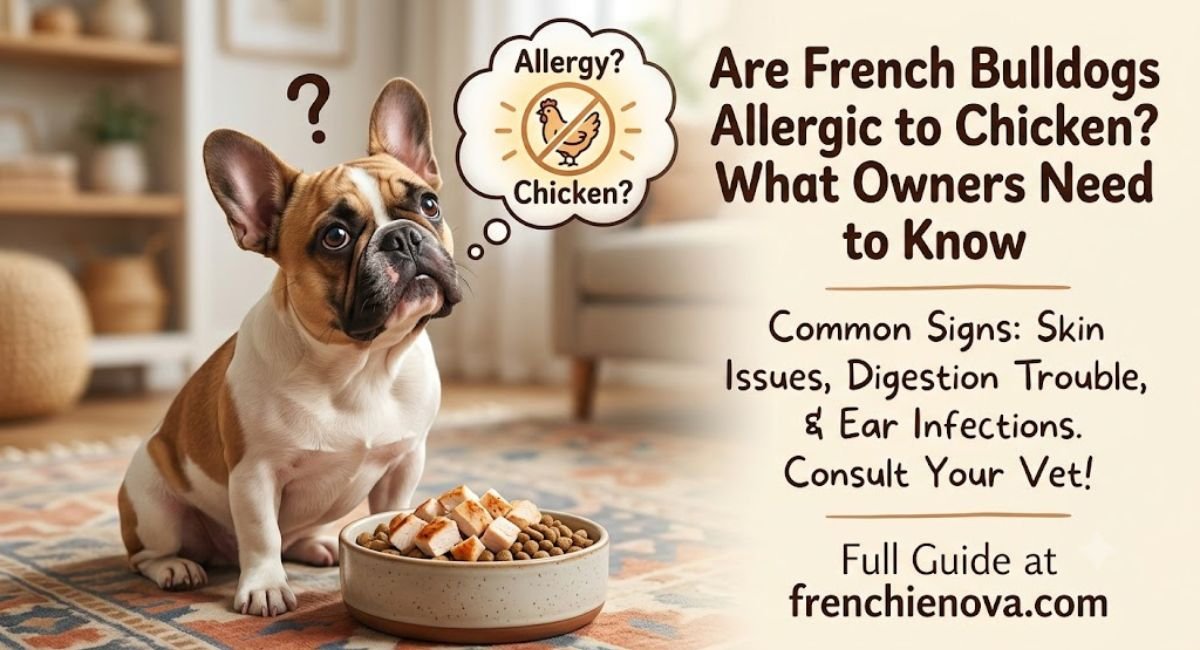
Chicken is in nearly every dog food on the shelf, which is exactly why so many Frenchie owners start wondering about it the moment their dog starts itching, licking their paws raw, or dealing with chronic tummy trouble. If chicken is the most common protein in dog food and French Bulldogs are one of the most allergy-prone breeds, the two are bound to collide.
So are French Bulldogs actually allergic to chicken? For some, yes, and chicken is one of the more common culprits in the breed. But it’s not a given, and the signs can be easy to misread. This guide Are French Bulldogs allergic to chicken? Learn the signs, why it’s common in the breed, how to confirm it, and what to feed a chicken-allergic Frenchie. explains why chicken allergies show up in Frenchies, the symptoms to watch for, how to confirm whether chicken is really the problem, and what to feed instead if it is.
Table of Contents
Can French Bulldogs Be Allergic to Chicken?
Yes. French Bulldogs can be allergic to chicken, and it’s one of the proteins the breed reacts to most often, alongside beef. This catches owners off guard because chicken seems so gentle and is in almost everything, but that ubiquity is part of the problem. The more often a dog is exposed to a protein, the more chances its immune system has to develop a reaction to it.
It’s worth being clear about what’s happening, though. A true food allergy is an immune response to a specific protein, and in Frenchies, that protein is frequently chicken or beef rather than the grains people often blame first. The breed’s immune system tends to overreact to proteins found in everyday food, and because Frenchies often have more than one sensitivity at once, chicken can be one piece of a bigger picture.
Why Chicken Allergies Are Common in the Breed
French Bulldogs are genetically predisposed to a long list of health quirks, and a disproportionate number of them show up on the skin and in the gut. Their immune systems are simply more prone to flagging common food proteins as threats, which triggers the itching, ear infections, and digestive upset owners dread.
Chicken lands in the crosshairs mostly because of exposure. It’s the default protein in budget and mid-range dog foods, treats, and even flavored medications, so a Frenchie eating a typical diet encounters it constantly. Food allergies in the breed also tend to surface between one and three years of age rather than in early puppyhood, so a dog that ate chicken happily as a pup can develop a reaction later.
Signs Your Frenchie Might Be Allergic to Chicken (Are French Bulldogs allergic to chicken?)
Chicken is one of the most common food allergens in dogs, and French Bulldogs, already prone to skin and ear issues because of their wrinkles, folds, and compromised airways, often show allergy symptoms more visibly than other breeds. The signs generally fall into two categories: skin-related and digestive. Most allergic Frenchies show a mix of both rather than just one.
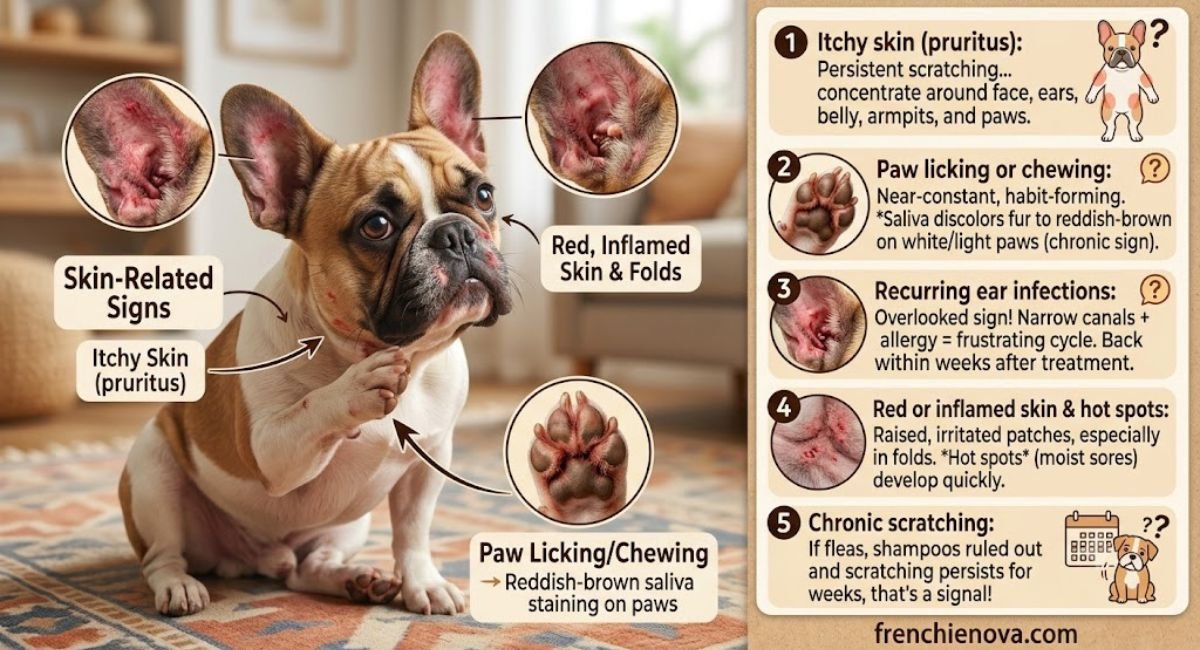
Skin-Related Signs
- Itchy skin (pruritus): Persistent scratching is usually the first thing owners notice. With food allergies, it tends to concentrate around the face, ears, belly, armpits, and paws rather than being spread evenly over the body.
- Paw licking or chewing: This is often near-constant and can become a habit even outside active flare-ups. Over time the saliva discolors the fur, leaving a reddish-brown staining on white or light-colored paws, a telltale sign of chronic licking.
- Recurring ear infections: This is one of the most overlooked allergy signs. Frenchies already have narrow ear canals prone to wax buildup, so when an allergy is added on top, infections can become a frustrating cycle, treated, cleared, then back again within weeks.
- Red or inflamed skin, sometimes with hot spots: Look for raised, irritated patches, especially in the skin folds around the face and tail. Hot spots (moist, weepy, rapidly spreading sores) can develop quickly when a dog scratches or licks an already-irritated area.
- Chronic scratching that doesn’t resolve with normal care: If you’ve ruled out fleas, switched shampoos, and the scratching still won’t quit after weeks, that persistence itself is a signal worth paying attention to.
Digestive Signs
- Gas: More frequent or noticeably stronger-smelling than usual.
- Loose stool: Soft, unformed, or inconsistent stools that don’t resolve with a bland diet.
- Occasional vomiting: Not necessarily violent or frequent, sometimes just sporadic, unexplained episodes.
The Important Catch
Here’s the complication: every symptom on this list can also be caused by environmental allergies, pollen, dust mites, grass, mold, even certain fabrics or cleaning products. Itchy skin, ear infections, and paw licking look identical whether the trigger is something your dog ate or something it walked through in the backyard.
That overlap is exactly why guessing rarely works. Switching protein sources on a hunch, declaring “it’s the chicken,” and moving on often leads owners in circles, especially if the real culprit is seasonal pollen or a flea allergy. Confirming a chicken allergy specifically requires a proper process, typically an elimination diet using a novel protein or hydrolyzed food for 8-12 weeks, followed by reintroducing chicken to see if symptoms return. Without that structured approach, it’s easy to misattribute the cause and end up cycling through foods without ever solving the underlying issue.
How to Confirm a Chicken Allergy
The reliable way to pin down a food allergy is an elimination diet trial, considered the gold standard by veterinarians. The idea is straightforward: feed a single new diet that contains none of the suspected protein, then watch for improvement.
In practice, that means switching to a food with a novel protein your Frenchie has never eaten, something like duck, venison, or fish, or a vet-prescribed hydrolyzed diet, and feeding that exclusively for several weeks. Skin cases often need around 8 weeks to show a clear result. If the symptoms fade on the new diet and then return when chicken is reintroduced, you’ve confirmed the allergy.
The single biggest reason these trials fail is accidental cheating, a chicken-flavored treat, a table scrap, or a flavored chewable medication can quietly ruin the results. During the trial, the chosen food has to be the only thing your dog eats. Because getting this right matters, it’s best done with your vet’s guidance rather than guesswork. Blood and saliva allergy tests exist but aren’t considered reliable for diagnosing food allergies, so the elimination diet remains the trustworthy route.
What to Feed a Frenchie With a Chicken Allergy
If chicken turns out to be the trigger, the fix is to remove it and build the diet around a protein your dog tolerates. Good approaches include:
- Novel proteins. Duck, venison, salmon, lamb, or rabbit, proteins your Frenchie hasn’t been exposed to, and so is less likely to react to.
- Limited-ingredient diets (LID). Fewer ingredients mean fewer potential triggers, and a single clear protein makes it easy to keep chicken out entirely.
- Careful label reading. Chicken hides in places you wouldn’t expect, “Animal fat,” “poultry meal,” broth, and flavorings can all contain it. Check every food, treat, and chew.
- Hydrolyzed protein diets for stubborn cases. These prescription foods break protein into fragments too small for the immune system to recognize, which is useful when even novel proteins don’t fully resolve the problem.
Whatever you switch to, transition gradually over a week or so to avoid upsetting a sensitive stomach, and give it time, skin and gut symptoms can take weeks to settle even after the right food is found.
Is Chicken Bad for all French Bulldogs?
No. Plenty of Frenchies eat chicken with no problem at all. Chicken is only an issue for dogs that have developed an allergy to it. If your Frenchie shows no symptoms, there’s no need to avoid chicken.
Can a Frenchie develop a chicken allergy later in life?
Yes. Food allergies in the breed commonly appear between one and three years of age, so a dog that tolerated chicken as a puppy can react to it later. Repeated exposure over time is part of why.
What is the Best Protein for a Frenchie Allergic to Chicken?
Novel proteins like duck, venison, salmon, or rabbit are good choices, since the immune system hasn’t built a reaction to them. A limited-ingredient diet built around one of these keeps chicken out reliably.
How do I know if it’s a Chicken Allergy or an Environmental Allergy?
You often can’t tell from symptoms alone, since both cause itching and skin issues. An elimination diet is the way to find out, if symptoms improve on a chicken-free diet and return when chicken comes back, it’s a food allergy. If the diet makes no difference, the cause may be environmental. Your vet can help sort it out.
The Bottom Line
French Bulldogs can absolutely be allergic to chicken, it’s one of the breed’s more common food triggers, largely because it’s in almost everything they eat. The telltale signs are itchy skin, paw licking, recurring ear infections, and digestive upset, though those overlap with environmental allergies, so confirming the cause takes an elimination diet rather than a guess.
If chicken is the problem, switching to a novel-protein or limited-ingredient diet usually brings real relief, with hydrolyzed prescription food as the backup for tough cases. It takes patience, but a comfortable, itch-free Frenchie is well worth the effort, and your vet is the best partner for getting there.
For more on feeding an allergy-prone Frenchie, see our guide to French Bulldog food allergies and sensitive stomachs and our complete French Bulldog puppy diet guide.
This article is for general educational purposes and isn’t a substitute for veterinary advice. Always consult your veterinarian before starting an elimination diet, especially if your Frenchie’s symptoms are severe or persistent.

Auston is the founder of Frenchie Nova and a longtime French Bulldog owner. He writes practical, research-backed guides on Frenchie care, feeding, and health. Not a veterinarian — always consult your vet for medical concerns.