

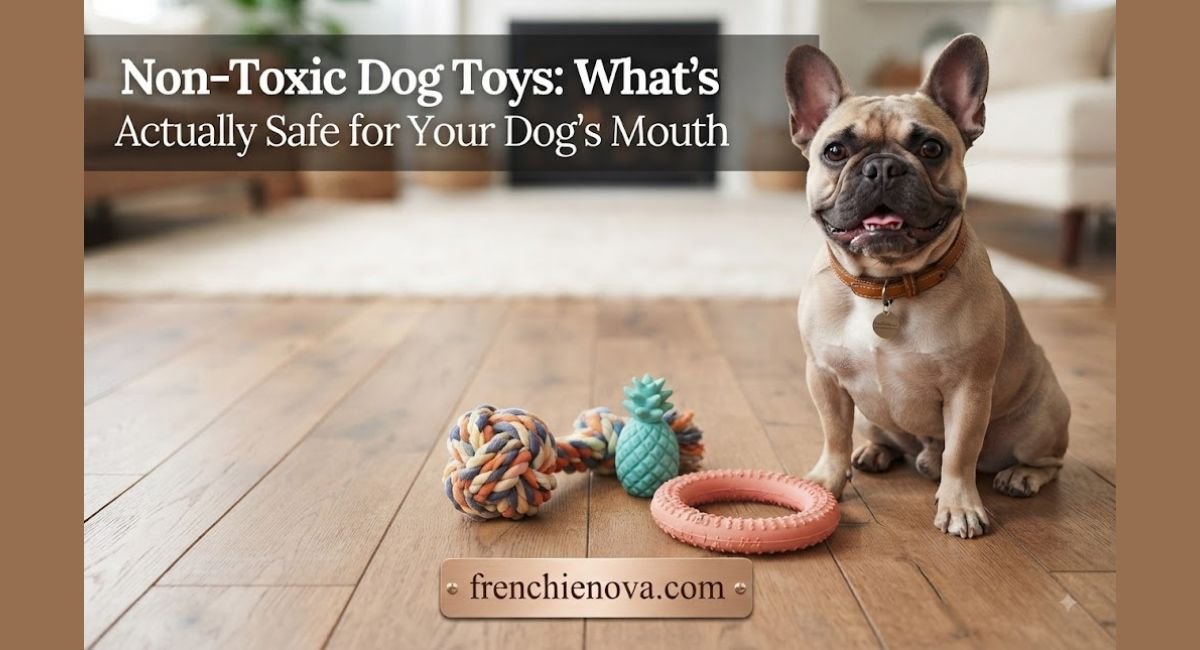
Dogs put everything in their mouths, that is the whole point of a toy. Which means what a toy is made of matters as much as how it plays. A surprising number of cheap imported toys contain materials owners would never knowingly hand their dog, and “non-toxic” on a label is not always backed by real testing. For owners who want peace of mind, choosing genuinely non-toxic dog toys, and often made-in-USA ones with stricter oversight, is worth the small extra cost. Consider this the complete dog toy safety guide: it explains what to look for, what to avoid, and the safest picks.
Affiliate disclosure: Frenchienova may earn a small commission from qualifying Amazon purchases made through links in this post, at no extra cost to the reader. Recommendations are based on independent research.
Table of Contents
Why Toy Materials Matter More Than Owners Realize
A toy spends hours in a dog’s mouth, and saliva can break down low-quality materials over time. The compounds owners most want to avoid are BPA, phthalates, lead, and toxic dyes, all of which have turned up in cheap, poorly regulated imported toys. These aren’t fringe worries; they’re the exact substances reputable brands specifically test against and advertise being free of.
This is where non-toxic dog toys earn their place. A genuinely non-toxic toy uses food-grade or natural materials, states what it’s made of plainly, and ideally tests to recognized safety standards like the ASTM guidelines used for children’s products. Vague material descriptions, “durable plastic,” no detail, are a quiet red flag.
It’s worth being clear-eyed, though: “non-toxic” describes the material, not indestructibility. A non-toxic toy that breaks into swallowable chunks is still a hazard. Safety means both clean materials and sound, supervised use.
Why “Made in USA” Often Signals Safety
Made in America dog toys aren’t automatically better, but the label often correlates with safety for a real reason: U.S. manufacturing faces tighter material and labeling oversight than some overseas production, and domestic brands tend to be more transparent about sourcing and testing. For owners who’ve been burned by mystery-material imports, it’s a useful shortcut.
Several of the most trusted names in safe dog toy manufacturing manufacture domestically and build their entire reputation on it, which brings us to the picks.
Best Non-Toxic, Made-in-USA Dog Toys
Top Pick: West Paw Zogoflex Line (Best Overall Safe + Tough)
Made in the USA from a recyclable, BPA- and phthalate-free material, the Zogoflex range (Hurley, Tux, Qwizl) proves that durable rubber dog toys do not have to compromise on safety these are both genuinely non-toxic and tough enough for real chewers, and West Paw guarantees it. It’s the rare toy that satisfies the safety-conscious and the power-chewer owner.

- EXTENDED BRAIN-STIMULATING PLAY: This tough interactive dog puzzle toy keeps dogs engaged while extending the life of bu…
- EASY GRIP DESIGN: Crafted with paw-friendly grooves, the Qwizl allows dogs of all sizes to hold and manipulate treats co…
- TEMPTING TREAT VENTS: Strategically placed side vents release delicious aromas and access to treats, which motivate dogs…
Top Pick: Goughnuts (Best Safe Heavy-Duty Chew)
Made in the USA from food-grade rubber, engineered for aggressive chewers, with the colored safety core that signals when to retire the toy. Safety is literally built into the design.

- ✅ AGGRESSIVE CHEWERS, MEET YOUR MATCH — Your search for a toy that can stand up to your dog’s aggressive chewing is over…
- ✅ ENGINEERED FOR MAXIMUM DURABILITY — Designed by a rubber chemist with 30 years of dog chew toy experience, our sturdy …
- ✅ ULTIMATE SAFETY— Our tug toys are made to prevent dogs from chewing off and ingesting pieces that can cause intestinal…
Runner-Up: Planet Dog Orbee-Tuff (Best Non-Toxic Ball/Chew)
Made in the USA from a non-toxic, recyclable material, these durable, often mint-scented toys are a long-standing favorite among safety-minded owners.
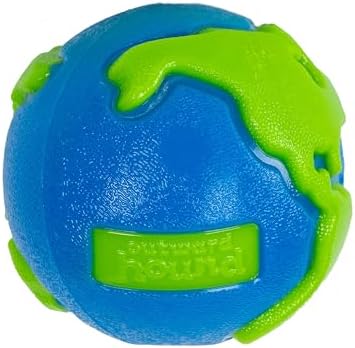
- Durable treat-dispensing dog ball that combines fetch and a treat game to reward your dog as they play; stuff with your …
- Interactive and mentally stimulating, treat-dispensing dog toys keep dogs busy and entertained for longer-lasting play s…
- Made of durable yet ultra bouncy Orbee-Tuff material that is BPA, lead, and phthalate-free for your peace of mind
Budget Pick: KONG Classic (Best Affordable Non-Toxic)
The original red KONG uses a time-tested non-toxic natural rubber and is one of the most-trusted toys on the market. Note KONG manufactures in both the USA and elsewhere depending on the line, check the listing if domestic sourcing specifically matters to you.

- Interactive Toy for Dogs: This Gyro dog toy from KONG engages pets with irresistible roll and flip action that will ente…
- Dog Toy with Treat Dispensing Feature: KONG Gyro is a dog toy designed to release dog treats and snacks; enrichment dog …
- Keep your Dog Moving: Entertaining wobble sparks a dog’s curiosity, allowing your pup to work for their food and engagin…
Best Natural Material Toys
For owners who prefer natural fibers over rubber, a few makers specialize in organic and natural-material toys.
Top Pick: Honest Pet Products & Similar (Best Natural Fiber)
Toys made from organic wool, hemp, and natural materials with non-toxic dyes, appealing for owners who want minimal synthetic content. Best suited to gentle and moderate players, as natural fibers are less durable than rubber against hard chewers.
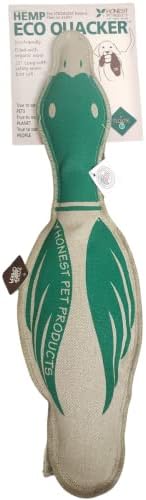
- Handmade in the USA from Natural Materials – Sewn and stuffed by hand using natural hemp canvas and wool—no plastics, dy…
- Thoughtfully Built, Inside and Out – From the whistling shape to the soft edges, everything about this toy was designed …
- Great for Water Fetch – Whether you toss it in a lake or wade through a pool, this duck floats, making it easy for your …
How to Spot a Truly Safe Toy
A quick checklist before buying:
- Stated materials: The listing should name the material clearly (natural rubber, food-grade silicone, organic cotton), not just “durable” or “plastic.”
- Free-from claims: Look for explicit BPA-free, phthalate-free, and lead-free statements.
- Testing standards: ASTM or similar safety testing is a strong trust signal.
- Reputable brand: Established makers like West Paw, Goughnuts, KONG, and Planet Dog stake their names on safety.
- No tiny detachable parts: Plastic eyes, bells, or beads that can be chewed off and swallowed are a hazard regardless of material.
- Right size and supervised use: Even the safest material is unsafe in swallowable pieces.
Common Mistakes That Make a “Safe” Toy Unsafe
Even careful owners slip up. A few patterns show up again and again:
Trusting the Word “Non-Toxic” Alone
It’s an unregulated marketing term on its own. Without named materials or a free-from claim to back it up, it means little. The label is a starting point, not proof.
Buying the Right Material in the Wrong Size
A non-toxic toy that’s too small is still a choking hazard. Material safety and size safety are separate checks, both have to pass.
Ignoring the Squeaker and Small Parts
Plastic eyes, bells, sewn-on noses, and squeakers are the parts most likely to come loose and get swallowed, regardless of how clean the main material is. Inspect for anything a determined dog could detach.
Keeping a Toy Past Its Life
The safest rubber on earth becomes dangerous once it’s chewed into swallowable chunks. A weekly look-over and prompt retirement matter as much as the original purchase.
Assuming “Natural” Means “Durable”
Organic wool and hemp toys are lovely for gentle players but won’t survive a power chewer, and a shredded natural-fiber toy is as much a hazard as any other. Match the material to the chewer.
Are Rubber Dog Toys Safe and Non-Toxic?
Quality natural-rubber toys from reputable brands are generally considered safe and non-toxic, especially those labeled BPA-, phthalate-, and lead-free. The concern is usually cheap, unbranded rubber or “rubber-like” plastics that don’t disclose their materials. Stick with established makers that state what their toys are made of, and the rubber category is one of the safest available.
What Dog Toys Should be Avoided for Safety?
The most common ones to approach with caution are very hard items that can fracture teeth (cooked bones, antlers, hooves), toys with small detachable parts a dog can swallow, low-quality imports with vague or no material information, and any toy worn down to swallowable pieces. Rawhide is also a frequent concern for digestibility and choking, which is why many owners look specifically for safe edible chews for aggressive chewers rather than reaching for whatever’s on the shelf. When in doubt, a vet can advise on a specific dog.
Is “Made in USA” Actually Safer for Dog Toys?
Not automatically, but it often correlates with safety because U.S. manufacturing faces tighter material and labeling oversight, and domestic brands tend to be more transparent about sourcing and testing. It’s a useful shortcut for safety-minded shoppers, though the real test is still the stated materials and free-from claims, wherever the toy is made.
How Can You Tell if A Dog Toy is Toxic?
There’s no home test, so it comes down to the label and the brand. Look for clearly named materials (natural rubber, food-grade silicone, organic cotton), explicit BPA/phthalate/lead-free statements, and ideally ASTM or similar safety testing. Vague descriptions like “durable plastic” with no detail are the biggest red flag. Reputable brands advertise their safety credentials plainly because they’re a selling point.
Are KONG Toys Non-Toxic?
KONG’s classic rubber toys use a time tested non-toxic natural rubber and are among the most trusted on the market. One nuance worth knowing: KONG manufactures different lines in different locations, so if domestic sourcing specifically matters to you, check the individual product listing rather than assuming every KONG product is made in the same place.
Are Natural Rubber and Silicone Dog Toys Better Than Plastic?
For chew toys, natural rubber and food-grade silicone are generally preferred over cheap plastic because they’re more flexible (gentler on teeth), more durable, and less likely to contain the additives found in low-grade plastics. The keyword is “food-grade” or “natural”, a vague “plastic” toy with no material detail is the one to be cautious about.
The Bottom Line
The safest dog toys combine two things: clean, genuinely non-toxic materials and sound, supervised use. For most owners, a made-in-USA brand like West Paw, Goughnuts, or Planet Dog delivers both, transparent sourcing, real free-from testing, and durability that keeps the toy from breaking into hazards. Read the materials, look for explicit BPA/phthalate/lead-free claims, stick with brands that earn their reputation, and supervise as always. A toy that’s safe in the mouth and sound in construction is the one that lets an owner stop worrying and let the dog play.
Always supervise play, choose appropriately sized toys, and consult a veterinarian about the safest options for a dog’s specific needs, especially for puppies and dogs that chew aggressively.

Auston is the founder of Frenchie Nova and a longtime French Bulldog owner. He writes practical, research-backed guides on Frenchie care, feeding, and health. Not a veterinarian — always consult your vet for medical concerns.