

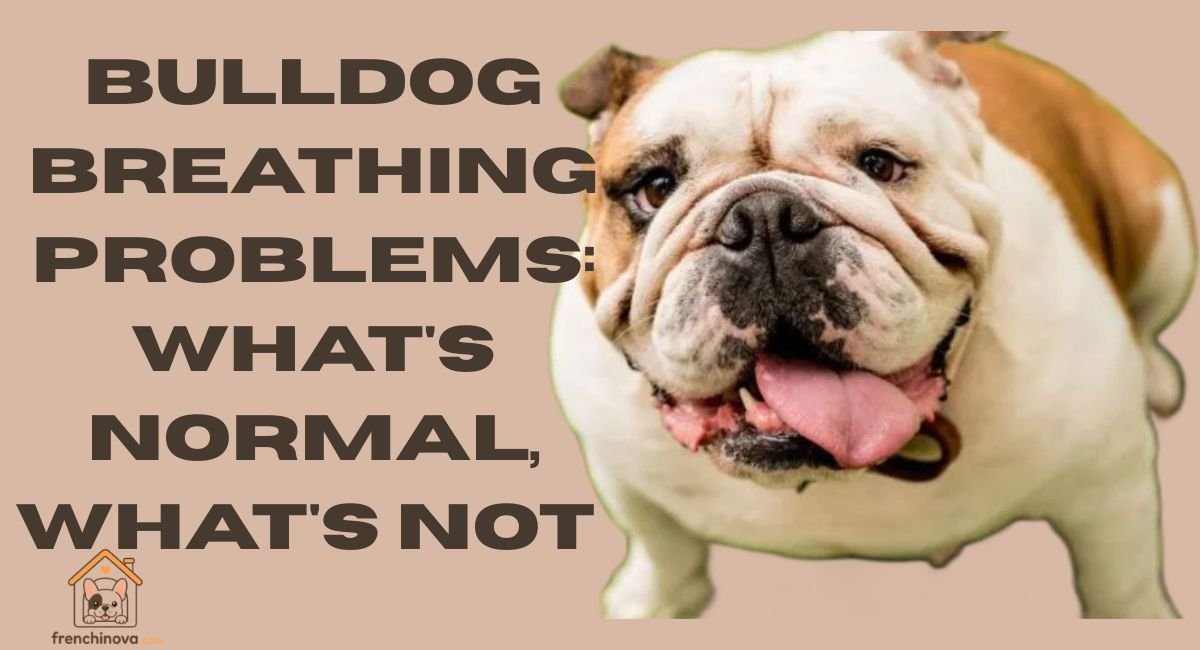
A breeder calls the loud snoring “personality.” Friends call it “cute.” Then a warm Saturday afternoon turns into an emergency vet visit, and a hard truth lands: what everyone laughed off was a structural health condition that had been worsening quietly for months.
That story plays out in bulldog households all the time. Owners ask the same question on Google, do bulldogs have breathing problems?, The honest answer is yes. Almost all of them do, to some degree. What separates a comfortable bulldog from a struggling one is how well their owner reads the signs.
This guide breaks down the anatomy behind the noise, which symptoms are manageable, which signal a real emergency, and what treatments vets actually recommend in 2026.
Table of Contents
Why Do Bulldogs Have Breathing Problems?
English Bulldogs belong to the brachycephalic group, a term that comes from the Greek words for “short” and “head.” Generations of selective breeding shortened the skull, but the soft tissue inside, tongue, soft palate, nasal passages, and throat lining never scaled down to match.
The result is a full-sized set of soft tissues crammed into a much smaller frame. Every breath has to push through narrower passages and against higher resistance. According to research from the University Federation for Animal Welfare (UFAW), the English Bulldog ranks as the most respiratory-compromised of all brachycephalic breeds, more so than Pugs, French Bulldogs, or Boston Terriers.
This isn’t a minor quirk. It’s a structural, lifelong condition that shapes how bulldogs sleep, walk, eat, and cool themselves down.
What Is Brachycephalic Obstructive Airway Syndrome (BOAS)?
Brachycephalic Obstructive Airway Syndrome, or BOAS, is the medical name for the cluster of anatomical abnormalities that cause breathing trouble in flat-faced breeds. It’s the most commonly diagnosed condition in English Bulldogs worldwide.
Five structural issues typically drive BOAS in bulldogs:
- Stenotic nares: pinched nostrils that choke airflow at the first point of entry
- Elongated soft palate: extra tissue that hangs into the airway and blocks it during every breath
- Everted laryngeal saccules: small pouches near the voice box that get sucked inward by labored breathing, narrowing the airway further over time
- Hypoplastic trachea: an underdeveloped, narrow windpipe; unlike the other components, surgery can’t fix this one
- Enlarged tonsils: chronically swollen tonsils that prolapse from their crypts, adding another layer of obstruction
BOAS is a progressive condition. The constant mechanical strain of breathing against resistance triggers secondary damage, including laryngeal collapse, where the voice box itself starts caving inward. UFAW research notes that most brachycephalic dogs don’t reach the vet for BOAS treatment until age 3 or 4, by which point the secondary damage is already underway.
Is There a Genetic Component to Bulldog Breathing Problems?
A study published in PLOS Genetics by Jeffrey Schoenebeck at the Roslin Institute (University of Edinburgh) identified a mutation in the ADAMTS3 gene that shows up in both flat-faced and normal-snouted breeds with airway syndrome. When researchers examined bulldogs and pugs, the mutation appeared commonly, which strongly suggests skull shape alone doesn’t explain the full picture.
Dogs carrying two copies of the ADAMTS3 mutation showed fluid retention, swelling around the lungs, and significantly worse breathing scores than dogs with one copy or none.
The practical takeaway: even a bulldog with a less extreme face can still carry a genetic predisposition for breathing problems. Skull conformation matters enormously, but genetics adds a second layer of risk, and most breeding programs don’t yet screen for it.
What’s Normal Bulldog Breathing, And What Isn’t
This is the question most owners wrestle with hardest. Bulldogs are loud by nature. They snort, snuffle, and snore. Some of that is expected. But there’s a clear line between charming bulldog noise and a dog in real trouble.
Normal for a Bulldog
- Soft snoring or snuffling during sleep
- Brief snorting during excitement that settles quickly
- Occasional reverse sneezing (a rapid, honking inhalation that resolves in seconds)
- Heavier breathing right after mild activity that calms within a few minutes
The clearest test for normal breathing is recovery. A healthy bulldog should be able to settle and breathe comfortably within minutes after activity or excitement. If the dog can’t, that’s a sign of airway compromise.
Not Normal, See a Vet
- Constant loud breathing at rest (not just during sleep)
- Panting in a cool environment with no obvious trigger
- Labored breathing with exaggerated chest movement or visibly flared nostrils
- Exercise intolerance, stopping, refusing to continue, or collapsing on short or gentle walks
- Gagging, retching, or regurgitation paired with breathing trouble
- Restless sleep or waking suddenly to gasp for air (sleep apnea)
- Neck stretched outward while trying to breathe
- Coughing that lingers after activity
- Any change in normal breathing patterns that wasn’t there before
Emergency, Go Immediately
- Blue, grey, or purple gums or tongue, oxygen isn’t reaching the bloodstream
- Collapse or fainting during or after activity
- Open-mouth breathing at rest, bulldogs should never mouth-breathe when calm
- Resting respiratory rate above 30 breaths per minute while sleeping — a possible sign of congestive heart failure or severe obstruction
- Visible extreme distress, pacing, can’t settle, obvious struggle to inhale
Don’t wait. Don’t monitor. These are veterinary emergencies.
The Heat Danger Every Bulldog Owner Has to Understand
Bulldogs can’t cool themselves efficiently. Dogs regulate body temperature almost entirely through panting, and panting only works when the airway is open. A compromised airway turns heat dissipation into a dangerously slow process.
That’s why English Bulldogs land in emergency clinics during summer at higher rates than almost any other breed. A walk that’s perfectly safe for a Border Collie can push a bulldog into respiratory crisis within minutes.
UC Davis School of Veterinary Medicine recommends close monitoring of brachycephalic breeds during exercise and warm weather. Several major airlines have placed travel restrictions on these breeds entirely, partly because altitude changes pile additional stress onto airways that already barely cope.
Practical precautions:
- Schedule walks for early morning or late evening during warm months
- Carry water on every outing and offer it often
- Never leave a bulldog in a parked car, even for a minute
- Use a cooling vest for any outdoor activity above 20°C (68°F)
- Treat air conditioning as a health requirement, not a luxury
How Vets Diagnose BOAS in Bulldogs
A BOAS diagnosis comes together through a layered evaluation:
- Visual nostril assessment: stenotic nares often show up during a standard physical exam
- Listening to breathing sounds: a trained vet can identify the quality and location of airway noise
- Neck and chest X-rays: to check internal airway structures and screen for tracheal hypoplasia or pneumonia
- Endoscopic evaluation: a camera-guided look at the soft palate, laryngeal saccules, and trachea
- Blood oxygen testing: measures how well the lungs deliver oxygen to the bloodstream
- Respiratory Function Grading Scheme (RFGS): developed by Dr. Jane Ladlow at the University of Cambridge and adopted by the Orthopedic Foundation for Animals (OFA) in 2023, the RFGS gives owners, breeders, and vets a standardized airway score for brachycephalic breeds
Most bulldogs reach the vet for BOAS surgery between ages 3 and 4. But earlier screening — ideally around desexing at 9 to 12 months, gives vets the chance to correct stenotic nares and soft palate issues before secondary damage develops. Earlier surgery consistently produces better outcomes.
Treatment Options for Bulldog Breathing Problems
Conservative Management (Mild Cases)
When symptoms stay mild, and quality of life holds up, vets usually start with conservative management:
- Weight control: excess body weight compresses an already narrow airway. Even a small reduction produces meaningful improvement.
- Harness over collar: A collar presses directly on the trachea during walks; a well-fitted harness spreads pressure across the chest.
- Cool, air-conditioned environment: lowering temperature and humidity directly reduces breathing workload.
- Avoid smoke and air pollutants: irritants inflame already sensitive airway tissue.
- Smaller, more frequent meals: large meals expand the stomach, push against the diaphragm, and worsen breathing.
- Anti-inflammatory medication: prescribed by a vet to calm airway tissue swelling.
- Treatment of acid reflux: common in bulldogs because of the negative pressure created by labored breathing. Left alone, reflux inflames the airway further.
Surgical Correction (Moderate to Severe Cases)
Surgery enters the conversation when conservative management can no longer maintain quality of life, or, ideally, before that point.
Common procedures include:
- Nostril widening (nares resection): a straightforward surgery to widen stenotic nares and improve airflow at the entry point
- Soft palate shortening (staphylectomy): trims excess soft palate tissue to stop it from blocking the larynx
- Laryngeal sacculectomy: removes everted laryngeal saccules pulled into the airway over time
- Tonsillectomy: recommended when chronically enlarged tonsils have prolapsed and joined the obstruction
Surgeons typically perform these procedures together for the strongest combined result. A vet with specific brachycephalic experience matters more here than for most breeds, anesthesia in bulldogs carries significantly higher risk than in normal-airway dogs, and post-op monitoring needs specialized care.
An honest note on surgical outcomes: Veterinary literature shows up to 60% of affected dogs still experience some degree of breathing trouble after surgery. Newer treatments are now under investigation, including Snoretox-1, a modified toxin therapy developed by RMIT University and Snoretox that strengthens muscles at the front of the airway to maintain airflow. Early trial results published in The Veterinary Journal in 2025 look promising, including improvements in dogs that had previously responded poorly to surgery.
Surgery delivers the best results when performed early, before secondary complications like laryngeal collapse set in. Harvey’s 1982 research found more than a third of English Bulldogs presented for BOAS surgery were already under one year old, a sign that waiting isn’t always in the dog’s best interest.
What This Means for Anyone Considering a Bulldog Puppy
For anyone weighing whether to bring a bulldog into their home, a few steps make all the difference:
- Request the RFGS grades of both parents: this is the most reliable predictor of the puppy’s airway health
- Listen to the puppy breathe at rest: some noise comes with the breed, but obvious labored breathing in a young puppy is a red flag
- Ask the breeder directly about BOAS history in the lineage
- Budget for veterinary costs: including potential early corrective surgery, regular monitoring, and emergency care
- Talk to a vet before buying: a real conversation about the breed’s specific health needs makes for a much better decision
Bulldogs make wonderful companions. Choosing one responsibly means going in with clear eyes about what their anatomy means for their health, and for the owner’s role as their caregiver.
Final Thought
Yes, bulldogs have breathing problems. Almost all of them, to some degree. But “they all breathe like that” should never be a reason to dismiss symptoms that are clearly worsening, disrupting sleep, or limiting the simple ability to walk and play.
The sounds bulldogs make are part of what makes them so beloved. Making sure those sounds don’t mask genuine suffering is part of being their owner.
An early vet assessment, a weight-managed lifestyle, and a willingness to pursue surgical correction when needed can give an English Bulldog a genuinely comfortable, active life — one that reaches well beyond what their anatomy alone would allow.
Note: This article is intended for informational purposes only. Always consult a licensed veterinarian for an accurate diagnosis and treatment plan specific to a dog.📌 For owners of French Bulldogs specifically, see the companion guide: Frenchie Breathing Hard? Causes, Warning Signs & When to Call the Vet — which covers French Bulldog-specific BOAS symptoms, emergency signs, and treatment options.

Auston is the founder of Frenchie Nova and a longtime French Bulldog owner. He writes practical, research-backed guides on Frenchie care, feeding, and health. Not a veterinarian — always consult your vet for medical concerns.