

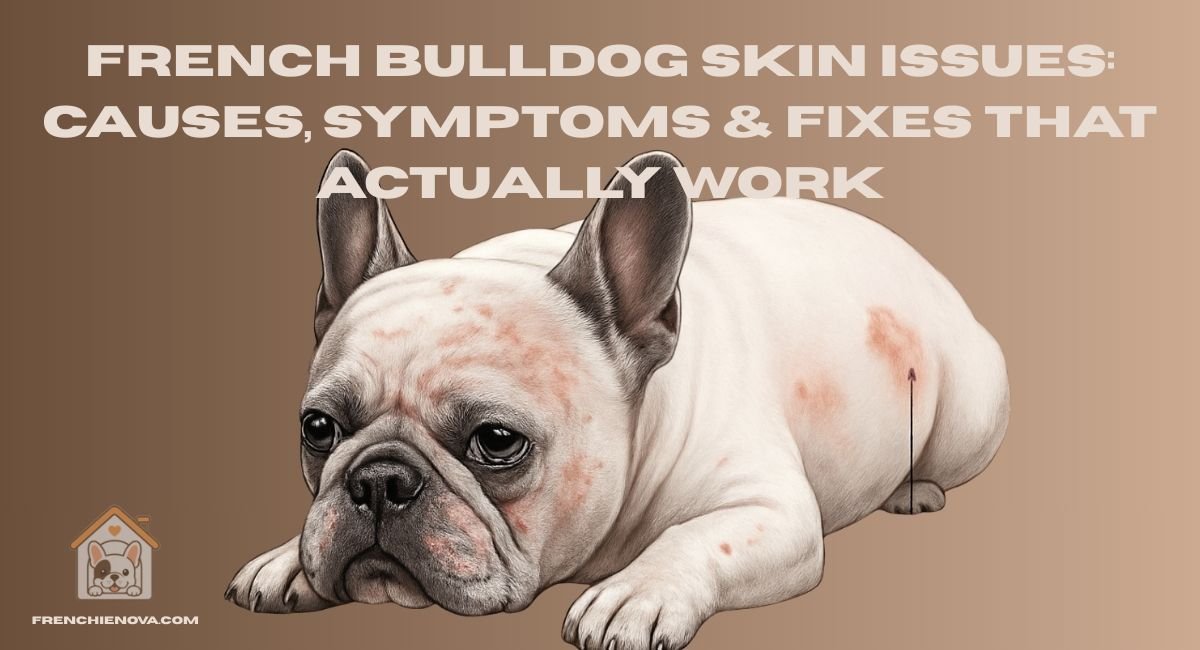
French bulldog skin issues are one of the most common health challenges faced by this breed, and they are easily misunderstood. What looks like a minor rash can quickly become a full-blown bacterial infection. What seems like seasonal itching is sometimes a sign of a deeper food allergy. Understanding what’s really going on under those adorable wrinkles is the first step to keeping your Frenchie comfortable.
Here’s everything that was learned, the hard way, so you don’t have to.
Table of Contents
Why French Bulldogs Are So Prone to Skin Problems
Before specific conditions are discussed, the root cause needs to be understood.
French Bulldogs are a “brachycephalic breed”, meaning they were selectively bred for a flat face, compact body, and heavy skin folds. According to the American Kennel Club, Frenchies have consistently ranked among the most popular dog breeds in the US for years. But that popularity has come with a cost: irresponsible overbreeding has made their skin folds even more pronounced, and their already-sensitive immune systems even more reactive.
Their anatomy creates a perfect storm for skin problems:
- Deep nasal folds, lip folds, neck rolls, and a tight “tail pocket” trap heat and moisture
- A naturally “weak skin barrier” makes allergens easier to absorb
- A compact body that retains heat gives bacteria and yeast the warm environment they love
- A genetic predisposition to “atopic dermatitis” means the immune system overreacts to everyday triggers
Other flat-faced breeds like Pugs, Boxers, Boston Terriers, and Pekingese face similar issues, but Frenchies are among the most commonly studied in canine dermatology research for chronic, allergy-driven skin discomfort.
7 Most Common French Bulldog Skin Issues
1. Skin Fold Dermatitis (Intertrigo)
Skin fold dermatitis, also called intertrigo, occurs when skin rubs against skin inside a fold. The nasal fold, lip folds, neck roll, armpit area, and tail pocket are all high-risk zones. Moisture from tears, saliva, or sweat gets trapped there. Oxygen is limited. Yeast and bacteria bloom.
Symptoms include:
- Redness and raw skin inside the fold
- A strong, musty odor
- Discharge or crusting
- Obvious discomfort when the area is touched
What needs to be done: Folds must be cleaned and dried thoroughly, ideally daily, especially during warm or humid seasons. A vet-approved antimicrobial cleanser is recommended. Topical or oral steroids may be prescribed for severe inflammation. Weight management also matters: excess body fat creates deeper folds and worsens friction.
2. Pyoderma (Bacterial Skin Infection)
Pyoderma is a bacterial infection most commonly caused by “Staphylococcus bacteria”. It often develops inside skin folds but can spread to other areas of the body.
Symptoms include:
- Red, raised pustules that resemble pimples
- Itching, flakiness, and crusty patches
- Hair loss in affected areas
- A musty odor around the infected skin
A course of antibiotics prescribed by a veterinarian is required to clear pyoderma. Medicated shampoos and antimicrobial sprays are commonly used as part of the treatment plan. Without treatment, the infection spreads and becomes harder to resolve.
3. Atopic Dermatitis (Environmental Allergies)
Atopic dermatitis is skin inflammation driven by environmental allergens, pollen, dust mites, mold spores, and grass, which are common culprits. Frenchies show up frequently in studies of canine atopic dermatitis, partly because their weak skin barrier allows allergens to penetrate more easily.
Unlike humans, who sneeze and develop watery eyes, French Bulldogs show environmental allergies almost entirely through the skin.
Symptoms include:
- Constant biting, licking, or chewing at the paws, belly, and groin
- Redness, especially between the toes and in skin folds
- Hair thinning or patchy hair loss
- Recurring ear infections (otitis externa)
Environmental allergies cannot be cured, but they can be managed. Regular bathing with vet-approved shampoos, wiping down paws and belly after outdoor walks, and antihistamine or steroid therapy prescribed by a veterinarian are all commonly used strategies. In chronic cases, allergen immunotherapy (allergy shots) may be recommended by a veterinary dermatologist.
4. Food Allergies
Food allergies are widely underdiagnosed in French Bulldogs, and they’re often mistaken for environmental allergies.
Common food allergens in Frenchies include beef, dairy, chicken, corn, soy, and wheat. What makes food allergies tricky is that many dogs show skin and ear symptoms with no digestive issues at all. This means a Frenchie can be reacting badly to every meal without a single stomach upset to hint at the problem.
Symptoms include:
- Chronic itching that doesn’t respond well to seasonal treatment
- Recurrent ear infections
- Red, inflamed paws
- Hot spots in the belly and groin area
A limited-ingredient diet or hypoallergenic diet trial, conducted under veterinary supervision for a minimum of 8–12 weeks, is typically required to identify the offending ingredient. Switching to a high-quality, single-protein food with non-GMO ingredients is often recommended as a starting point.
5. Hot Spots (Moist Dermatitis)
A hot spot is a localized patch of skin that becomes intensely itchy and infected. Once licking or scratching starts, the skin barrier is damaged further, and the infection deepens fast.
Hot spots in Frenchies are most commonly triggered by “allergies, flea bites, or excessive moisture”. They can appear seemingly overnight and grow quickly if not addressed.
Symptoms include:
- A moist, red, oozing lesion
- Matted fur covering the affected area
- Intense scratching or licking focused on one spot
- A foul smell from the lesion
Treatment involves clipping the fur around the hot spot, cleaning the area with an antibacterial solution, and often applying topical or oral antibiotics and anti-inflammatory medication. A cone collar may be used to prevent further licking.
6. Flea Allergy Dermatitis
Because French Bulldogs already have sensitive, reactive skin, a single flea bite can trigger a massive inflammatory response. This is known as flea allergy dermatitis (FAD), and it’s more severe in Frenchies than in many other breeds.
Symptoms include:
- Intense scratching and biting at the tail base, inner thighs, and lower back
- Red, irritated skin
- Patchy hair loss
- Secondary skin infections from scratching
Year-round flea prevention is critical for Frenchies, even for dogs that spend most of their time indoors. A single flea can cause a flare-up that takes weeks to resolve.
7. Interdigital Cysts (Paw Furuncles)
Interdigital cysts, also called “interdigital furuncles”, are painful, inflamed bumps that form between a dog’s toes. They are caused by bacteria or yeast that penetrate the skin in the interdigital area, often triggered by allergies, foreign bodies like splinters, or chronic moisture.
Symptoms include:
- Swollen, red bumps between the toes
- Limping or reluctance to walk
- Licking or chewing at the paws
- Discharge from the bump
Regular paw inspections and hygiene are essential. Keeping paws clean and dry, especially after walks on grass, gravel, or chemically treated surfaces, helps prevent the formation of these cysts. Recurring cysts often signal an underlying allergy that needs to be addressed.
What Causes French Bulldog Skin Issues? The Full Picture
All of the conditions above share overlapping root causes. Understanding these helps in addressing the problem rather than just chasing symptoms:
Genetics and anatomy
Frenchies were bred for features (flat faces, heavy wrinkles, compact bodies) that create ideal conditions for bacterial and yeast overgrowth. Choosing a puppy from a reputable, health-focused breeder can reduce these risks significantly.
Weak skin barrier
The skin barrier in Frenchies doesn’t retain moisture or block allergens as effectively as in other breeds. This is why environmental and food allergens cause such pronounced reactions.
Diet quality
Low-quality dog food containing common allergens like chicken by-products, grains, or artificial preservatives can directly trigger chronic skin inflammation.
Grooming gaps
Skin folds that are cleaned infrequently or dried incompletely are among the most preventable causes of dermatitis and pyoderma.
Obesity
Extra weight creates deeper, more pronounced skin folds, increasing friction, heat, and moisture trapping. Maintaining a healthy body weight is one of the most underrated preventive measures available.
How to Prevent French Bulldog Skin Problems: A Daily Routine
Prevention is far easier than treatment, especially for a breed this prone to flare-ups.
Clean skin folds daily
Use a pet-safe antimicrobial wipe or damp cloth to gently clean nasal folds, lip folds, the neck roll, armpits, and tail pocket. Dry thoroughly after cleaning; trapped moisture is the enemy.
Bathe regularly with medicated shampoo
A vet-approved medicated shampoo helps remove environmental allergens, reduces bacterial load on the skin, and soothes irritation. Bathing once every 2–4 weeks (or more during allergy season) is commonly recommended.
Wipe paws after outdoor walks
Pollen, grass chemicals, and other environmental allergens cling to paws and belly fur. A quick wipe-down after every walk significantly reduces allergen exposure.
Feed a high-quality diet
Choose dog food with named, whole-protein sources and minimal fillers. Work with a veterinarian before switching to a hypoallergenic or limited-ingredient diet.
Maintain a healthy weight
Regular exercise and portion control aren’t just good for overall health; they reduce skin fold depth and the skin problems that come with it.
Use year-round flea prevention
Don’t wait for flea season. For Frenchies, flea allergy dermatitis can flare severely from a single bite.
Schedule regular vet check-ups
Early detection allows for faster treatment. A veterinary dermatologist can perform cytology, patch testing, and allergen panels to identify what’s driving chronic or recurring skin issues.
When to See a Vet Immediately
Some skin problems should not be managed at home alone. A veterinarian should be contacted without delay if:
- Skin lesions are spreading quickly or look infected (pus, severe redness, warmth)
- Your Frenchie is scratching to the point of breaking the skin
- A hot spot appeared and has grown within 24 hours
- There is swelling, discharge, or a strong odor from the tail pocket or ear canals
- The same skin problem keeps returning despite treatment
Frenchie skin care is dynamic. Infections evolve. Allergens change with seasons. Treatment plans should be revisited regularly, not just when a new flare-up appears.
Note: This article is intended for informational purposes only. French bulldog skin issues can be caused by a wide range of underlying conditions. Always consult a licensed veterinarian for an accurate diagnosis and a treatment plan suited to your dog’s individual needs.
Final Thought
The scratching, the smell, the red patches under the wrinkles, it all made sense once the right information was found and the right vet was seen. French bulldog skin issues are incredibly common, but they are not inevitable. With daily care, a quality diet, regular vet visits, and an understanding of what your Frenchie’s skin actually needs, most flare-ups can be managed or prevented entirely.
Your Frenchie can’t tell you when something hurts. But now, you’ll know what to look for.

Auston is the founder of Frenchie Nova and a longtime French Bulldog owner. He writes practical, research-backed guides on Frenchie care, feeding, and health. Not a veterinarian — always consult your vet for medical concerns.