

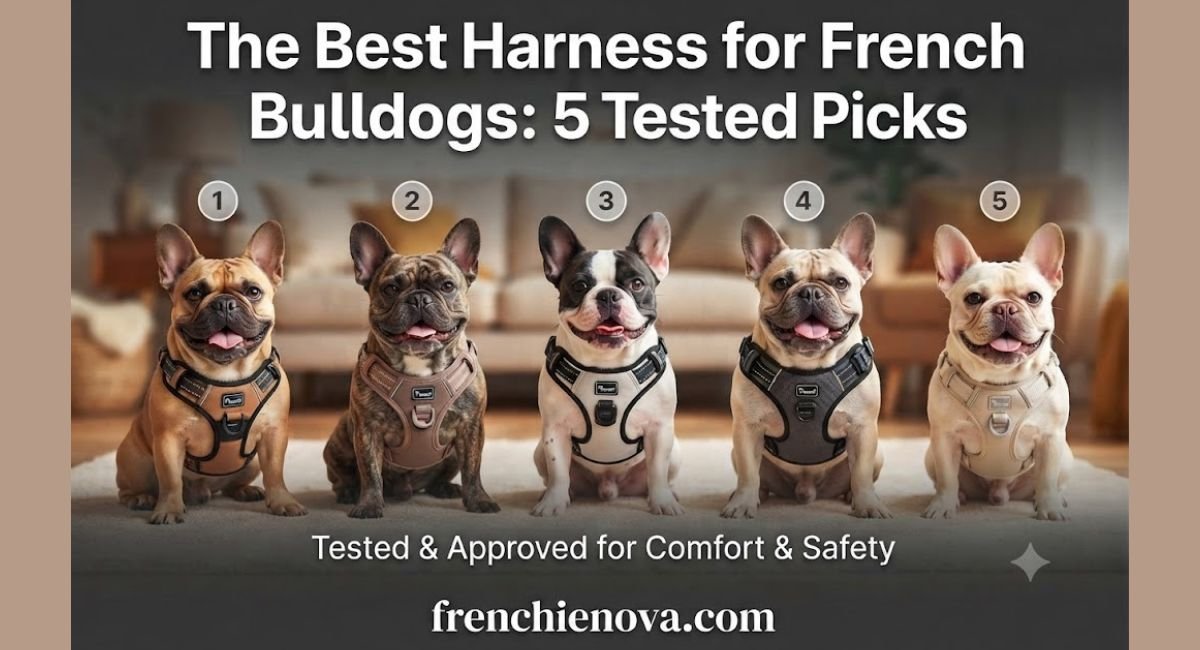
Anyone who’s owned a French Bulldog knows the routine: clip on a cheap harness, head out the door, and watch their dog calmly reverse straight out of it on the sidewalk. Frenchies are escape artists with a build that defeats most off-the-shelf gear, a chest like a barrel, a neck nearly as thick as the head, and a flat face that makes breathing harder than it looks. The best harness for French Bulldogs has to solve all three at once. After weighing the options Frenchie owners actually rely on, five rise to the top. Here’s what works, what doesn’t, and how to size it right the first time.
Quick disclosure: This guide contains affiliate links. If a reader buys through one, this site may earn a small commission at no extra cost, and it never changes which harnesses make the list. Every pick is chosen on fit, safety, and how well it suits a Frenchie’s build.
Table of Contents
Why French Bulldogs Need a Harness, Not Just a Collar
The American Kennel Club has ranked the French Bulldog as one of the most popular breeds in the United States for years running, which means a lot of new owners are learning this the hard way. Frenchies are brachycephalic, flat-faced, with short, narrow airways. PetMD notes that steady pressure on the throat, especially from a collar during pulling, can restrict an already compromised airway and make breathing harder.
A harness moves that force off the neck and spreads it across the chest instead. For short-nosed breeds, that’s the safer setup for actual walks. A collar still earns its keep for carrying ID tags, it’s just not the tool for leash pressure.
The catch is that a generic small-dog harness rarely fits a Frenchie’s proportions. The right one needs a snug, adjustable chest, a shape that doesn’t choke movement, and enough security that a determined dog can’t back out of it.
The 5 Best Harness for French Bulldogs
1. Best Overall, Best Pet Supplies Voyager Step-In Air Mesh Harness
The Voyager keeps showing up as the default Frenchie harness for good reason. It’s a step-in design made of soft, breathable air mesh that wraps the chest without rubbing, which matters for a heat-sensitive breed that overheats fast. The wide vest panel distributes pressure evenly across the body, and the double-Velcro-plus-buckle closure helps lock in a secure fit on a stocky frame.
Best for: everyday walks and warm climates.
Pros: breathable, lightweight, gentle on the skin, comes in lots of prints.
Cons: not built for heavy, dedicated pullers; sizing runs snug, so measure carefully.
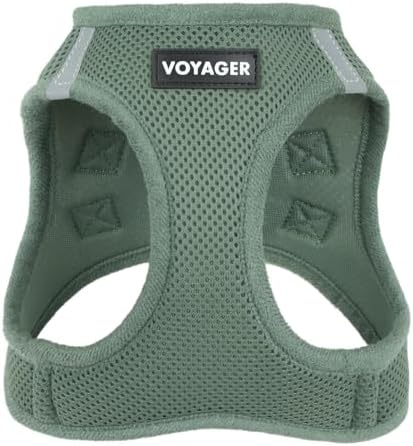
- Perfect Fit: Sizing does NOT directly correspond to your pet’s breed or weight; Ensure the ideal fit by MEASURING your p…
- Comfort All Year: Made with a soft and breathable air mesh, this lightweight, fast drying harness ensures maximum comfor…
- Enhanced Visibility: Featuring two reflective bands, this harness increases your pet’s visibility during morning and eve…
2. Best for Pullers, Rabbitgoo No-Pull Dog Harness
If a Frenchie throws its weight into the leash, a no-pull design with a front clip earns its keep. The Rabbitgoo has both a front D-ring (to redirect pulling) and a back D-ring (for relaxed walks), plus four adjustment points to dial in that tricky chest-to-neck ratio. The padded straps help it stay comfortable even on a dog that leans.
Best for: strong pullers and leash training.
Pros: dual D-rings, highly adjustable, sturdy build.
Cons: heavier than a mesh vest; can feel like a lot of harness on a smaller Frenchie.
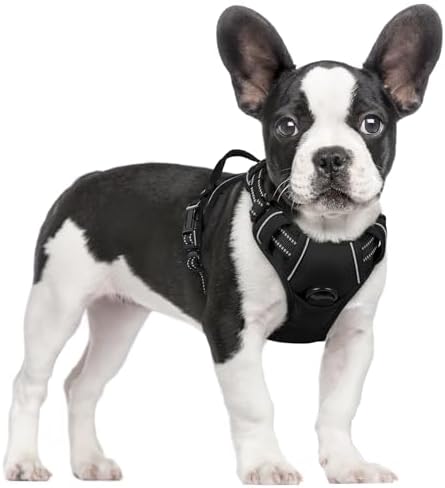
- Small Dog Harness – Recommended Breeds: Small Dogs, such as Beagle, Dachshund, Corgi, Pug, Puggle, Terrier, etc. Please …
- No Pull, No Choke – Our non-pulling dog harness is specially designed with 2 metal leash rings for safer dog walks. Use …
- Easy to Use – This hassle-free overhead harness is easy to put on and take off with its 2 fast-release buckles. Slide th…
3. Best for Escape Artists, Julius-K9 IDC Power harness
For the Houdini Frenchie that slips everything, the Julius-K9 is the secure pick. It’s a heavy-duty, vet-favored harness with a chest strap and belly strap that both adjust independently, so there’s no loose gap for a dog to wriggle through. It’s overbuilt in the best way, the kind of harness that lasts years.
Best for: secure containment and dogs that back out of softer harnesses.
Pros: extremely secure, durable, holds its shape.
Cons: the tighter weave traps more body heat than a mesh vest, so it needs closer watching on hot walks; pricier.
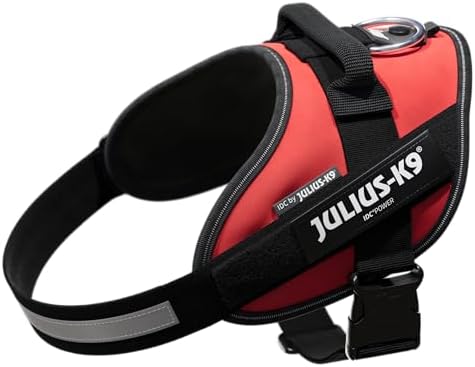
- Chest Circumference: 22. 8-30 in, weight of the dog: 31-55 lbs
- Sturdy and easy-to-use harness from premium quality materials, made in Europe
- Interchangeable hook & loop patches – your dog may wear the patches of your choice
4. Best Lightweight Classic, Puppia Soft Vest Harness
A longtime favorite for small breeds, the Puppia is a soft, over-the-head mesh vest that’s about as gentle as harnesses get. For a calm Frenchie that doesn’t pull and just needs comfortable, low-fuss gear, it’s hard to beat on comfort.
Best for: calm walkers and sensitive-skinned dogs.
Pros: soft, light, breathable, easy on, easy off.
Cons: over-the-head style suits dogs that tolerate it; minimal no-pull control.

- Material : Polyester 100%
- Vest with air-mesh for extra comfort
- Inner filler promotes superior comfort
5. Best Budget All-Rounder, Joyride No-Pull Harness
For owners who want no-pull function without the premium price, the Joyride is a solid middle ground. A side-ring design helps gently turn a pulling dog back toward the owner, and the padded, adjustable build fits a range of Frenchie shapes.
Best for: value-minded owners who still want pull control.
Pros: affordable, no-pull side ring, washable.
Cons: less rugged than the Julius-K9; check the size chart closely.

- Small dog harness – recommended for breeds like shihtzu, miniature schnauzer, small pugs, terriers, lhaso apso, dachshun…
- No Pull, No Choke – Original Side-Ring Design Joyride Harness is the original side-ring dog harness, built with 3 metal …
- Easy On, Easy Off – One-Buckle Simplicity Designed for speed and simplicity, Joyride features a single quick-release buc…
How to Choose: What Actually Matters for a Frenchie
Past the brand name, four things separate a harness that works from one that ends up in a drawer:
- A snug, multi-point fit. A Frenchie’s head and neck are close in size, so any slack lets them reverse straight out. Look for 2 to 4 adjustment points.
- Breathable material. Brachycephalic dogs overheat quickly. Air mesh beats thick nylon for anything but the coldest weather.
- A shape that frees the shoulders. A Y-shaped chest or wide vest panel lets the front legs move naturally instead of being rubbed at the armpits.
- The right closure for your dog. Step-in designs suit dogs that hate things going over their head; over-the-head vests are quicker once they tolerate it.
What Size Harness Does a French Bulldog Need?
Harnesses are sized by chest girth, the measurement around the widest part of the ribcage, just behind the front legs, not by weight, which is the most common sizing mistake. Most adult Frenchies wear a Small or Medium. For the full chest-girth chart and how to measure step by step, see the French Bulldog collar size guide.
Are Harnesses Better Than Collars for French Bulldogs?
For walks, yes, and most veterinary sources agree. A harness keeps pressure off a French Bulldog’s sensitive windpipe and gives far better control over a strong, low-to-the-ground dog. A collar still has a job, though: it’s the right place for ID tags and is fine for a quick step into the yard. The ideal setup is both, a comfortable collar for identification and a well-fitted harness for every real outing.
Why Do French Bulldogs Slip Out of Harnesses?
It comes down to that head-to-neck ratio. When a harness is even slightly loose, a Frenchie can plant its feet, lean back, and pull its head and shoulders through the gap. The fixes are a properly snug fit, a design with both a chest and belly strap, and checking the adjustment every few weeks, dogs change shape with weight and season. A secure, multi-strap harness like the Julius-K9 is the usual answer for a true escape artist.
How Tight Should a Frenchie’s Harness Be?
Snug enough that two fingers slide flat between the strap and the dog’s body, but no tighter. That’s the standard fit check breeders and trainers use: if two fingers won’t fit, it’s too tight and will rub or restrict breathing; if a full hand slides in, there’s enough slack for the dog to back out. Check the fit at both the chest strap and the belly strap, since a harness can be snug in one spot and loose in the other.
Can a French Bulldog Wear a Harness All Day?
It’s better not to. Even a well-fitted, breathable harness traps some heat and creates friction points with extended wear, and a Frenchie’s sensitive skin folds are prone to chafing and irritation if a harness stays on for hours. The harness should go on for walks and outings, then come off at home so the coat and skin underneath can breathe and reset.
Do French Bulldogs Need a Special Harness Because of Their Breathing?
Yes, not a “special” harness so much as the right shape. Because Frenchies are brachycephalic, anything that adds pressure near the neck or chest during exertion can make breathing harder than it already is. A harness with a wide, padded chest panel spreads that pressure out instead of concentrating it, which is why chest-focused designs (rather than thin straps or anything that rides up near the throat) are the better fit for this breed specifically.
The Bottom Line
For most French Bulldogs, the Best Pet Supplies Voyager hits the sweet spot of comfort, breathability, and security for everyday walks. Dedicated pullers do better with Rabbitgoo’s no-pull design, and committed escape artists need the Julius-K9’s lock-tight fit. Whichever a reader picks, the harness only works if it’s measured and fitted right, so measure the chest, check it against the size chart, and confirm with two fingers before heading out. Get that part right and walks stop being a wrestling match.
For a French Bulldog with known breathing trouble, skin conditions, or mobility issues, it’s worth a quick word with a veterinarian about the best gear for that individual dog.

Auston is the founder of Frenchie Nova and a longtime French Bulldog owner. He writes practical, research-backed guides on Frenchie care, feeding, and health. Not a veterinarian — always consult your vet for medical concerns.