

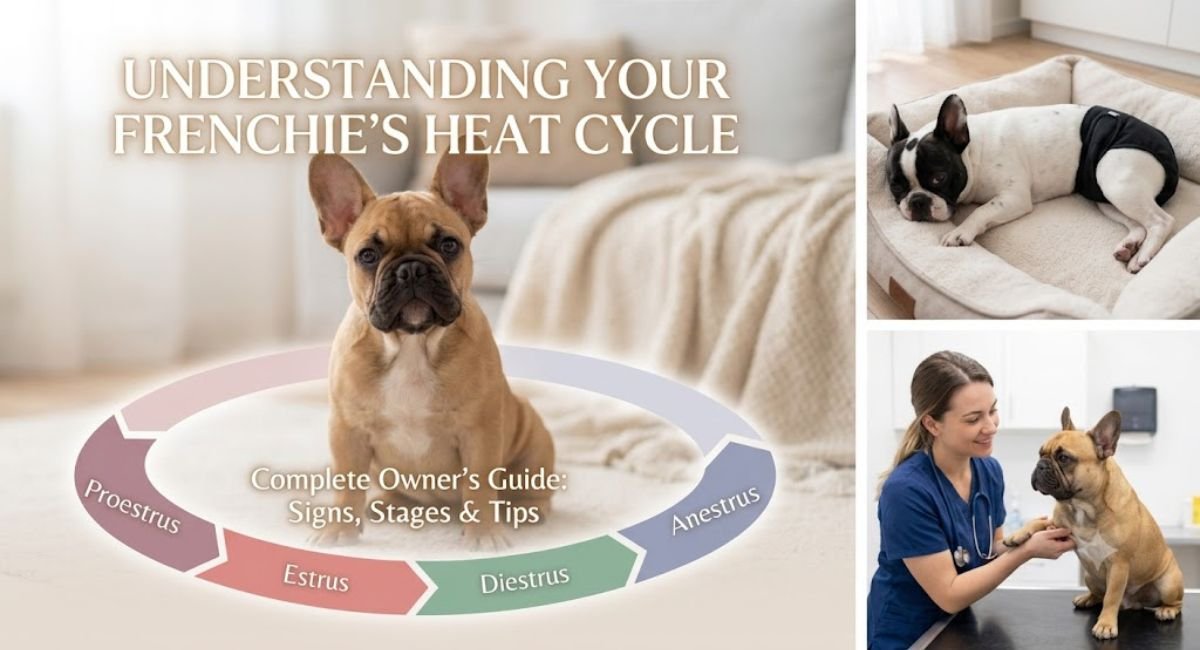
Most first-time Frenchie owners learn about the heat cycle the same way: when their girl suddenly starts acting strange, leaving spots on the floor, and attracting every intact male within three blocks of the park. The panic that follows is almost universal.
The good news is the French Bulldog heat cycle follows predictable patterns once an owner knows what to look for. Twice a year, four distinct stages, a handful of clear behavioral signs, and a few practical management decisions that make the entire process far less stressful for both dog and owner.
This guide walks through exactly how often French Bulldogs go into heat, what each stage looks like, the signs to watch for, and when a call to the vet becomes essential rather than optional.
Table of Contents
How Often Do French Bulldogs Go Into Heat?
French Bulldogs typically go into heat twice a year, roughly every 6 to 8 months. That means two heat seasons a year once the cycle settles into a regular rhythm.
The first few cycles, though, often run irregular. A young Frenchie can take up to two years before her cycle locks into a predictable pattern, and that delay alone doesn’t mean anything is wrong. Patience matters most in this stretch.
When Does the First Heat Happen?
Most French Bulldogs experience their first heat cycle between 6 and 12 months of age. Some come into season as early as 6 months. Others are late bloomers who don’t show clear signs until 18 to 24 months.
If a Frenchie is past 2 years old with no heat signs at all, no swelling, no discharge, no behavioral changes, a vet check is worth scheduling. A silent heat (one with minimal external symptoms) could be slipping past unnoticed, but it’s always smart to rule out hormonal or developmental concerns first.
The 4 Stages of the French Bulldog Heat Cycle
The heat cycle isn’t a single event. It’s a sequence of four distinct phases, each with its own timeline and signs.
1. Proestrus, The Warm-Up (7–10 Days)
This is when the first changes appear. The vulva starts to swell, a bloody discharge shows up, and male dogs may start showing real interest, though the Frenchie will reject their advances at this stage.
Behavioral shifts are common here too: increased affection, restlessness, or mild irritability. Think of it as the “not yet” phase.
2. Estrus, The Fertile Window (7–10 Days)
This is the stage every owner needs to watch most carefully. The discharge lightens in color and turns more watery, and the Frenchie will now be receptive to mating. This is the only phase when pregnancy is possible.
The fertile window typically lands around days 9 to 14 of the overall cycle. A behavior called “flagging,” when she raises her rear and moves her tail to the side, is one of the clearest signs estrus has begun.
3. Diestrus, The Cool-Down (60–90 Days)
Whether or not mating occurred, diestrus follows next. Hormones stabilize, the bleeding stops, and behavior returns to baseline. If pregnancy did happen, this is the phase where it develops. If not, the body resets.
4. Anestrus, The Resting Phase (~4 Months)
This is the quiet period between cycles. No physical symptoms, no behavioral changes. The reproductive system essentially goes on standby, preparing for the next season.
How Long Does the Entire Heat Cycle Last?
The active part of the heat cycle, from the first signs of proestrus through the end of estrus, typically runs 2 to 4 weeks. Some cycles stretch slightly longer depending on the individual dog’s age and health.
Anestrus (the resting phase) adds several more months before the next cycle starts. That’s why the overall gap between heats lands in the 6 to 8 month range.
Signs a Frenchie Is in Heat
Not every dog shows the same symptoms, but the most common signs include:
- Swollen vulva
- Bloody or watery vaginal discharge
- Increased urination
- Excessive licking of the genital area
- Restlessness or nervousness
- Increased affection or sudden irritability
- Mounting behavior
- Flagging (raising the rear toward male dogs)
- A distinct body scent that attracts males
One additional sign worth flagging: female Frenchies in heat often develop a noticeably stronger natural odor. For owners trying to keep male dogs away, scent-neutralizing sprays designed for this purpose can help reduce the signal that travels through the air.
Should a Frenchie Be Kept Indoors During Heat?
Yes, and most breeders and vets are firm on this. During estrus especially, an unspayed female can become pregnant very quickly if access to an intact male isn’t controlled.
Some Frenchies also turn into surprising escape artists during heat. Door gates, leashed walks only (no off-leash time), and extra household vigilance all make a real difference during this stretch.
Managing the Mess
Bloody discharge is one of the more challenging parts of the heat cycle for owners. Doggy diapers (or “nappies” in the UK) are widely recommended, and because Frenchies don’t have tails, the diapers without a tail hole tend to fit best.
Regular, gentle cleaning of the genital area also helps prevent irritation or infection during the active phases of the cycle.
When to Call the Vet
The heat cycle is a natural process, but a few signs warrant a vet call:
- Heavy or unusually foul-smelling discharge can indicate infection
- Extreme behavioral changes, sudden aggression, or deep depression
- Cycles that are unusually long or very frequent may point to hormonal imbalances
- Signs of heat after spaying can indicate ovarian remnant syndrome, where small fragments of ovarian tissue remain after surgery and continue producing hormones
Trust the gut on this one. When something feels off mid-cycle, an early phone call to the vet beats a late one every time.
What About Spaying?
Spaying eliminates the heat cycle by removing the reproductive organs. Most vets recommend spaying a Frenchie between 6 and 9 months of age, ideally before the first heat cycle, since this timing is associated with a lower risk of mammary cancer and avoids the complications of early or unwanted pregnancies.
The risk of mammary cancer rises with each heat cycle a dog goes through, which is one of the strongest arguments vets make for early spaying.
That said, spaying too early can delay the closure of growth plates, which may affect joint development long-term. A real conversation with a trusted vet is the best way to figure out the right timing for an individual dog. There isn’t one universal answer here, body condition, family history, breed, and lifestyle all factor in.
A Note on Breeding Frenchies
Anyone considering breeding a Frenchie needs to know the breed faces unique challenges in this area. Many French Bulldogs can’t mate naturally because of their physical build and require artificial insemination instead. The majority of French Bulldog litters also need delivery by C-section, because the breed’s narrow hips make natural birth genuinely risky.
These are significant considerations, both financially and in terms of health risk for the mother, that responsible breeders factor in carefully before proceeding. Pet owners without breeding experience are almost always better served by working with their vet on a spay decision than navigating breeding alone.
Final Thoughts
The French Bulldog heat cycle doesn’t have to be a stressful experience, but it does take preparation. A Frenchie goes into heat roughly twice a year, with each active cycle lasting two to four weeks. With a clear understanding of the stages, the signs, and a plan in place, the whole process becomes much easier to manage calmly.
Whether spaying is on the table or breeding is being considered, working closely with a trusted vet is always the right first move.
Note: This article is intended for general informational purposes only. For health, breeding, or spaying decisions specific to an individual dog, always consult a licensed veterinarian.

Auston is the founder of Frenchie Nova and a longtime French Bulldog owner. He writes practical, research-backed guides on Frenchie care, feeding, and health. Not a veterinarian — always consult your vet for medical concerns.