

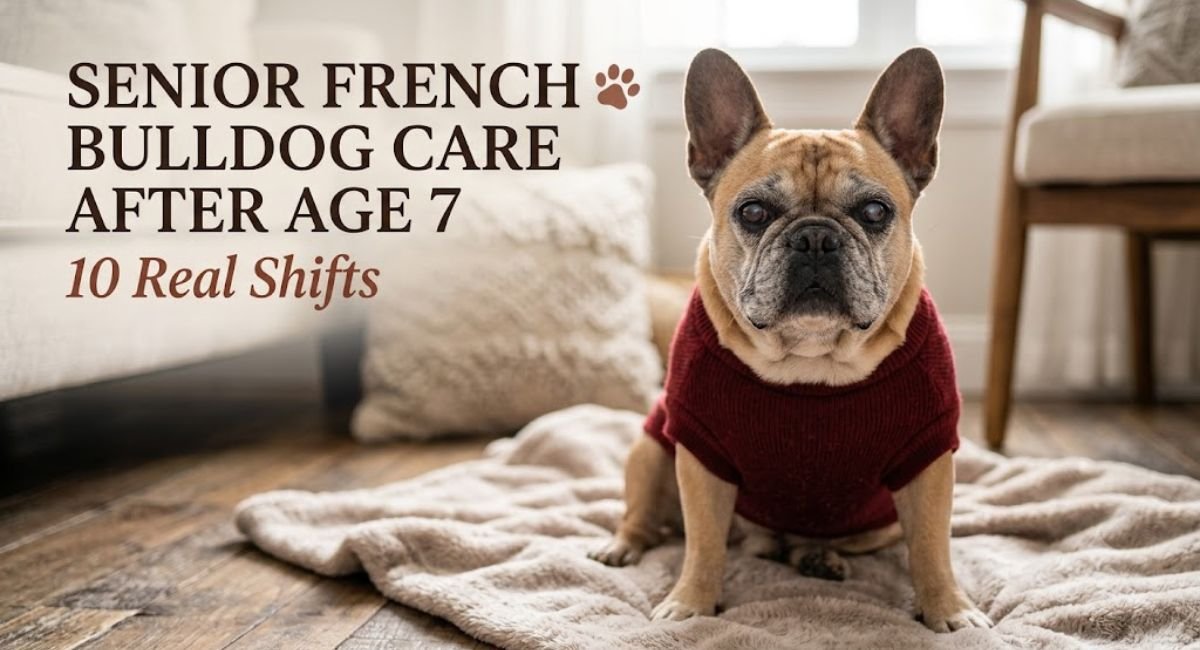
Most owners don’t notice the day their Frenchie becomes a senior. The morning stretches get slower. The snores get deeper. The jump onto the couch turns into a pause, then a look, then a hopeful glance upward. None of it screams “senior dog.” But by the time a French Bulldog hits age 7, ten distinct shifts have usually started, and the care that worked at age 3 won’t carry the next chapter.
Senior French Bulldog care after age 7 isn’t about doing less. It’s about doing different. This guide breaks down exactly what changes, why it matters for this breed in particular, and what to actually do, backed by veterinary research and the practical adjustments that move the needle.
Table of Contents
Why Age 7 Matters Specifically for French Bulldogs
Most medium breeds cross into senior status between 8 and 10. Frenchies get there sooner, usually around age 7, and the reasons are breed-specific.
Brachycephalic anatomy ages the body faster. The chronic respiratory load of BOAS, combined with joint stress from a compact, muscular frame, accelerates wear-and-tear that longer-snouted breeds simply don’t carry.
 Liverpool John Moores University 2024 Scientific Reports study on French Bulldog longevity documented a median lifespan of 9.8 years for the breed, which puts age 7 at roughly 75% of expected life, the threshold AAHA uses to classify a dog as senior.
In human terms, a 7-year-old Frenchie sits at around 62 in human years using the UCSD epigenetic clock. That alone reframes the math for most owners.
Dog years to human years
Convert your dog’s age accurately
10 Things That Change After Age 7
1. Calorie Needs Drop 20–30%
This is the change with the biggest health impact, and the one most owners miss completely.
A typical adult Frenchie at age 4 might need around 600 calories a day. The same dog at age 8 often needs 450–500. Two things drive the drop: slower metabolism and lower activity. The intake that was perfect at age 4 quietly causes weight gain at age 8, and weight gain in this breed compounds every other senior issue.
What works:
- Recalculate the daily target using the senior MER multiplier (roughly 1.1–1.4 × RER, down from the adult 1.6)
- Trim portions by 20–30% gradually over two to three weeks
- Keep treats inside the new lower budget, typically 45–55 calories a day for a 22-lb senior
- Weigh monthly to confirm the math is landing
Daily calorie needs
How many calories does your dog need?
2. Food Formula Needs to Shift (Not Just Smaller Portions)
Senior Frenchies need a different nutritional profile, not just less of the same food. Cutting an adult formula by 25% also cuts protein, vitamins, and minerals by 25%, which is a fast track to muscle loss and nutrient gaps.
A senior-formulated food typically lands between age 7 and 8, and the right formula usually carries:
- Higher quality protein (around 28–32% dry matter) to hold muscle
- Lower fat (8–12%) to ease calorie density
- Added omega-3 fatty acids (EPA and DHA) for joints and cognition
- Glucosamine and chondroitin for cartilage support
- Reduced sodium and phosphorus to lighten the kidney load
- Smaller, easier-to-chew kibble for aging teeth
Worth researching by category:
- Royal Canin French Bulldog Adult or Aging Care
- Hill’s Science Diet Senior Adult 7+ Small Paws
- Purina Pro Plan Bright Mind Senior 7+
- The Farmer’s Dog or Ollie (custom senior portions)
- Petaluma Baked Senior
Always transition over 7–10 days, mixing increasing amounts of the new food into the old to keep the GI tract happy.




3. Joint Stiffness Becomes the New Normal
Frenchies are predisposed to joint and spinal issues from birth. IVDD, hip dysplasia, and patellar luxation are all overrepresented in the breed, and after age 7, these conditions progress into visible stiffness.
What to watch for:
- Slower to rise after a nap
- A pause before jumping onto the couch
- Stiff walking for the first 5–10 minutes of the day
- Less interest in stairs
- Trembling in the back legs after activity
What helps:
Joint supplements. Glucosamine, chondroitin, and MSM are the gold standard. Look for daily doses around 500 mg glucosamine, 400 mg chondroitin, and 100–200 mg combined EPA + DHA. Common product lines include Cosequin DS, Nutramax Dasuquin, Zesty Paws Mobility Bites, and Native Pet Hip & Joint.
Orthopedic support. Senior Frenchies sleep 14+ hours a day. A memory foam or therapeutic dog bed cuts joint pressure during all those hours, and the difference shows up in how easily they get up.
Ramps and steps. Jumping onto couches and beds compresses the Frenchie spine in a way that few other breeds experience. Ramps for furniture and steps for the car meaningfully reduce IVDD risk.
Pain management with the vet. NSAIDs, gabapentin, and other prescription options become appropriate for many seniors. Waiting until pain is severe is usually waiting too long.




4. Vet Visits Should Double in Frequency
The AVMA and AAHA both recommend twice-yearly visits for senior dogs instead of annual checkups, and the reasoning is simple: a year is a long time in senior dog years.
For a 4-year-old Frenchie, one calendar year equals roughly 4 human years. For an 8-year-old, that same year stretches closer to 6 human years, long enough for cancer, heart disease, kidney disease, or hyperthyroidism to develop and progress meaningfully.
A proper senior visit should cover:
- Full physical exam with attention to lumps, joints, and abdomen
- Annual bloodwork (minimum): CBC, full chemistry panel, T4
- Urinalysis to catch early kidney or bladder issues
- Dental check, this breed is prone to dental disease
- Weight and Body Condition Score
- BOAS reassessment, especially if breathing has changed
- Blood pressure (often skipped but important for seniors)
Expected cost shift: senior care typically runs 2–3× the annual cost of adult care, mostly driven by diagnostics, supplements, and managing emerging conditions. Budgeting $800–$2,000 a year for non-emergency senior care is realistic for most Frenchies.
5. Sleep Patterns Shift Dramatically
Do senior French Bulldogs sleep more? Yes, often 14–18 hours a day, up from 10–12 as adults. But the timing and quality of that sleep also change.
Common senior sleep shifts:
- Longer daytime naps
- More restlessness at night
- Occasional nighttime wandering or pacing
- Snoring that gets noticeably louder (often BOAS-related)
- Trouble settling in cold or unfamiliar spots
What helps:
Multiple comfortable sleep spots. Seniors do better with options — one in a quiet area, one near the family, one in a cooler spot for warm days.
Watch for sundowner-style anxiety. Increased restlessness or vocalization in the evening can be an early sign of canine cognitive dysfunction (more on that below).
Plan for nighttime bathroom needs. Older Frenchies may need a late-night trip outside. Pee pads near the door, a doggy door, or a final pre-bed bathroom routine cuts accidents.
Calming supplements, if the vet agrees. L-tryptophan, melatonin, or hemp-based calming chews settle some senior dogs. Always check with the vet before stacking supplements, especially alongside other medications.
6. Breathing Issues Often Get Worse
BOAS doesn’t develop later, it’s there from birth. What changes after age 7 is how severely it affects the dog, because other stressors (weight, heart strain, reduced exercise tolerance) stack on top.
Senior BOAS signs that matter:
- Louder snoring (often described as “freight train” volume)
- Heavier panting after minor activity
- Blue-tinged gums during exercise — this is a medical emergency
- More frequent reverse sneezing episodes
- Sleep apnea-like pauses in breathing
- Reluctance to walk in heat or humidity
The Cambridge BOAS Research Group has documented how the syndrome compounds with age, and the practical takeaways are concrete:
BOAS surgery is still on the table. Widening the nostrils and shortening the soft palate often adds quality years. Most veterinary surgeons prefer earlier intervention (before age 5), but otherwise-healthy seniors can still benefit, with the caveat that anesthesia risk is higher for older brachycephalic dogs and demands a vet experienced in the breed.
Optimize the home environment. Air conditioning in summer, cooling mats, elevated water bowls (easier breathing while drinking), and harnesses instead of collars (collars compress an already-restricted airway) all add up.
Track changes carefully. A baseline video of resting breathing taken at age 6 or 7 is one of the most useful things an owner can keep. It gives the vet something objective to compare against later.
7. Weight Management Becomes Non-Negotiable
Weight has always mattered for Frenchies. After age 7, it becomes the single most important controllable longevity factor in the breed.
The 2024 Scientific Reports study documented that leaner Frenchies lived 1.8 years longer than overweight ones, roughly an 18% lifespan extension. Every extra pound on a senior Frenchie compounds:
- Worse breathing (compressed airway)
- More joint stress on already-fragile spines and hips
- Higher heart disease risk
- Reduced heat tolerance
- Increased anesthesia risk for any surgery
Tools that actually move the needle:
A kitchen scale. Measuring food by weight, not volume, eliminates the slow creep of overfeeding. A 1/2-cup scoop can vary 15–20% in actual food weight depending on how it’s packed.
A pet scale. Weekly weigh-ins catch drift before it turns into a problem. Small pet scales designed for dogs under 40 lbs are cheap and worth owning.
Body Condition Scoring. A 1–9 score gives an objective number that backs up the weight reading.
Body condition score
Check your Frenchie’s body condition
8. Dental Disease Accelerates Fast
By age 7, most dogs have some level of dental disease. For Frenchies, the compressed jaw makes it worse, teeth crowd together, plaque builds faster, and gum infection becomes common.
Senior dental warning signs:
- Bad breath that doesn’t improve
- Yellow-brown buildup
- Red or bleeding gums
- Loose or missing teeth
- Pawing at the mouth
- Reluctance to chew hard food
A professional dental cleaning becomes the right call for most seniors, even though it requires anesthesia, which carries higher risk for brachycephalic dogs. The fix is working with a vet who has experience anesthetizing Frenchies specifically. Skipping the cleaning isn’t safer; untreated dental disease causes systemic infection that lands in the heart, kidneys, and liver.
Daily at-home dental care that actually helps:
- Brushing with dog-safe toothpaste (never human toothpaste, xylitol is toxic)
- Dental wipes for dogs that won’t tolerate brushing
- VOHC-verified water additives (Veterinary Oral Health Council seal of approval)
- Senior-appropriate chews like Greenies, Whimzees, or Virbac C.E.T.
Skip hard chews like deer antlers, senior teeth crack more easily. Rubber Kongs, freeze-dried treats, and pressed rawhide alternatives are safer choices.



9. Cognitive Decline Begins (Canine Dementia Is Real)
Canine Cognitive Dysfunction (CCD), sometimes called canine dementia, affects an estimated 14–35% of dogs over age 8, and prevalence rises with each year of age.
The veterinary mnemonic used to spot it is DISHAA:
- Disorientation: getting lost in familiar rooms, staring at walls
- Interactions: less interest in family, or new clinginess
- Sleep-wake disruption: pacing at night, sleeping more during the day
- House soiling: accidents despite previous training
- Activity changes: decreased play, sometimes random restlessness
- Anxiety: new fears, separation distress, noise sensitivity
What to do:
Get a vet diagnosis first. Vision loss, hearing loss, brain tumors, and UTIs all mimic CCD. The diagnosis is made by ruling everything else out.
Cognitive support diets and supplements:
- Hill’s Prescription Diet b/d (brain aging formula)
- Purina Pro Plan Bright Mind 7+
- SAMe (S-adenosylmethionine) supplements
- Senilife or Neutricks
- MCT (medium-chain triglyceride) oil supplements
Environmental anchoring:
- Keep routines consistent (CCD dogs cope better with predictability)
- Add gentle daily mental stimulation, puzzle feeders, simple training
- Use night lights for disoriented dogs
- Avoid major furniture rearrangement
- Keep food, water, and bed locations stable
Research from the University of Helsinki on cognitive enrichment trials suggests early intervention can slow CCD progression, but it cannot reverse it. The earlier the signs are caught, the more quality cognition gets preserved.
10. Their Emotional Needs Intensify
This is the change worth ending on. Senior Frenchies often become more affectionate, more dependent, and more emotionally tuned-in to their primary caregiver than they were as adults.
Common emotional shifts owners report:
- Wanting to be closer at all times
- Heightened separation anxiety
- Preference for one person over others
- More sensitivity to loud noises, visitors, or household stress
- Stronger reaction to changes in routine
What this looks like in practice:
Keep routines consistent. Senior Frenchies cope worse with disruption. Travel, new pets, schedule shifts, and household moves affect them more than younger dogs.
Increase quiet bonding time. Short walks, gentle grooming, lap time, and simple presence matter more than active play.
Don’t punish anxious behavior. If a senior Frenchie develops new fears, harsh correction makes it worse every time. Patience and reassurance work.
Watch for depression. Loss of a household pet, a person, or a major routine change can trigger depression in senior dogs, reduced eating, lower activity, and withdrawal. A vet consultation is warranted if symptoms last beyond two to three weeks.
Recognize the value of just being there. Many senior Frenchies don’t want or need much. Sitting quietly with them while watching TV, taking slow short walks, or having them nap nearby fills their emotional tank better than expensive toys ever will.
Quick Reference: Senior Frenchie Care Checklist (Senior French Bulldog Care After Age 7)
| Change | What to do |
| Calorie needs drop 20–30% | Recalculate with senior MER multiplier |
| Food formulation needs shift | Transition to senior food over 7–10 days |
| Joint stiffness emerges | Supplements, orthopedic bed, ramps |
| Vet visits should be twice yearly | Semi-annual exams + bloodwork |
| Sleep patterns shift | Multiple comfortable sleep spots |
| BOAS often worsens | Optimize environment, consider surgery |
| Weight management becomes critical | Weekly weigh-ins, BCS scoring |
| Dental disease accelerates | Professional cleaning + daily care |
| Cognitive changes begin | Vet evaluation, cognitive support |
| Emotional needs intensify | Consistent routine, quiet bonding |
What Doesn’t Need to Change
A few things stay the same, and trying to change them does more harm than good.
The bond. A senior Frenchie’s relationship with their family is often the strongest it has ever been. That doesn’t need adjusting.
Their personality. Even with cognitive decline, the core personality usually persists. Underneath everything, it’s still the same dog.
Their need for purpose. Senior Frenchies still want to be involved, gentle play, short outings, family presence. Treating them like fragile objects causes withdrawal faster than honest engagement.
The value they bring. The quiet companionship of a senior Frenchie is one of the underrated joys of dog ownership. There’s nothing to optimize about it.
The Bottom Line
Senior French Bulldog care after age 7 isn’t about doing less, it’s about doing different. Calorie needs change. Food formulation changes. Vet schedules, sleep patterns, breathing, dental health, cognition, and emotional needs all shift. The owners who navigate this stage best are the ones who adjust at each change rather than treating their senior Frenchie the way they did at age 3.
The supporting math gets easier with the right tools. The Dog Age Calculator keeps the human-equivalent age clear. The Dog Calorie Calculator handles the new lower targets. The BCS Calculator keeps body condition honest.
The senior years aren’t the end of the relationship. They’re often the deepest part of it.
Dog years to human years
Convert your dog’s age accurately
Daily calorie needs
How many calories does your dog need?
Body condition score
Check your Frenchie’s body condition
This guide is based on hands-on French Bulldog ownership and sources including the American Veterinary Medical Association (AVMA), American Animal Hospital Association (AAHA), American Kennel Club (AKC), French Bull Dog Club of America, the Royal Veterinary College’s VetCompass program, the 2024 Scientific Reports French Bulldog longevity study, the Cambridge BOAS Research Group, the Veterinary Oral Health Council (VOHC), and current veterinary geriatric research. Always consult a veterinarian for individualized senior care, especially around medications, supplements, and surgical decisions.

Auston is the founder of Frenchie Nova and a longtime French Bulldog owner. He writes practical, research-backed guides on Frenchie care, feeding, and health. Not a veterinarian — always consult your vet for medical concerns.