


Potatoes are in everything, fries, mash, chips, and even a lot of dog foods. So when your Frenchie eyes your dinner, it’s fair to wonder: can French Bulldogs eat potatoes, and are they actually safe?
The answer is yes, but with a big asterisk. Plain, cooked potatoes are safe for French Bulldogs in moderation, but raw potatoes and anything green is a different story, and the way most humans eat potatoes (fried, buttered, salted) is off-limits. This guide breaks down exactly when potato is safe for a Frenchie, when it isn’t, the benefits and risks, and how to serve it the right way.
Table of Contents
Can French Bulldogs Eat Potatoes? The Short Answer
Yes, but only plain, cooked, peeled potatoes, and only in moderation. Cooked potato is non-toxic and provides some useful nutrients, and it appears as an ingredient in many commercial dog foods.
The important caveats are never feed a raw potato or any potato that’s gone green. Raw and green potatoes contain solanine, a compound that’s toxic to dogs. And the typical human preparations, fried, mashed with butter, salted, or seasoned, add fat and salt that aren’t good for a breed prone to obesity and pancreatitis. Plain and cooked is the only safe way.
Potato Safety Chart for French Bulldogs: What’s OK and What Isn’t
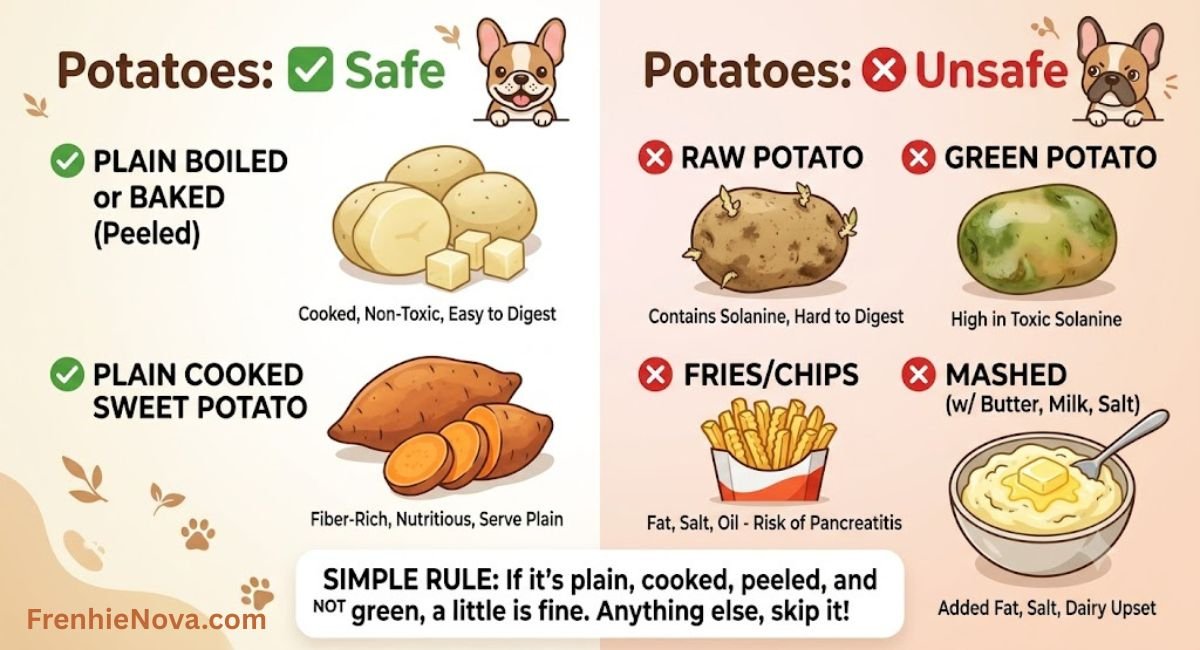
This is the part that matters most, so here’s the clear breakdown:
| Type | Safe for a Frenchie? | Why |
| Plain boiled or baked potato (peeled) | ✅ Yes, in moderation | Cooked, non-toxic, easy to digest |
| Plain cooked sweet potato | ✅ Yes | Fiber-rich and nutritious; serve plain |
| Raw potato | ❌ No | Contains solanine; hard to digest |
| Green potato (raw or cooked) | ❌ No | High in toxic solanine |
| Fries/chips | ❌ No | Fat, salt, and oil — risk of pancreatitis |
| Mashed with butter/milk/salt | ❌ No | Added fat and salt; possible dairy upset |
The simple rule: if it’s plain, cooked, peeled, and not green, a little is fine. Anything else, skip it.
Why Plain Cooked Potato Can Be Good for a Frenchie
When it’s cooked properly and served without any extras, potato isn’t the enemy some pet owners assume it to be. Here’s a closer look at what it actually brings to the bowl.
Energy From Carbohydrates
Quick fuel for an active pup. Potatoes are rich in carbohydrates, which give a dog a quick source of fuel. That’s not a coincidence, this is exactly why sweet potatoes (and the same logic applies to white potatoes) are a popular carbohydrate source in commercial dog foods. For a Frenchie who’s had a short but intense play session, a small spoonful of plain cooked potato mixed into a meal can act as a digestible energy top-up rather than something exotic or risky.
Vitamins and Minerals
A modest nutritional bonus. Potatoes contain vitamin C, B vitamins, iron, potassium, and magnesium, all of which play supporting roles in a dog’s overall health. Breaking that down a bit further for Frenchie owners:
- Vitamin C supports immune function, though healthy dogs can synthesize some of their own. Potatoes just add a small dietary boost.
- B vitamins (including B6) are tied to metabolic processes and nervous system function.
- Potassium supports muscle contraction and heart function, which matters for a breed already prone to cardiovascular sensitivity.
- Magnesium contributes to muscle and nerve signaling.
Worth noting: none of these nutrients are unique to potatoes, and a Frenchie eating a complete, AAFCO-balanced commercial diet is already getting them. Potato just adds a little extra rather than filling a gap.
Fiber
Gentle support for digestion. Potatoes are a good source of dietary fiber, which helps dogs with digestion, and a plain, boiled, or baked potato can be gentle on a dog’s stomach, which is why vets often recommend it as part of a bland, soothing diet for dogs with mild digestive upset. Sweet potato takes this a step further: it’s a good source of dietary fiber that helps with digestion and, as a complex carbohydrate, provides a steadier source of energy compared to simple sugars.
For a breed like the French Bulldog, already prone to sensitive digestion and occasional gas, that gentleness is part of the appeal. It’s also why so many bland-diet protocols for upset stomachs lean on boiled potato or sweet potato as a base.
Read our guide can dog eat rice
The Caveat Worth Repeating
Even with these benefits, potatoes are still a starchy, calorie-dense food. All treats combined, including potato, should make up no more than 10% of a dog’s daily diet, with the rest coming from a complete and balanced diet. For a weight-prone breed like the Frenchie, where extra pounds put more strain on already compromised breathing and joints, that 10% ceiling is less of a suggestion and more of a hard line worth building the article’s bottom line around.
Risks of Feeding Potatoes to a Frenchie
Potato isn’t inherently dangerous, but there are a few specific ways it can go wrong, and for a breed with a sensitive gut and a tendency to gain weight easily, those risks deserve real attention rather than a footnote.
Raw Potato Contains Solanine
Never served raw, ever. Raw potatoes contain solanine, a compound that’s toxic to dogs and can cause gastrointestinal distress, weakness, and even neurological issues in higher amounts. Cooking reduces solanine levels significantly, which is exactly why every vet-backed source insists on boiled, baked, or otherwise fully cooked potatoes only. Green-tinged potatoes or ones that have sprouted carry the highest solanine concentration and should be skipped entirely, skin and all.
Choking and Blockage Risk
Size matters more than owners expect. Large chunks of potato, particularly raw or undercooked pieces, can be a choking hazard or lead to a gastrointestinal blockage. This is worth flagging specifically for French Bulldogs, their brachycephalic airway already makes swallowing and breathing a bit more effort-intensive than it is for longer-snouted breeds, so bite-sized, well-mashed, or diced pieces are the safer call rather than handing over a chunk.
Weight Gain and Calorie Density
The biggest long-term risk for this breed. As a starchy vegetable, feeding a dog too many potatoes can contribute to obesity and related health problems. Frenchies are already predisposed to weight gain due to their low activity tolerance and brachycephalic build, and extra pounds worsen the very breathing and joint issues the breed is known for. This is the risk that ties directly back to the 10% treat rule, potato needs to stay an occasional extra, not a diet staple.
Blood Sugar Concerns
A consideration for less-active or diabetic dogs. Potatoes carry a moderate glycemic index, and dogs that are diabetic, overweight, or less active should only get a minimal amount, since the carbohydrate content can cause blood sugar to rise more than it would in a lean, active dog. This is less of a concern for a healthy, active Frenchie eating a small amount occasionally, but it’s worth a mention for owners managing a dog with existing metabolic issues.
Additives Are the Real Danger, Not the Potato Itself
It’s rarely the potato that causes problems, it’s what’s added to it. Fried, buttered, salted, or heavily seasoned potato dishes (think French fries, mashed potatoes with butter, or potato chips) are unhealthy for dogs regardless of breed. Onion and garlic powder, common in seasoned potato dishes, are separately toxic to dogs and deserve their own warning if this section links out to your allium-toxicity content.
plain, cooked, unseasoned potato in small amounts is low-risk for most healthy Frenchies. The real danger comes from raw potatoes, oversized pieces, and human potato dishes loaded with fat, salt, or seasoning, not the vegetable itself.
Read our Guide can French bulldog eat blueberries
How to Serve Potatoes to Your Frenchie
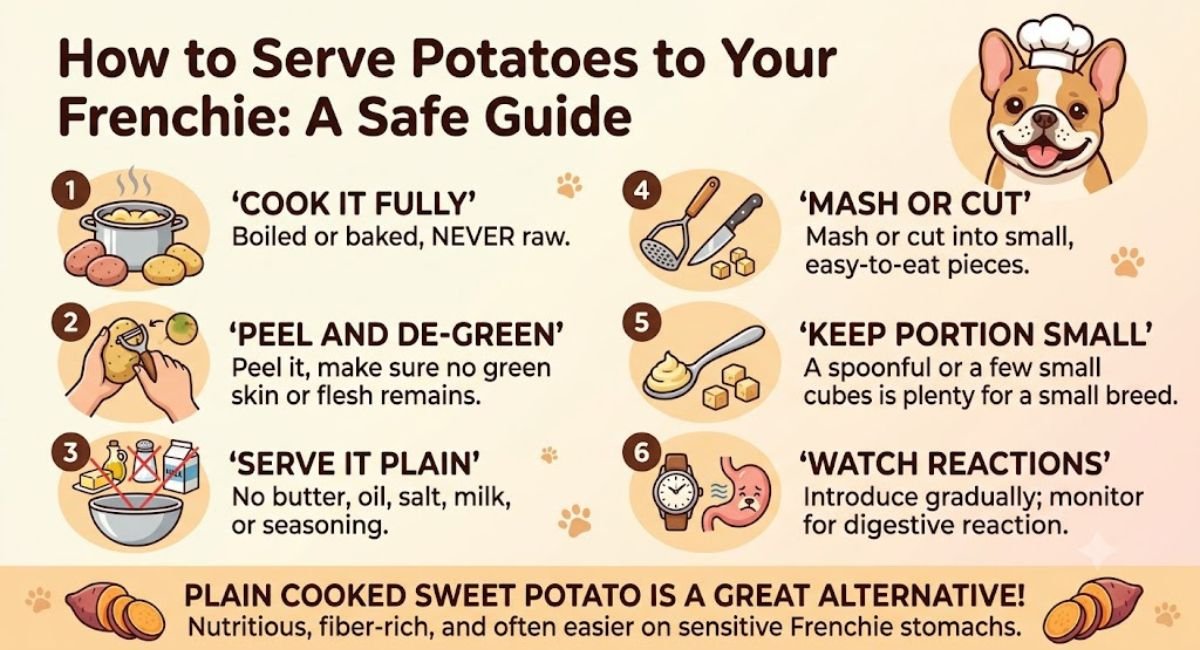
If you want to share a little potato, do it the safe way:
- Cook it fully: boiled or baked, never raw.
- Peel it and make sure there’s no green on the skin or flesh.
- Serve it plain: no butter, oil, salt, milk, or seasoning of any kind.
- Mash or cut into small pieces for easy eating.
- Keep the portion small: a spoonful of plain mashed or a few small cubes is plenty for a small breed.
- Introduce it gradually and watch for any digestive reaction.
Plain cooked sweet potato is a great alternative worth considering, it’s nutritious, fiber-rich, and often easier on a sensitive Frenchie stomach.
Can French Bulldogs eat raw potatoes?
No. Raw potatoes contain solanine, a toxic compound, and are hard to digest. Only plain, fully cooked, peeled potatoes are safe for a Frenchie.
Can French Bulldogs eat mashed potatoes or fries?
Not the way humans usually make them. Fries are fried and salted, and mashed potatoes are typically loaded with butter, milk, and salt, all bad for a breed prone to obesity and pancreatitis. Plain, unseasoned cooked potato is the only safe version.
Is sweet potato better for Frenchies than regular potato?
Often, yes. Plain cooked sweet potato is fiber-rich, nutritious, and tends to be gentle on sensitive stomachs, making it a great choice, as long as it’s served plain and in moderation.
How much potato can my Frenchie have?
Only a small amount as an occasional treat, a spoonful of plain mash or a few small cubes. Because potatoes are starchy and calorie-dense, keep it well within the 10% treat limit, and skip it for diabetic or overweight dogs.
The Bottom Line
French Bulldogs can eat potatoes, but only the right kind, prepared the right way: plain, cooked, peeled, and never green or raw. In that form, a small amount of potato, or better yet, plain cooked sweet potato, makes a fine occasional treat with some useful nutrients. The dangers come from raw or green potatoes (toxic solanine) and from human-style preparations loaded with fat and salt.
Keep it plain, keep it small, and keep it occasional, and potato is perfectly safe for your Frenchie. As always, introduce it gradually and check with your vet, especially if your dog is overweight or diabetic.
For more safe and unsafe foods, see our full guide on what foods French Bulldogs can eat and our complete Frenchie nutrition guide
This article is for general educational purposes and isn’t a substitute for veterinary advice. Consult your veterinarian before adding new foods to your dog’s diet, especially if they have a health condition.

Auston is the founder of Frenchie Nova and a longtime French Bulldog owner. He writes practical, research-backed guides on Frenchie care, feeding, and health. Not a veterinarian — always consult your vet for medical concerns.