

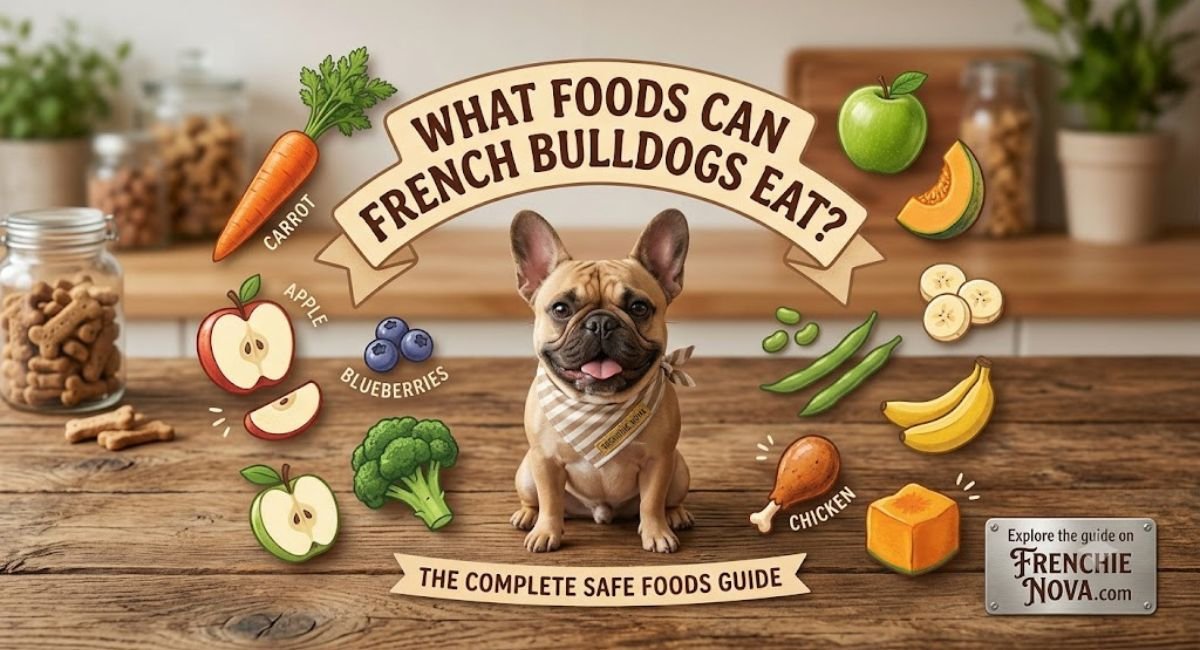
Every Frenchie owner knows the look, those big eyes locked onto whatever you’re eating, willing you to share. The trouble is that not everything on your plate is safe for them, and Frenchies come with extra baggage, sensitive stomachs, a long list of allergies, and a tendency to gain weight from the smallest extras. So, which human foods can your French Bulldog actually eat?
The good news is that plenty of everyday foods make great, healthy treats for a Frenchie, while others should never come near them. This guide is your master list What Foods Can French Bulldogs Eat?, the safe fruits, vegetables, proteins, and grains your French Bulldog can enjoy, the foods to avoid entirely, and the breed-specific rules that keep treat time from turning into a vet visit. Think of it as the quick-reference hub; we’ll link out to deeper guides on individual foods along the way.
Table of Contents
The Golden Rule: Treats Stay Under 10%
Before the lists, one principle governs everything: treats and human-food extras should make up no more than 10% of your Frenchie’s daily calories, with the other 90% coming from a complete, balanced dog food. For a small, weight-prone breed like the French Bulldog, this matters more than it does for most dogs, those little snacks add up fast, and obesity brings serious health problems for the breed.
Every “yes” below comes with that asterisk: safe in moderation, as an occasional treat, not a meal replacement.
Safe Fruits for French Bulldogs
Many fruits make excellent low-calorie treats, as long as you remove any seeds, pits, cores, or rinds first. Here are the Frenchie-friendly ones:
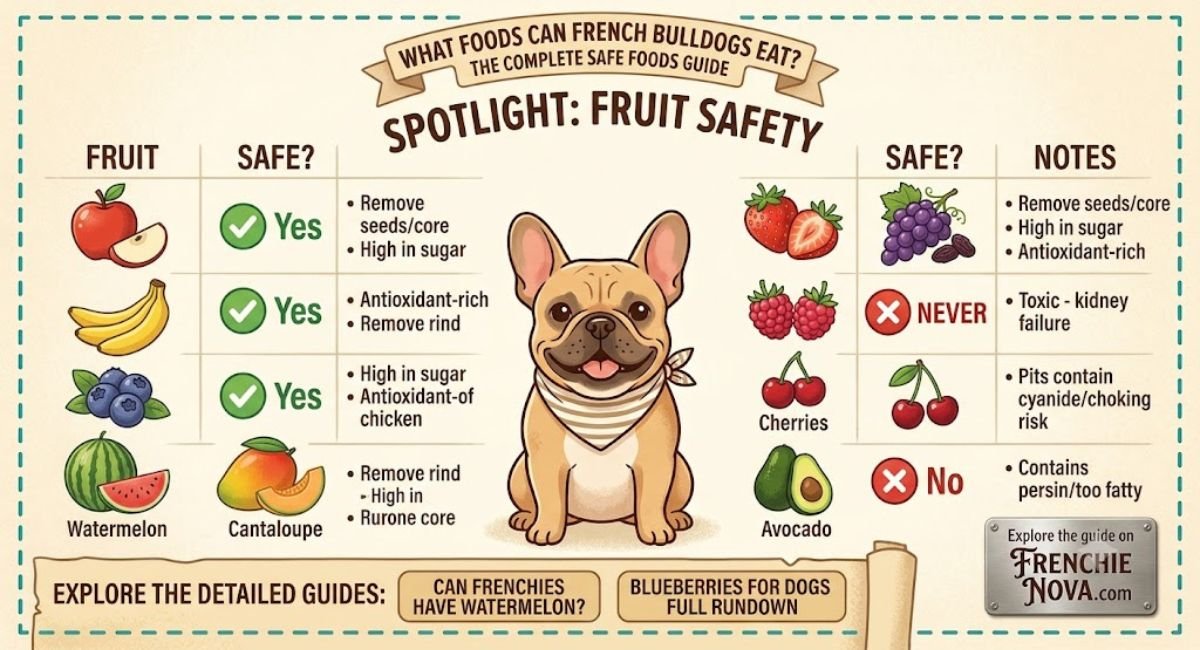
| Fruit | Safe? | Notes |
| Apples | ✅ Yes | Remove seeds and core (seeds contain cyanide) |
| Bananas | ✅ Yes | High in sugar — small amounts only |
| Blueberries | ✅ Yes | Antioxidant-rich; mash for small dogs |
| Watermelon | ✅ Yes | Remove rind and seeds; very hydrating |
| Strawberries | ✅ Yes | Antioxidants and fiber; sugary, so limit |
| Raspberries | ✅ Yes | Low sugar; moderation due to trace natural compounds |
| Mango | ✅ Yes | Remove the pit; high in sugar |
| Cantaloupe | ✅ Yes | Hydrating; remove rind |
| Grapes / Raisins | ❌ NEVER | Toxic — can cause kidney failure |
| Cherries | ❌ No | Pits contain cyanide; choking risk |
| Avocado | ❌ No | Contains persin; too fatty |
Two of these have their own detailed guides worth reading: see whether Frenchies can have watermelon and the full rundown on blueberries for dogs.
Safe Vegetables for French Bulldogs
Vegetables are some of the best treats for a weight-conscious Frenchie, low in calories, high in nutrients, and satisfyingly crunchy.
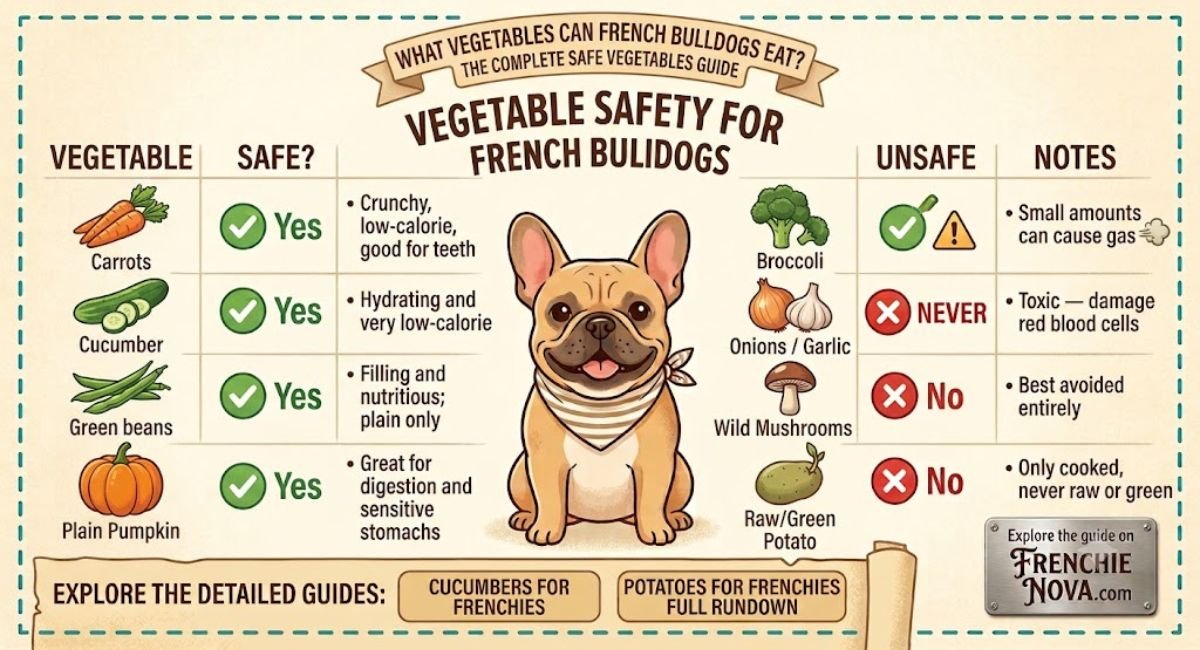
| Vegetable | Safe? | Notes |
| Carrots | ✅ Yes | Crunchy, low-calorie, good for teeth |
| Cucumber | ✅ Yes | Hydrating and very low-calorie |
| Green beans | ✅ Yes | Filling and nutritious; plain only |
| Pumpkin (plain) | ✅ Yes | Great for digestion and sensitive stomachs |
| Sweet potato (cooked) | ✅ Yes | Fiber-rich; serve plain |
| Potato (cooked, plain) | ✅ Yes | Only cooked, never raw or green |
| Broccoli | ✅ Yes | Small amounts can cause gas |
| Onions / Garlic | ❌ NEVER | Toxic — damage red blood cells |
| Mushrooms (wild) | ❌ No | Best avoided entirely |
For the details on two popular ones, see our guides on whether Frenchies can have cucumbers and whether Frenchies can eat potatoes.
Safe Proteins and Other Foods for Bulldogs
Frenchies are omnivores who thrive on quality protein, and several plain, cooked options make great treats or food toppers:
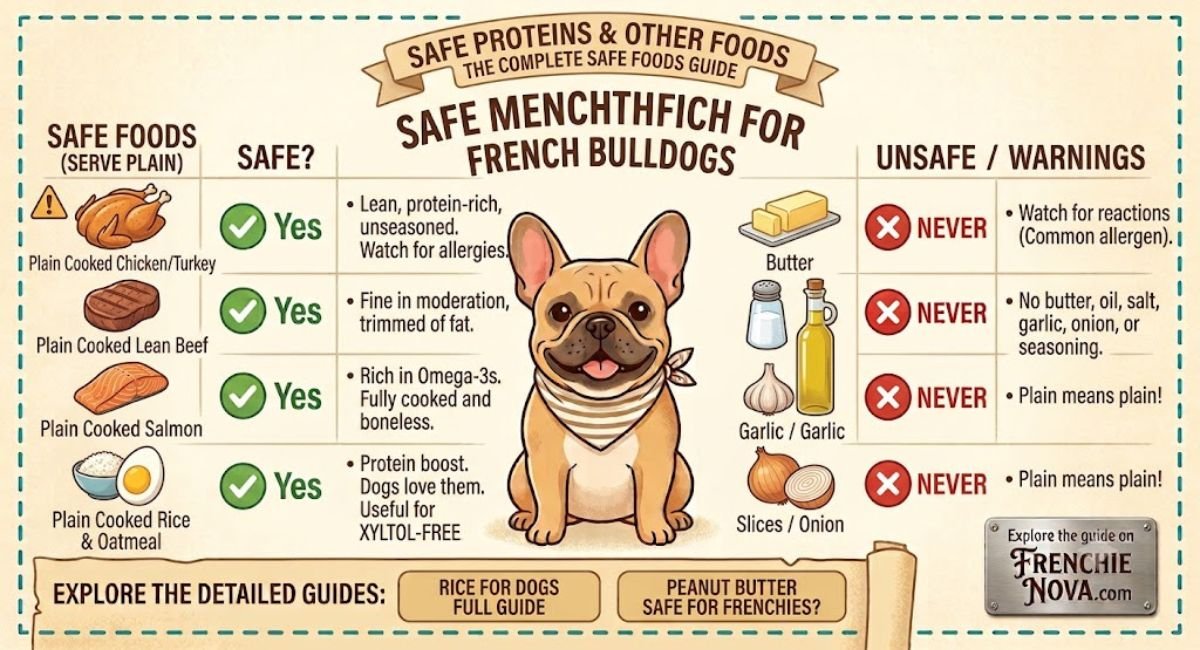
- Plain cooked chicken or turkey: lean, protein-rich, and gentle (skinless, unseasoned). Note that chicken is a common Frenchie allergen, so watch for reactions.
- Plain cooked lean beef: fine in moderation, trimmed of fat.
- Cooked plain fish like salmon: rich in omega-3s for skin and coat, fully cooked and boneless.
- Plain cooked eggs: a protein boost, dogs tend to love.
- Plain rice and oatmeal: gentle, easily digestible carbs, useful for sensitive stomachs. See our full guide on rice for dogs.
- Plain, unsweetened peanut butter: a favorite, but only if it’s xylitol-free.
The recurring word is plain. No butter, oil, salt, garlic, onion, or seasoning, those are where the danger usually hides.
Foods French Bulldogs Should Never Eat
Some foods are outright dangerous and must be kept well away from your Frenchie. The headline offenders:
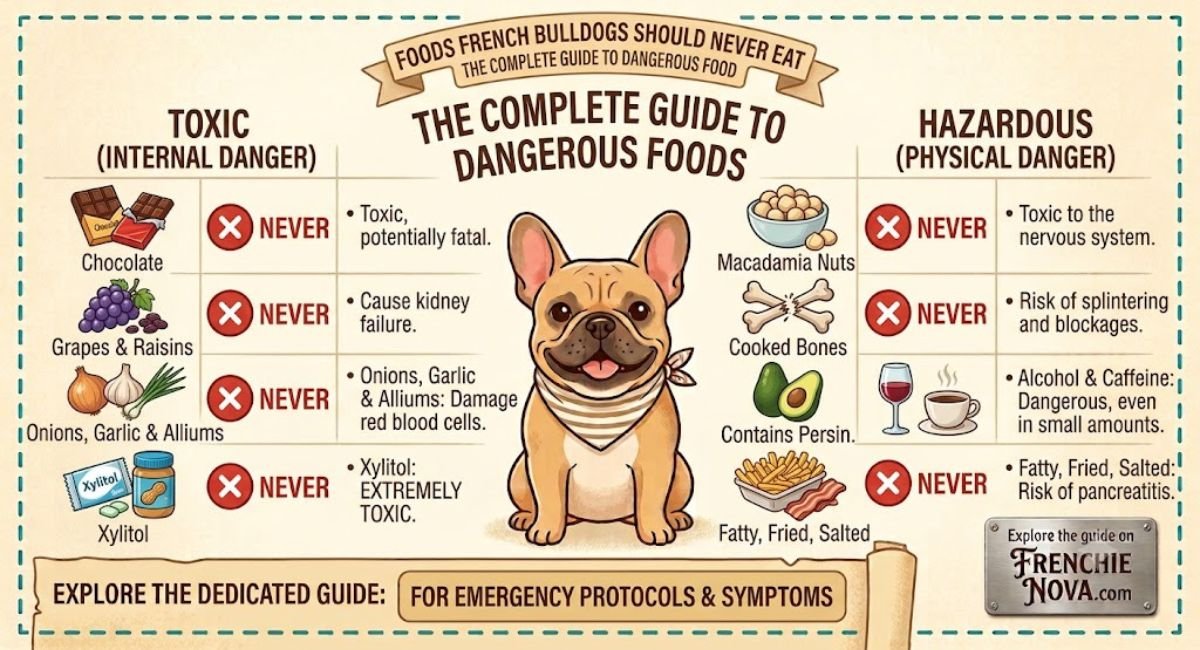
- Chocolate: toxic, potentially fatal
- Grapes and raisins: cause kidney failure
- Onions, garlic, chives, and leeks: damage red blood cells
- Xylitol (in sugar-free gum, some peanut butters): extremely toxic
- Avocado: contains persin
- Macadamia nuts: toxic to the nervous system
- Alcohol and caffeine: dangerous even in small amounts
- Cooked bones: splinter and cause blockages
- Fatty, fried, or heavily salted foods: risk of pancreatitis, which Frenchies are prone to
This is just the summary: for the complete breakdown of dangerous foods, symptoms, and what to do in an emergency, see our dedicated guide to foods French Bulldogs can’t eat.
Breed-Specific Rules for Feeding a Frenchie (What Foods Can French Bulldogs Eat?)
French Bulldogs need a little extra care around treats compared to the average dog. Keep these in mind:
Watch for allergies
Frenchies are one of the most allergy-prone breeds, with common triggers including chicken, beef, and dairy. Introduce any new food slowly, one at a time, and watch for itching, gas, or loose stool. If your Frenchie has known sensitivities, our food allergies guide goes deeper.
Mind the choking risk
With their flat faces and small mouths, Frenchies can struggle with whole small foods like blueberries or grape-sized pieces. Mash or cut treats into manageable bites.
Guard against weight gain
This is the big one. Because the breed gains weight so easily, every treat has to fit inside that 10% budget. Vegetables like carrots and cucumbers are your friends here, filling, crunchy, and with barely any calories.
Always plain, always gradual
Cook foods plain, skip all seasonings, and introduce anything new in small amounts to protect that sensitive Frenchie stomach.
What human foods are safe for French Bulldogs?
Plenty, including apples, blueberries, watermelon, carrots, cucumber, green beans, pumpkin, plain cooked chicken, and plain rice. The key is serving them plain, in moderation, with any seeds, pits, or rinds removed.
What foods are toxic to French Bulldogs?
Chocolate, grapes, raisins, onions, garlic, xylitol, avocado, macadamia nuts, alcohol, and caffeine are all dangerous and should never be fed. Fatty and heavily salted foods are also risky for this pancreatitis-prone breed.
Can French Bulldogs eat fruit every day?
In small amounts, fruit can be a regular treat for most Frenchies, as long as it stays within the 10% treat limit. Stick to dog-safe fruits, remove seeds and pits, and watch the sugar, especially for overweight dogs.
How do I introduce a new food to my Frenchie?
Slowly and one at a time. Offer a small amount, then watch for any reaction like itching, gas, or loose stool over the next day or two before making it a regular treat. This is especially important for such an allergy-prone breed.
The Bottom Line
French Bulldogs can safely enjoy a wide range of human foods, plenty of fruits, vegetables, and lean proteins make healthy, satisfying treats when served plain and in moderation. The trick is sticking to the safe list, keeping treats under 10% of daily calories, removing any hazards like seeds and pits, and introducing new foods slowly because of the breed’s sensitive stomach and allergy tendencies.
When in doubt, lean on low-calorie vegetables and dog-safe fruits, avoid the toxic list entirely, and check with your vet about your individual dog. For the full details on specific foods, follow the linked guides throughout, and see our complete how to feed a French Bulldog puppy for the bigger nutrition picture.
This article is for general educational purposes and isn’t a substitute for veterinary advice. If your Frenchie eats something toxic, contact your veterinarian or an animal poison control center immediately.

Auston is the founder of Frenchie Nova and a longtime French Bulldog owner. He writes practical, research-backed guides on Frenchie care, feeding, and health. Not a veterinarian — always consult your vet for medical concerns.