

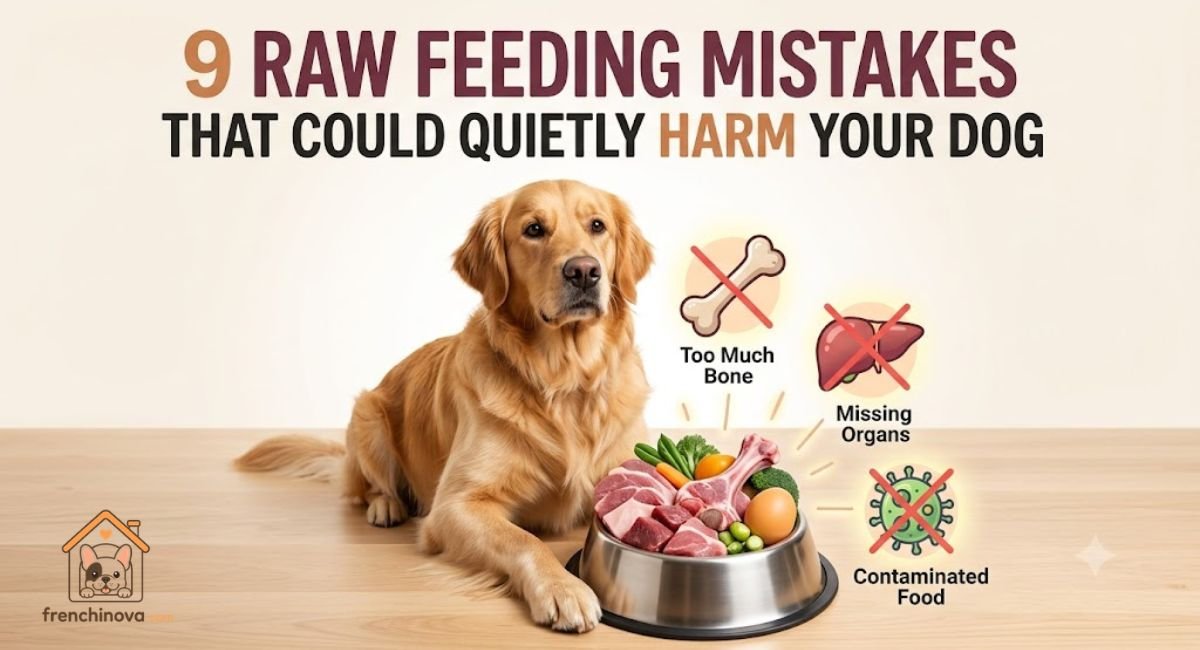
A dog can look healthy on a raw diet for months while a problem builds silently underneath. That’s the part most owners never see coming. The bowl looks fresh, the dog seems happy, the coat shines, and then a blood panel or an X-ray reveals a deficiency that took half a year to surface. Raw feeding done well is genuinely good for a lot of dogs. Done wrong, it causes problems that are slow, hidden, and sometimes permanent.
This list walks through the Raw feeding mistakes that do the real damage, why each one is risky, and exactly how to fix it before it costs your dog.
Table of Contents
Why Raw Feeding Goes Wrong So Often
Raw feeding isn’t dangerous because raw meat is evil. It goes wrong because it’s deceptively easy to get the basics almost right while missing the details that actually matter. A dog eating “meat, bone, and organs” sounds balanced, but balance is a numbers game, and most home plates don’t add up the way owners assume.
The scale of the problem is bigger than most people realize. A 2013 study by Stockman and colleagues at the University of California, Davis, published in the Journal of the American Veterinary Medical Association, analyzed 200 home-prepared dog food recipes and found that 95% were deficient in at least one essential nutrient, with over 83% falling short in multiple nutrients.. That’s not a fringe statistic. It means the typical home raw diet is missing something, and the dog usually pays for it slowly.
The mistakes below are ranked roughly from most dangerous to most overlooked. Every one is fixable.
9 Raw Feeding Mistakes
1. Feeding an All-Meat Diet (the “Meat Is Natural” Trap)
This is the single most common and most damaging mistake. Muscle meat is high in phosphorus and low in calcium, so a bowl of pure meat, even premium, organic, human-grade meat, is badly out of balance. Over time, it pulls calcium from the dog’s own bones to compensate.
The consequences aren’t theoretical. A veterinary case series published through the NCBI documented four large-breed puppies fed exclusively boneless raw meat who developed nutritional secondary hyperparathyroidism and weakened, demineralized skeletons. Two suffered pathological fractures and were euthanized. The “dogs are wolves” logic falls apart here, because a wolf eats the whole animal: bone, organ, hide, and gut contents, not just steak.
The fix: Build the plate around the widely used framework of roughly 80% muscle meat, 10% raw edible bone, and 10% organ (with about half of that organ being liver). Meat alone is never enough.
2. Getting the Calcium-to-Phosphorus Ratio Wrong
Even owners who add bone often miss the ratio. The target calcium-to-phosphorus balance for adult dogs sits around 1.2:1, slightly more calcium than phosphorus, with a safe range of about 1:1 to 1.4:1. Puppies have an even tighter window. Stray too far in either direction, and you risk skeletal problems, poor growth, or mineral interference.
Here’s the trap: too little bone causes calcium deficiency, but too much bone swings the other way and causes hard, chalky stools, constipation, and, in growing dogs, orthopedic disease. More calcium is not safer. Balance is the whole point.
The fix: Keep total bone intake in a workable range (many feeders aim for roughly 10–15% of the diet) and don’t stack a bone-in meal with extra calcium “just in case.” For boneless meals, add a measured calcium source like eggshell powder rather than guessing.
Raw feeding made easy
Calculate raw food portions for your dog
3. Switching to Raw Too Fast
A sudden flip from kibble to raw is a recipe for vomiting, diarrhea, and a miserable dog. The gut needs time to adjust its enzymes and bacteria to a completely different food.
The fix: Transition over 7–10 days. A common pattern: 25% raw for the first few days, then 50%, then 75%, then a full switch, watching the stool the whole way. Soft stool early on is normal; it should firm up as the dog adapts. (Switching between two raw brands is usually faster and gentler.)
4. Mishandling and Storing Raw Food Carelessly
Raw meat can carry Salmonella, E. coli, Listeria, and Campylobacter. These bacteria are a risk to the dog and to every human in the house, especially children, elderly people, and anyone immunocompromised. Leaving meat to thaw on the counter all day is one of the fastest ways to turn a safe meal into a sick one.
The fix: Store raw food frozen until needed, thaw in the fridge rather than at room temperature, serve promptly, and clean bowls, utensils, hands, and surfaces after every meal. Treat raw dog food with the same care you’d give raw chicken for your own dinner.
5. Feeding Cooked Bones, Ever
Raw meaty bones can be part of a healthy diet. Cooked bones are a genuine emergency risk. Cooking dries bone out and makes it brittle, so it splinters into sharp fragments that can lacerate the mouth, lodge in the throat, or puncture the stomach and intestines.
The fix: Never feed cooked bones of any kind, not chicken, not steak, not the leftovers from dinner. If bones are on the menu, they must be raw, size-appropriate, and given under supervision. Softer raw options like chicken necks, wings, or turkey necks are common starting points.
6. Skipping Organ Meat (or Drowning the Dog in Liver)
Organ meat is where a huge share of a raw diet’s vitamins and minerals live, vitamin A, copper, B vitamins, and more. Skip it, and the diet becomes quietly deficient. But organs are potent, and overdoing liver in particular can tip a dog into vitamin A excess.
The fix: Aim for organs at around 10% of the diet, with roughly half of that being liver and the rest “secreting” organs like kidney or spleen. Heart, despite being an organ anatomically, behaves more like muscle meat nutritionally and doesn’t count toward the organ portion.
7. Believing Variety Alone Equals Balance
“I rotate proteins, so it all evens out” is one of the most reassuring myths in raw feeding, and one of the most misleading. If every protein in the rotation is low in the same nutrient, you’re not balancing the diet, you’re just rotating the same deficiency. As one canine nutritionist puts it, consistent, properly formulated nutrient intake beats haphazard variety every time.
The fix: Make each meal independently balanced rather than hoping the week averages out. Use recognized nutritional standards like NRC, FEDIAF, or AAFCO as the benchmark, and adjust bone, organ, fat, and supplements per recipe, not just the meat.
8. Ignoring the Dog’s Individual Health Needs
Raw feeding isn’t automatically right for every dog. Animals with kidney disease, liver issues, pancreatitis history, or compromised immune systems can be harmed by a diet that’s perfect for a healthy dog. Puppies have razor-thin margins for error in calcium and fat, and large-breed pups are especially vulnerable to joint disorders from unbalanced diets.
The fix: Talk to a veterinarian or board-certified veterinary nutritionist before starting raw, especially for puppies, seniors, or any dog with an existing condition. This isn’t box-ticking; it’s the step that catches problems a generic plan would miss.
9. Never Reassess, Set It and Forget It
A dog’s needs change. Activity drops, weight shifts, age advances, a new health issue appears, and a diet that fit perfectly a year ago can slowly stop fitting. Owners who never re-weigh portions or recheck the plan often don’t notice until the dog is visibly too heavy, too thin, or unwell.
The fix: Watch the markers that tell the real story: stool quality, body condition, energy, coat, and weight. Recheck portions when the dog’s life stage or activity changes, and book periodic vet visits with bloodwork to catch hidden imbalances before they show on the outside.
What Raw Feeding Done Right Actually Looks Like
The dogs that thrive on raw aren’t the ones with the fanciest meat, they’re the ones whose owners respect the details. Balanced ratios, safe handling, a slow transition, real organ content, and a willingness to check in with a professional. None of it is glamorous, but all of it is what keeps a raw diet a benefit instead of a slow-burning risk.
Spotting Trouble Early: Warning Signs to Watch
Catching a problem early is far easier than reversing one. Keep an eye out for persistent diarrhea or vomiting, chalky white or hard stools, sudden weight changes, lethargy, a dull coat, excessive scratching, or stiffness and reluctance to move. Any of these, particularly in a puppy, is a reason to pause and call a vet rather than wait it out.
The Bottom Line
Most raw feeding harm doesn’t come from bad intentions. It comes from small, invisible imbalances that compound over months, an all-meat bowl, a missed ratio, a skipped organ, a counter-thawed meal. The fixes are simple once you know what to look for, and none of them require giving up on raw. Get the balance right, handle the food safely, match the diet to the actual dog, and check in regularly.
Before starting or overhauling a raw diet, it’s always worth a conversation with a veterinarian or qualified canine nutritionist, especially for puppies, seniors, and dogs with health conditions. Your dog can’t tell you when something’s off, so the safest plan is the one that’s measured, monitored, and built around them.
This article is informational and not a substitute for professional veterinary advice.
Raw feeding made easy
Calculate raw food portions for your dog

Auston is the founder of Frenchie Nova and a longtime French Bulldog owner. He writes practical, research-backed guides on Frenchie care, feeding, and health. Not a veterinarian — always consult your vet for medical concerns.